On November 30th 2012, NCsoft shut down City of Heroes and ended the spandex adventures of thousands of players. Gamasutra has the exclusive story on how the popular superhero MMO and developer Paragon was almost saved, but was instead scuttled by last minute publisher decisions.
On the night before we all got the notice of the studio shutting down, Brian, Ross, and Destin were in there still trying to work out that deal. We were a signature away from things going through or not – and we unfortunately fell on the not side.
Lead Designer Matt Miller spoke about some of the plans Paragon had for the MMO if they had been allowed to continue.
So we had an alien invasion race called The Battalion that was going to be arriving in the very next issue. That would play out over several issues culminating with the moon base, where you would use the resources of the moon base to actually fight back and basically kick Battalion out of our solar system.
A final fan effort to purchase the rights to City of Heroes also failed.
Ubisoft CEO Yannis Mallat spoke with GamesIndustry International and explained how the next-gen of consoles may not result in any big changes to the general direction of the industry.
“On one end of the spectrum you will have all the big, AAA blockbuster games that [offer] more and more production values, more value for the players, but there will be fewer of them taking a bigger chunk of the market,” Mallat said.
On the other end of the spectrum, the developer said mobile initiatives, tablets, and Facebook will continue to bring in new customers to the gaming industry. The problem is with what falls in the middle of the spectrum.
“The in-between, the belly of the market, is the one that just collapsed in a way and disappeared,” Mallat said. “Meaning there is no room for B-games, if I should say so, which proves the point of quality. I think that companies that put quality and consumer value as a primary focus, as we’ve been doing at Ubisoft, will enjoy great success.”
Mallat did add that he expects development costs to rise, but that the new consoles would bring opportunities for innovation.
Flashback to 1992! From the depths of France came a rotoscoped science fiction platformer for the Amiga called Flashback that wound up being ported to just about every system available. Players loved the convoluted story married to the striking (at the time) visuals reminiscent of Out of This World. Unfortunately, Delphine Software wound up making annual iterations of Moto Racer until their closure in 2004 and never got to finish the tale of Conrad B. Hart’s investigations.
Rejoice (or cry) retro fans! Ubisoft has announced that Paul Cuisset and others from Delphine have reformed as VectorCell and will be releasing an HD “re-imagining” of Flashback using Unreal Engine 3.
Gorgeous graphics, amazing animations. It’s the Flashback you’ve always dreamed of. True to the original spirit but made a million times better by using modern engines such as Unreal and Havok. The makeover is completely stunning.
It’s all about Gameplay. The team modernized gameplay mechanics, making the game more reactive, offering new features, like gadgets and an experience progression system. But the developers kept the original formula in mind: a fine balance between rolling and shooting, exploring remote space stations and obliterating hostile alien planets.
Bringing back new memories. The story was revamped to speak to 21st century gamers. Most of the cast of the original game is still here – Conrad, the Morphs – but you can expect new characters and a few twists you’re definitely not going to forget… this time.
Polygon revealed that the remake will have core gameplay changes to bring the experience up to modern expectations.
“For example, in the old game, when you aim, it was either left or right,” Da Costa Vieira said. “You can’t do that now because it would be too old school. So now you can aim at 360 degrees. For us, it was a very important thing to fix because the goal here is to see what we can do with current technology to make Flashback even better.”
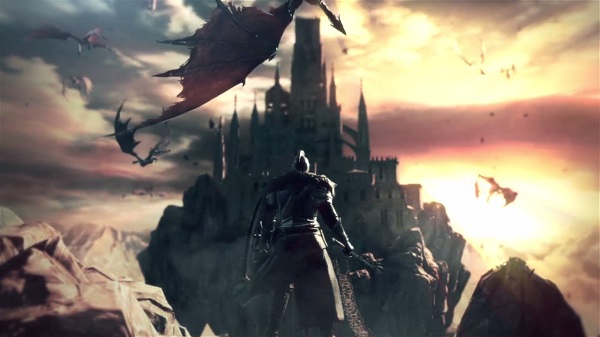
Fans of hardcore games are in a tizzy thanks to IGN’s 12-minute gameplay demo of Dark Souls II. IGN even sat down with FromSoftware Director Yui Tanimura in a ten-minute interview and asked him how many times players can expect to see the “YOU DIED” screen.
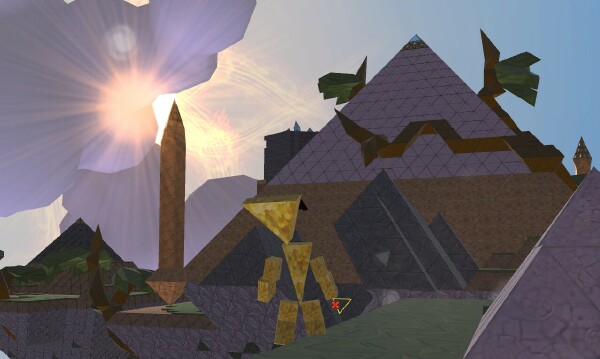
Tom Chick and Nick Diamon call out Linden Lab CEO and erstwhile Sims developer Rod Humble for that weird Second Life game. Not pictured, by the way. That’s a screenshot from the lovely but inchoate Patterns, also from Linden Lab. We discuss what the studio is up to, and then talk about the non-news for the new Xbox, the upcoming TRONny shooter from Timegate, the Defiance MMO, whatever Timber and Stone is, military codes of conduct in the ARMA 3 alpha, and solo wargaming in a custom built warbarn.
After Greg Zeschuk left BioWare, he created quite the stir by saying he’d probably never create another game again and instead devoted his retirement to beer. Not just drinking them, but the process of brewing and selling them. Recently, both he and Ray Muzyka were honored at GDC with a Lifetime Achievement Award and Greg sat down with GamesIndustry International to discuss his game-making days, what it was like working for EA, and why he thinks the next-gen may be at a crossroads.
Also, right now, there is this sort of classic innovator’s dilemma where we see a new market emerging, but it’s not really that great – with the mobile business, certain people make a lot of money but on the whole it’s not generating as much revenue as the console business. Everyone’s kind of holding out hope for the new consoles, but I honestly don’t think they’re going to be that big a deal. I worry a lot that unless Microsoft or Sony pull something magically out of a hat, it’s pretty much the same old, same old repackaged and I don’t think they’re going to change the dynamic of the retail market. I don’t see how they can – the market is what it is.
I don’t get sports. I just don’t. Why do people care so much about teams of dudes who aren’t even from the city they’re representing engaging in excessively formalized, heavily regulated, and ridiculously overpaid contests of athleticism? And why do people who watch sports care so much when most of them certainly don’t play the game they’re watching? Is it just for the cheerleaders? That I could understand.
I do, however, get e-sports because I actually play the games I’m watching. I know the rules, I understand completely how the players feel and the dilemmas they face, and I enjoy the tension and drama of a game without necessarily being inside it. But I feel like a prerequisite for enjoying e-sports is knowing the game at hand.
For instance, Netrunner, a masterfully designed card game of bluffing and asymmetry, with a superlative sense of theming. Listening to a cast of the game really plays up the theming. Experiential Data, Datasuckers, Account Siphons, and Heimdall ICE! “That is a rather mighty server!”, “I’ve seen this before, the old ‘don’t care about tags’ strategy”, and “He has not been lucky running the centrals!” are all proclamations in the above Netrunner cast.
These casts for Netrunner’s clunky but serviceable OCTGN module are narrated by a friend of mine with an actual British accent. He goes by the name Mr. Skinny as he Britishly commentates on the cyberpunk proceedings. A generically bitchin’ techno soundtrack plays discreetly in the background. I don’t know if folks who aren’t hip to Netrunner would get these, but if you’re going to watch a bunch of dudes kick a pigskin around, wouldn’t you just as easily enjoy this weird cocktail of Hugh Grant-a-like, William Gibsonism, and faux Daft Punk?
Nintendo has a problem with getting third-party next-gen games for their Wii U console. Over the past few weeks, developers and publishers have one by one confirmed that this game or that will not be coming to the Wii U. Is it a crippling issue? Not yet, but let’s look at some of the things that have gone wrong.
Timegate is a fantastic developer when it comes to the hard work of actual game design. Kohan was one of the boldest innovations in the history of RTS innovation and Section 8 was one of the cleverest Tribes variations I’ve played. But both games had a tough time creating any sense of identity, starting with Kohan’s weird word soup mythology (Give yourself ten Timegate fanboy points if you can tell me what a Kohan is and 20 Timegate fanboy points if you can tell me the difference between a gauri and a haroun!) and going up through Section 8’s generic space marines with their usual arsenal.
But based on the announcement trailer, if there’s one thing you can’t say about Minimum, Timegate’s newly announced shooter, it’s that it lacks personality.
Defiance is almost entirely about shooting stuff, and therefore the gear grind is almost entirely about the guns. So why then does it get gun progression so horribly wrong?
Microsoft’s unlikely high-definition remaster of Age of Kings II is available today on Steam. It’s an interesting historical relic, but some genres stand the test of time better than others. I’m not sure I’d ever choose to play this over more recent RTSs. In theory, I love that there are walls. In practice, walls are always a tough balance to strike. I don’t get the sense that Age II fussed much with striking that balance. I also love the relic victory condition, whereby your monks can set out to collect all the relics on the map and ensconce them in a monastery for 200 years. I was particularly delighted when the AI did this, which meant I had to go kick over his monastery. It’s nice to have a compelling reason to do that sort of thing.
But the interface is killing me. For instance, is there really no attack move? Lord knows, I complained bitterly about the lack of attack move in Age III during the time that it was cut. If I’d known it was a tradition, I might have been a little more understanding. And can I not shift queue certain orders in Age II? If it’s an option, I haven’t figured it out yet. Once my villagers are done building a lumber yard, they then stand around it instead of going to chop trees like I thought I told them to do. And I don’t miss having to replant farms one whit.
But what really kills it for me is the pacing. So little happens for so long. Modern RTSs have worked wonders at dropping you into important decisions early on (Starcraft II) or at least giving you some engaging busywork before the important decisions come along (Age of Empires III). If I wanted a drawn-out build up, I’d play a turn-based game! I love that Microsoft has made this game available again for hardcore retro RTS fans. But I’m afraid I’m not a hardcore retro RTS fan.
343 Industries Executive Producer Dan Ayoub told DigitalSpy that the team is looking at offering cosmetic microtransactions in Halo.
I think Halo certainly has the potiental for those kinds of things. We don’t have too much to talk about in terms of our plans down that line, but it’s certainly something… we’ve seen what the fans of Gears are enjoying, and if it’s something we think our community is going to enjoy, it’s something we’ll seriously talk about.
While the Halo series has sold map packs and cosmetic avatar items, they have not offered in-game microtransactions like the numerous weapon and character skins that Gears of War 3 and Gears of War: Judgment sell to players. Halo 4 currently has weapon skins as in-game unlockables.
From the screenshots, you might mistake Sang-froid: Tales of Werewolves for an action game. You can play it that way, but you’ll discover a not very good action game. You’ll get through a few early missions easily enough. But you’re Doing It Wrong. This isn’t an action game. It’s barely even a real time strategy game. This is mostly a cerebral strategy game about studying a map, considering your resources, setting up traps, and then executing your plan carefully. If you’re flailing around with your axe, it’s because plans A, B, and C have failed. Sang-froid has more in common with the early Rainbow Six games than with the typical tower defense game.
Also, there are wolves. Sang-froid has a lot of wolves.