


It’s smooth sailing for Hades II
It is a well-known fact that critics are like sea monsters. They latch their miserable appendages upon the ships of passing artists, leeching sustenance by taking down other people’s hard work. If the artist’s ship is sound, if their creation has no visible flaws, it is that much harder for the wretched critic to latch onto.
Look, what I’m getting at: it’s harder to write a review for a good game than a bad one. Where are the clever put-downs going to come from? The witty repartee? The first Hades has become the new gold standard for action roguelikes. It’s probably not going to surprise anyone that Hades II is also good. Very good.
What’s a sea monster to do? It’s a conundrum.
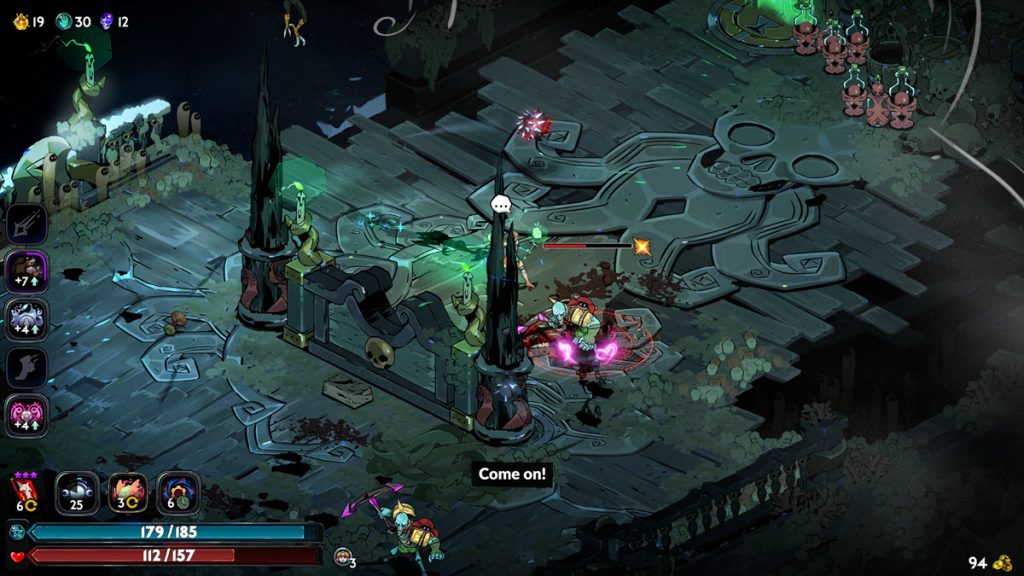
The first thing about Hades II is that even if you threw away all the builds and the unlocks and the metaprogression, you’d still have a solid action game on your hands. There’s a handful of weapons, each with two attacks, both of which can be charged. This gives every weapon a mix of ranged and close-quarter moves. On top of that, you have your “cast”, which puts a circle on the ground whose role is mostly to hinder enemy movement, creating breathing room to reposition. Then there’s the ability to evade, which gives you a tiny window of invincibility. Pro tip: evade all the time. This is not the kind of game where you should trade damage with the enemy, ever. I don’t think Hades II is that hard of a game, especially once the permanent upgrades start rolling in (at least compared to something like Dead Cells). If you need it, there’s the much vaunted “God mode” that immediately gives you a damage resistance boost, which increases permanently every time you lose a run. That being said, it is a very fast-paced action game, and a good one. That’s the whole point. It’s not the kind of game that tests your strategic ability to pick one out of three things.
That should probably be the golden rule of roguelikes or something: make a good game first, then add your metaprogression shenanigans.
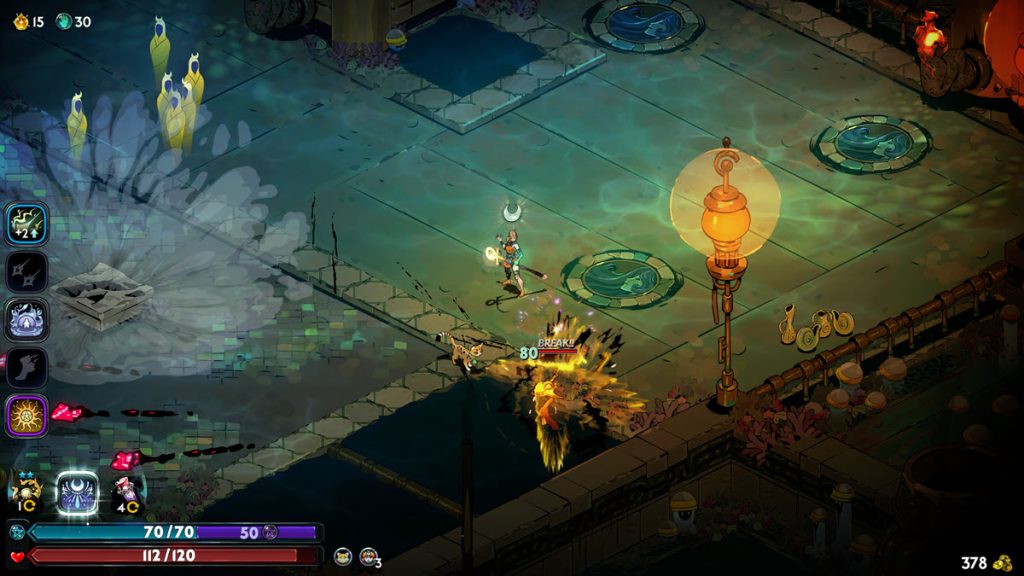
The most notable addition to Hades II is that relatively early on an entire second course opens up. From then on, there are two different directions you can pick at the start, each with its own levels, bosses and gimmicks. You get your choice of the more conventional descent to the depths of Hades, or a much more difficult trek to Olympus. Heaven or hell, literally.
You’d think: having twice the game means Hades II is twice betterer? Not so fast. While at first the extra variety is intriguing, after a while it can lead to some analysis paralysis. The original Hades’ main quality is, after all, its impeccable sense of pacing. What if I want to do this course this time around but there’s a critical resource I need in the other? Or, what do I do if the easy course is now too easy, but the hard course is too hard? During the mid-game I admit this can lead to some friction. However, I’m happy to report that eventually, once you start to learn and dominate both paths, the choice becomes so natural that you don’t know how Hades managed with only one course. It becomes as simple as: do you feel more like vanilla or chocolate this time? I mean, what kind of self-respecting soft-serve machine doesn’t do both?
Right, review done, five stars! So… is this enough? No? Welp, I suppose we’re going to have to go about it backwards: to talk about the bad things Hades II doesn’t do. I have a list of my pet peeves about roguelikes right here. I’ll show it to you some time if you ask nicely.
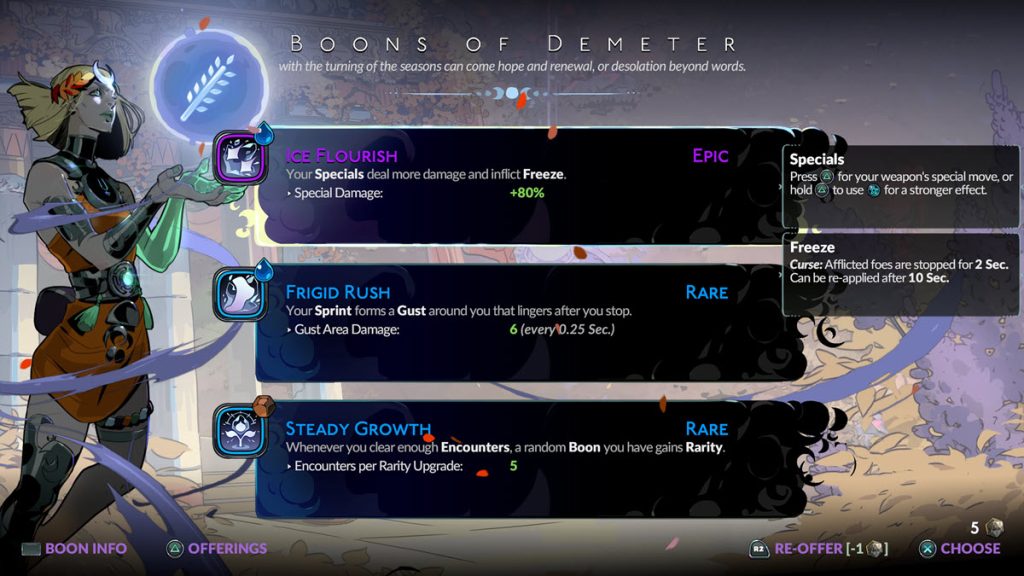
The first pet peeve is games that just pile hundreds of unlocks in one big random item pool, clogging it up with junk and making the things you actually want harder to find. This turns what should be a little shot of dopamine when unlocking a new toy into a groan of annoyance. Wiser games allow to “ban” items you don’t like to bring back a semblance of order to the chaos. Even more wisely, Hades II makes most of your new toys permanent additions or things that you choose freely at the beginning of a run. That new weapon you don’t like isn’t so much of a hassle if it’s never forced on you. It becomes just one more flavor you can pick in the kaleidoscope of options when leaving home. Instead of having two flavors of ice cream, now you have the whole ice cream bar. What are you going to put on top of that chocolate ice cream? Shredded nuts? Sprinkles? Gummy bears?
The main elements that get added to a random pool are the Olympians themselves and their perks (or boons). While some gods are generally less useful and some boons are duds, you get so many of both during a run that I’ve never once had the feeling that I’d been “screwed over by RNG”, if you will. There’s never that one critical piece needed for some strategy that would make winning impossible otherwise. As I said: action game first, roguelike shenanigans second. Besides, if you’re pining for that one specific thing, there are multiple ways to stack the odds in your favor. Gosh, Hades II has even thought of the opposite case: if you want to go with the flow and let random chance decide, it also has a little something special for you. Hades II is nothing if not thorough. It’s worth noting that the Greek pantheon is much more complete this time around. If you’ve been wondering in the first Hades: “where’s Apollo?”, well, there he is now.
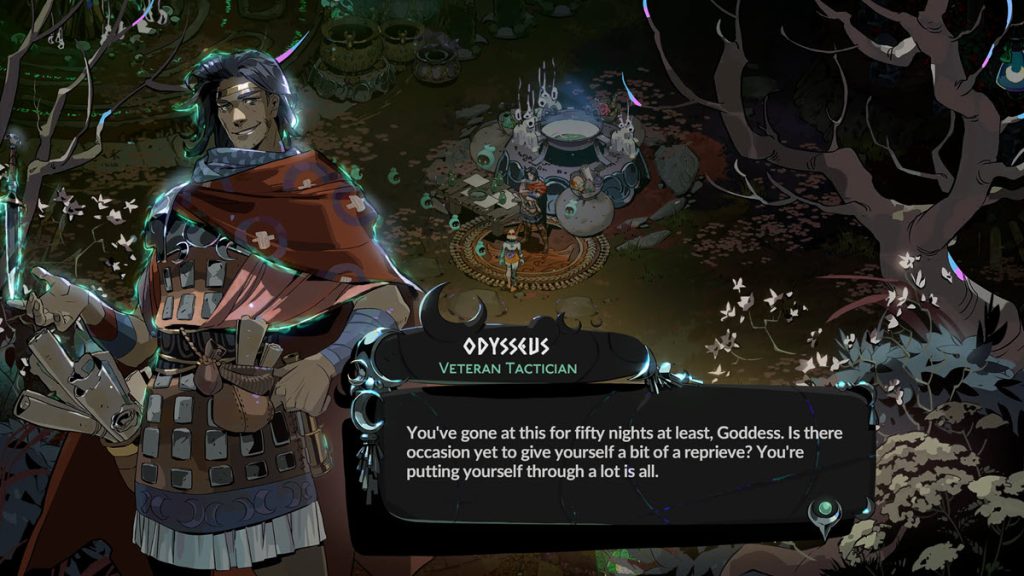
A second pet peeve of mine regarding roguelikes is when runs become too damn long. One hour is a great general target, especially for an action-heavy game like this. For a while, the two-course structure tends to add to the overall length of a run, which teeters dangerously over the one-hour mark. However, another great thing about Hades II is that there are multiple details that make runs become faster and faster. For one, eventually the conversations dry up. You also become better at quickly identifying the boons you need. Considering this and since there’s very little fat to begin with, I can now finish a run in under 20 minutes. That’s a massive reduction.
Other than that, the attention to detail in Hades II is exquisite. There’s a ridiculous amount of voice lines, apparently one for NPCs noticing every single choice you make: “Why did you bring this keepsake, it sucks! Wow, you’ve managed to beat me without getting hit once! Nice custom Arachne dress you’ve got there (“Why, thank you!”). I’ve never felt so seen. The reward structure of the game is impeccable. There are multiple ways in which run-specific and metaprogression resources seep into each other, so no matter what your goal is, you never feel like a reward is wasted. Hades II is also constantly pushing you to make things harder for yourself by offering a bonus if you do. (It makes it all the more odd that God mode exists completely outside of the scope of the game and its reward structure, but that ship has already sailed a long time ago.)
Finally, Hades II is one of the few games that are genuinely fun to beat 100%. The game basically expects you to try everything at least once and it outright tells you what things you’ve never picked yet. It’s such a simple detail. Why doesn’t everyone else do this? Without going into specifics, I started figuring out that beating the game while using every small variant was going to take a very long time. What a slog, I’m thinking. Except… no, it’s actually kind of a joy. If the game itself is a blast to play, a small variant is all the push you need to keep going.
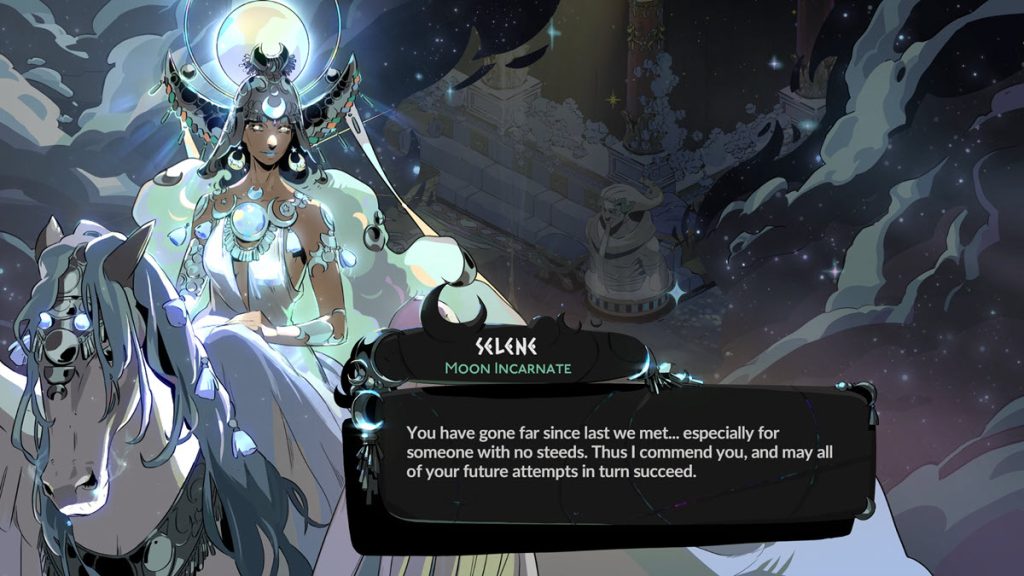
I suppose I need to find something to complain about. The sea monster has to get his jollies in some way. If there’s one aspect that Hades II doesn’t execute as well as its predecessor, it’s story. The brilliant thing about Hades is that, despite the veneer of divine grandeur, it was the story of an average dysfunctional suburban household. Deadbeat kid rebels against his hard-ass single father to go find his mom; maybe along the way he learns that his dad wasn’t so bad after all. The plot of Hades II is… your grandpa Chronos kidnaps your parents, so you go live in the woods to be raised and trained by your adoptive grandma in order to plot a revenge/rescue mission. It seems a bit less true to life. I don’t know what kind of redneck upbringing you’ve had, but if this is your life story, I’m deeply sorry.
Otherwise, Hades II is still written effectively as a pollyannaish version of Greek mythology. In myth, the Olympian gods were rarely known for their even-handedness. Here, Chronos scoffs at the idea that he’s eaten his own children. The cast is also outrageously American. I keep getting called “baaabe” by the mean girl. She’s literally the incarnation of strife, so I suppose that tracks. Most of the new elements in the sequel are cribbed from the Odyssey. Scylla and the sirens are reimagined as a glam rock girl band. The cherry on top is that they’re actually performing a diss track while trying to kill you. Now that’s a boss fight.
I only realized how special Hades II really was once I turned my attention to something else. Some very mean people keep telling me about all the cool new games coming out every week, you know? So I tried another game, started noticing all the little flaws… and then immediately went back to Hades II. If I had to describe Hades II in one word, it would be: smooth. Where are the niggles, the asperities, the little cracks in the design to sink your criticism into? They’re not there, that’s what. How frustrating. And so, the big bulging eyes of the sea creature slink back under the brackish surf, waiting for easier prey to bring down.
Hades II
Rating:
PC
Still the best action roguelike in town.
DoctorsSnarky critics hate it.
