


True to its name, The Long Dark is more or less complete after a decade
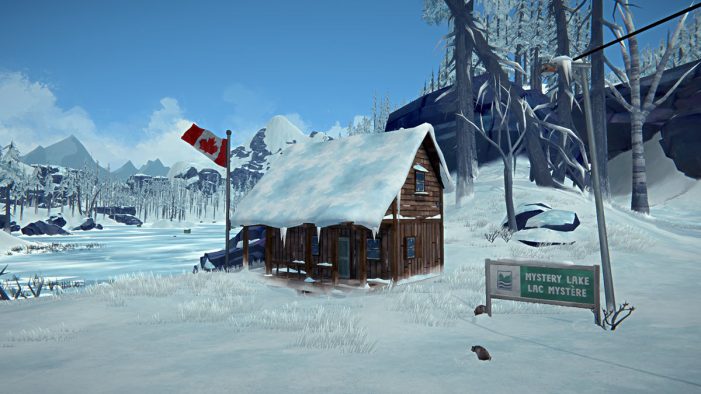
It’s wonderful stuff, snow. Very multi-faceted. Did you know that the Inuit have a hundred words for snow? Oops, that’s an urban legend. Oh wait, it is true, sort of. Anyway, leaving linguistics aside, snow can be many things. It can come down in great globs of Christmas magic. It can be hard as rock, strong enough to make an igloo. It can be heavy and full of water, perfect for making a snowman, or fine like sand, stinging your eyes as it is carried by the wind. It can even be soft underneath with a thin crunchy layer on top, like a crème brulée for your feet.
Snow deserves a video game worthy of its majesty. It’s so often treated as a mere change of scenery to be sandwiched between the lava world and the tropical world. Canadians eat snow for breakfast, they’ll know what to do.
Enter The Long Dark, a game about surviving winter in the Great North after “The Quiet Apocalypse”, a geomagnetic event that has made modern technology inoperative.
According to the ancient sagas, development for The Long Dark started sometime in 2012, then the game had a Kickstarter campaign in 2013, was released in early access in 2014 and “officially” released in 2017. It received paid DLC in 2022 which was itself delivered gradually over the course of three years (mind you, you had to pay the whole thing upfront). The Long Dark has a parallel five-episode story mode called Wintermute, which started in 2017. The final episode was delayed by more than three years. It finally came out this April.
So… is this the right time for a review? Am I ten years too late? Look at what early access and endless development schedules have wrought! No, it’s everyone else that has reviewed the game too soon, before it was “content complete”. I’m sticking to that position. Actually, it’s not even really content complete right now, but we’ll leave that aside for now.
Booting up the game in 2026 immediately leaves a weird taste in the mouth. You first get bombarded with messages about the team being against AI, a photosensitivity warning, and the team begging you not to try this in real life. Okay mom, okay. It’s unfortunate, because the developers have a great stinger that displays their logo, minimalistic and a little bit mysterious. (As an aside, the game has been in development for so long that the studio changed its logo and the old one can still be found on coffee cups in the game). The main menu is busy with messages about patch notes, release dates, “please read our dev blog and join our socials”, that kind of crap. The menus refer to perks you can no longer unlock and challenges you could only beat before COVID hit. Look, is this a stoical survival game or a “game as a service” nag fest? Oh well, moving on.
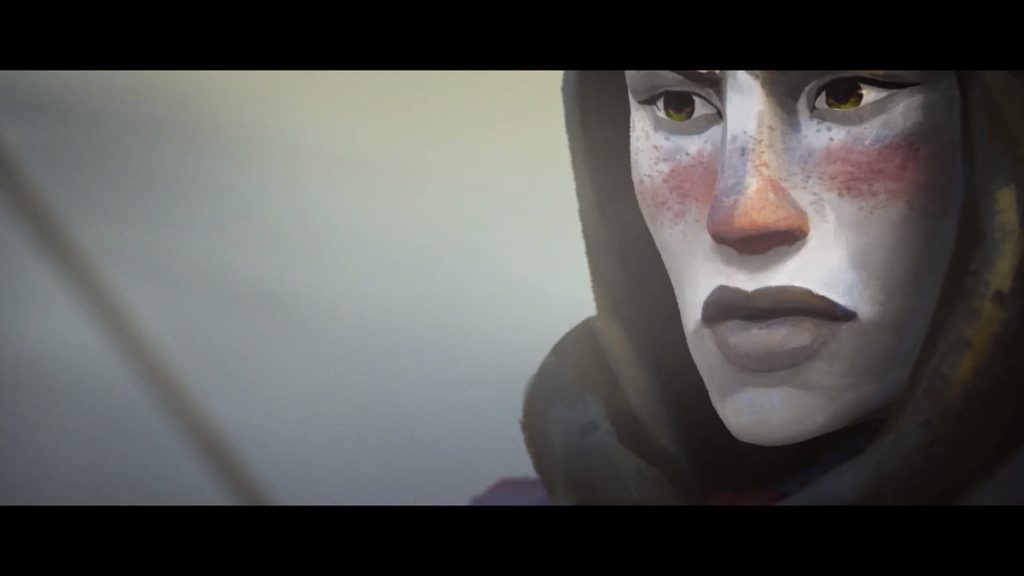
In honor of episode 5 being just released, we might as well start by tackling the Wintermute story mode. It mostly acts as a massive 30-40 hour tutorial. Yes, it’s that long. I’ll grant that story mode has some good things going for it. It has a cool TV-series opening credit sequence. The voice acting is stellar. It manages to create a melancholic mood that’s perfect for a “quiet apocalypse”. As an episodic format, however, it doesn’t fare as well. It feels like booting an older build of the game, which is pretty much what it is. There’s a jump in the level of character detail between episodes. It’s about as jarring as seeing the kids in Stranger Things age five years over the course of summer break. It’s also pretty hard to care about a story when episodes are released years apart. 80% of the actual reveals are packed in the final episode. It explains things to you that you’ve probably guessed in episode 1, thirty hours ago (or perhaps ten years ago, depending on how you look at it). Most objectives are overly linear, which doesn’t fit a survival game at all. As of writing this, the final episode is full of bugs. I suppose five years wasn’t enough time in the oven.
Anyway, the consensus is that story mode isn’t the “real” game. Survival mode is where it’s at… and story mode isn’t even preparing you for it correctly either. In story mode, you can save manually. You’re supplied with a full map which even shows your position and facing. The game even hands you a rifle when you need one. Bro, are you even Long Darking? No, Survival is the main event, the sandbox mode where you are left to your own devices against uncaring nature and death is permanent.
Circling back to the main question, how does The Long Dark handle snow? From a physics perspective, it’s a complete miss. The Long Dark basically treats snow as uneven linoleum. It will never move or shift and it will never accumulate over time. You can’t shovel the stuff either. You can’t even build a snowman.
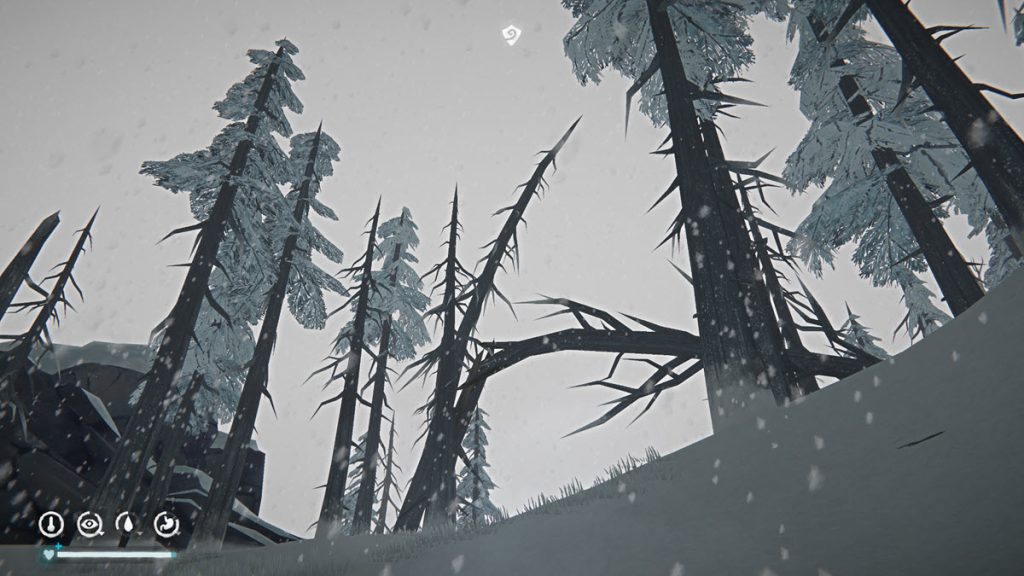
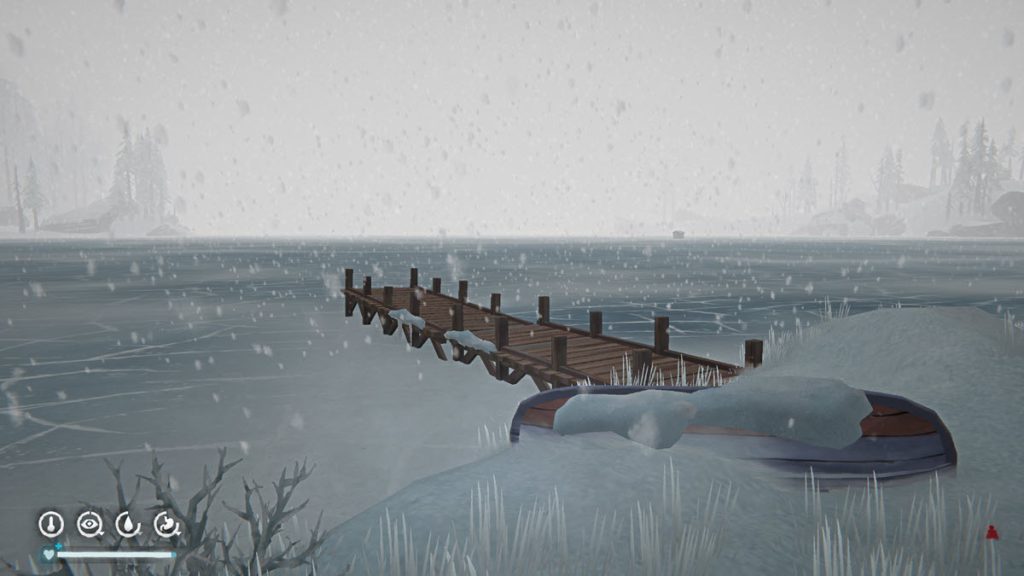
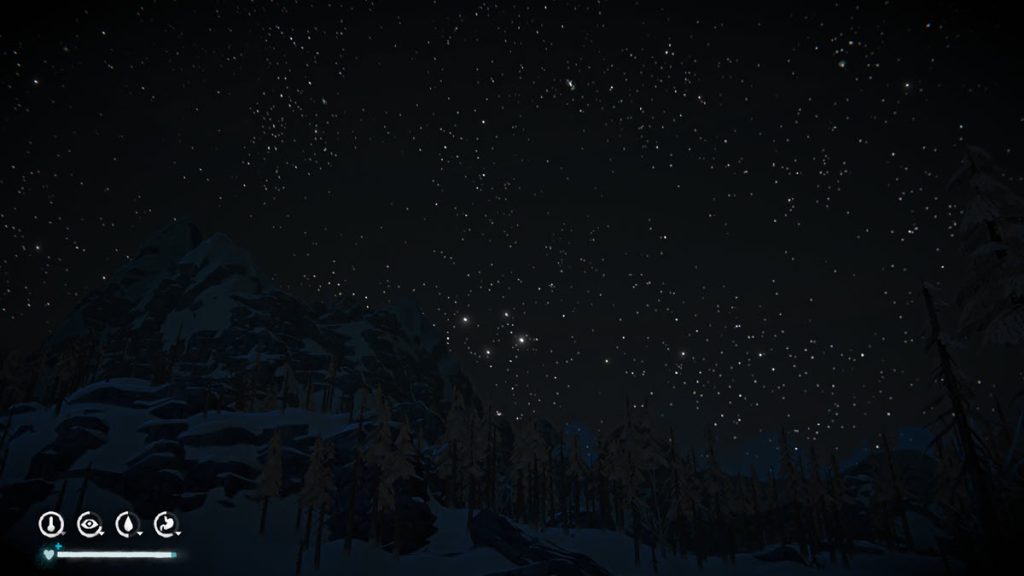
Where the game does shine is in the use of weather effects. The graphics will never give the landscapes of Crimson Desert a run for their money, that’s for certain, although the scenery in The Long Dark has a certain watercolor painting charm. But the real point is how snow affects visibility. Sunny days are very bright, which is fitting since sunlight shining over fresh snow can be more blinding than the brightest summer day. Light snow can hinder visibility a little bit. Once a snowstorm picks up, however, you can barely see a few feet in front of you. With no map and everything in every direction colored the same shade of white, it’s very easy to get lost and start walking in circles. Even worse, trying to walk with the wind in your face is excruciatingly slow. Night-time weather is similar. On a cloudless night, navigation can be quite simple. Otherwise, it’s usually much harder to do anything at night. In a world with no electricity, light itself is a precious resource, since doing anything indoors at night is usually impossible by design. For the record, all this weather stuff is great. The vagaries of the weather are serious business here and it’s up to you to manage your time, and the risks you take, around it.
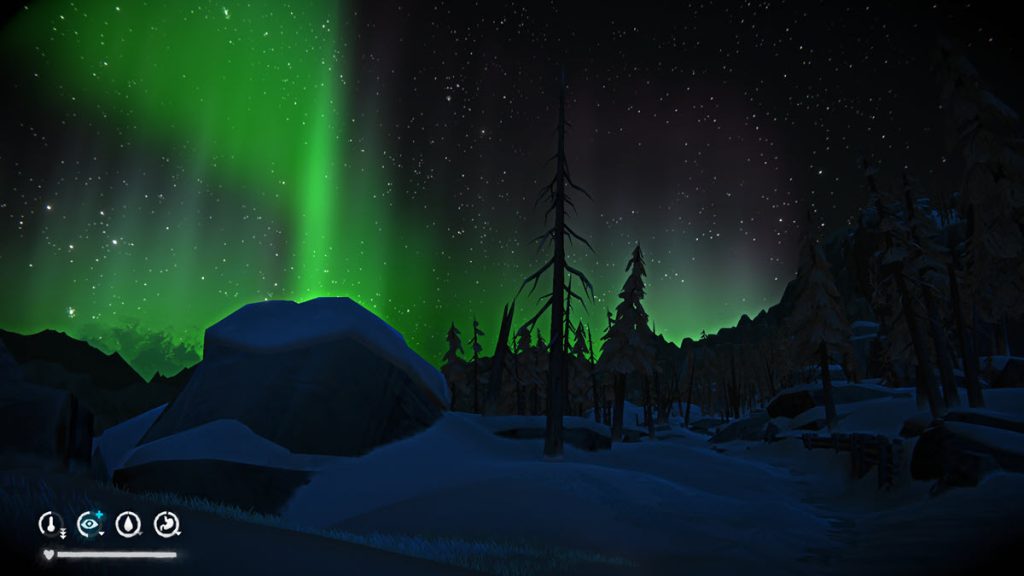
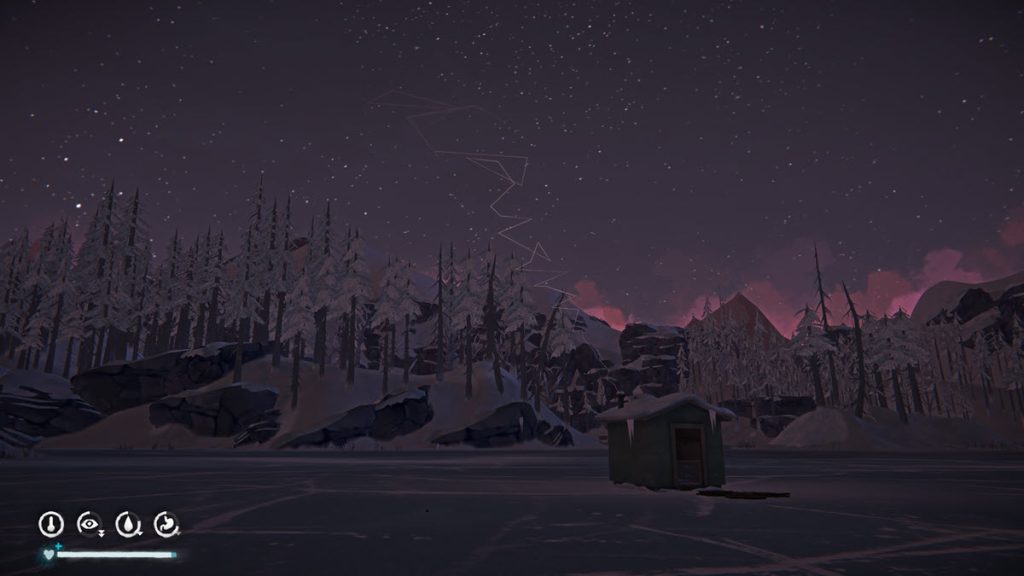
One last weather phenomenon deserves mention: auroras. The aurora borealis is one of nature’s most mesmerizing spectacles. At a time of year when everything is white, the sky suddenly writhes in electric green and red hues. In The Long Dark, auroras cause all the abandoned electronics of the world to come alive randomly. It is the only time when some electronic equipment can be used. The auroras certainly give a much-needed dose of mystery to the otherwise prosaic world of The Long Dark.
On a similar note, credit is to be given to the sound design, which is phenomenal. Wolves call out to one another. It never stops being startling. Woodpeckers drill down trees in a wooden rat-tat-tat machine gun noise (sadly, there are no woodpeckers in the game, it’s just a sound effect). What you are carrying affects the sounds you make while walking. Your metal tools clatter, water bottles slosh around. If you are wearing crampons, they scratch across the different surfaces you walk on. When you find a rare item, your character mutters “Thank you” to no one in particular. If you’re inside during a snowstorm, which you should be, the wind makes the window panes rattle, almost covering the crackling of the fire. You don’t really appreciate a roof over your head and a fire in your hearth until it’s minus 30 Celsius outside.
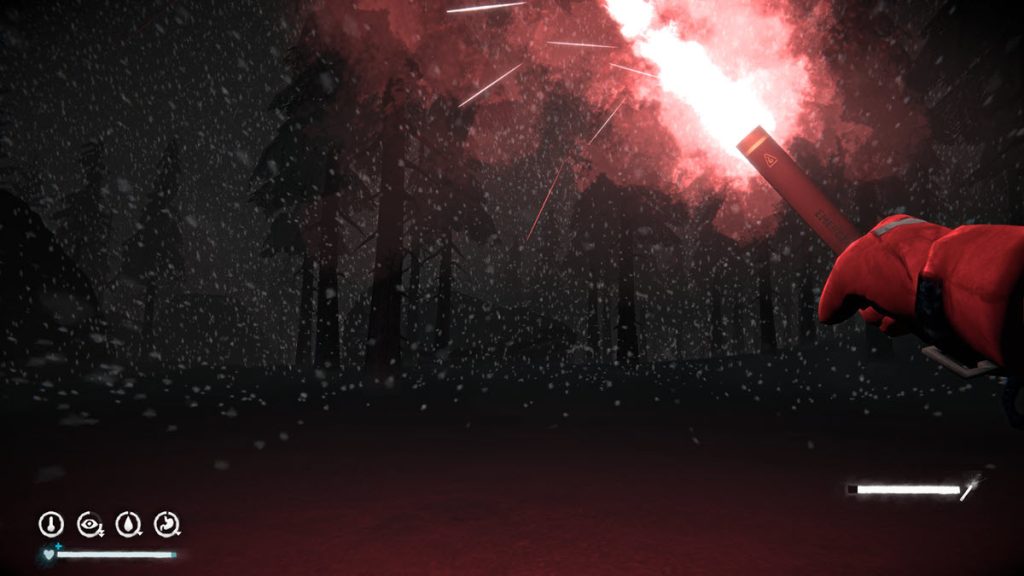
The pace in The Long Dark can be generously described as contemplative. It can be less generously described as a slog. Your walking speed is very slow. It’s always a worrying sign when a game gives you an “auto-walk” button, because it signals that the act of moving is so dull that the developers will let you automate the process a bit… but not speed it up. The Long Dark is no exception. Your time not spent plodding from place to place is spent rummaging through every drawer, cabinet, and chest. When starving, a can of soup is a bigger treasure than any magic sword. After a while, however, finding the same junk in every single cabin and house loses its charm. You then start a fire and go to sleep. Basically, 99% of the game is about slowly trudging through snow or watching a little progress bar turn. The last 1% is brief bursts of catastrophic violence. Wolves need food too, you know? Other times it’s the wolf that gets the short end of the stick. The ratio of tranquility to action is, in a sense, very fitting for a game about survival in nature.
Unsurprisingly, The Long Dark is starting to show its age from a technical perspective. Its level design is old-fashioned, to put it mildly. Any ankle-high obstacle is impassable terrain. Every zone in the game is basically a big bowl enclosed by mountains. There’s no organic, open-world traversal here. The only way to move between areas is to find the one improbable mineshaft or narrow pass that connects them. There’s a single climbing rope that leads to Timberwolf Mountain, barely visible along the endless cliff face. You could spend hours looking for it. It’s just something you have to know, I guess. Trees are indestructible, which means it is entirely possible to run out of firewood in the middle of the forest.
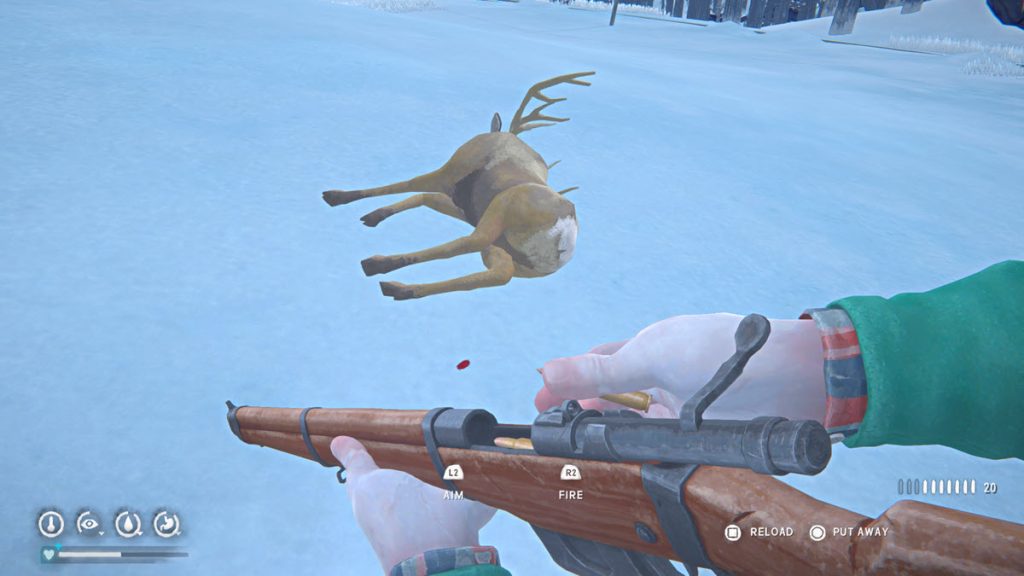
Is The Long Dark any good? I suppose there is more than one way to judge a game.
One way is by deciding how well it makes you play out one of the great conflict types of literature. Here, it’s “man versus nature” or rather man versus snow, to be more precise. By that standard, The Long Dark absolutely delivers. Do you like Jack London’s To Build a Fire? Well, you too can fall into freezing water and fumble while trying to build a fire with your last match. More partial to Tolstoy’s Master and Man? You can press on despite a snowstorm, get lost and die within a few meters of safety. I sense a pattern. Snow punishes the foolhardy and the overconfident alike. Geez, playing the game is almost like living literature, maybe even better than reading a book!
But there are other ways to judge a game. For example, you can tell a lot about a game by its achievements. It is, after all, what the developers expect their most engaged players to do.
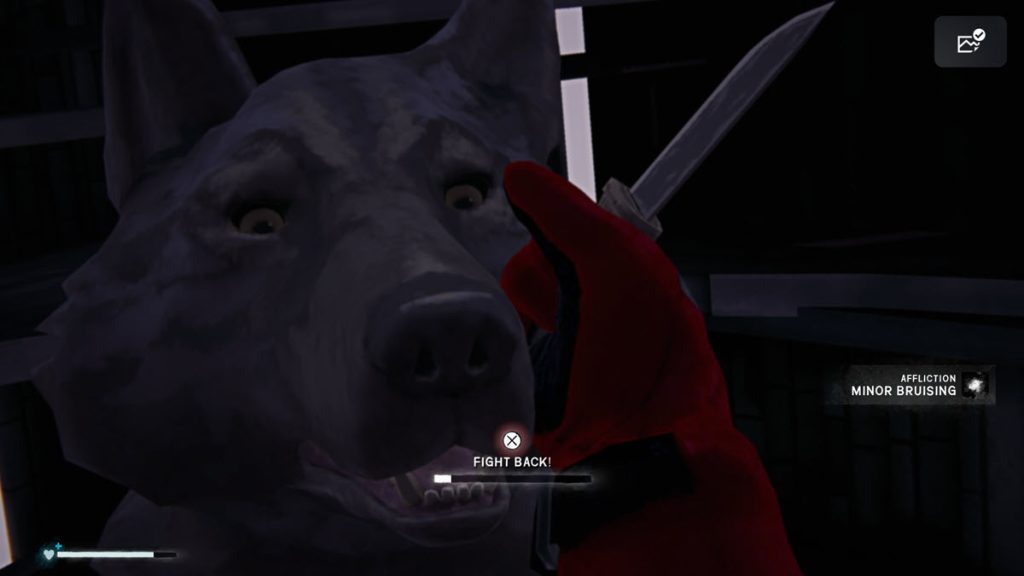
Once the immediate issue of staying alive is solved, there is no real goal in Survival mode. Ok, now what do I do? I dunno, says the game, maybe keep not dying? Here, I have a trophy for you if you keep not dying for 500 days, oh no, wait it’s 1000 days now. Keep in mind that a day in The Long Dark is roughly an hour of real time, so that’s a thousand hours. It could be a lot less if you “pass the time” constantly, but what the heck’s the point? Also, don’t forget the game is permadeath. You’d better not die and have a meltdown because you lost a 250-hour save file.
I don’t know, game, do you have anything else for me? Hmm, it replies, maybe you can manually map every single point of interest in the world? Uh, you mean visiting every single copy-pasted cabin, waterfall, and cave in the game? No thanks. Ok then, maybe you can track down all the rare unique loot, like the seven different colors of thermoses? Wow, do you have anything less interesting? As a matter of fact, I do… maybe you could track down all 165 Kickstarter backer cairns? You mean those things that have no effect other than to tell me that backer #3074 sure paid fifty bucks to break my immersion even in a completely forlorn corner of the map? Nope, not interested.
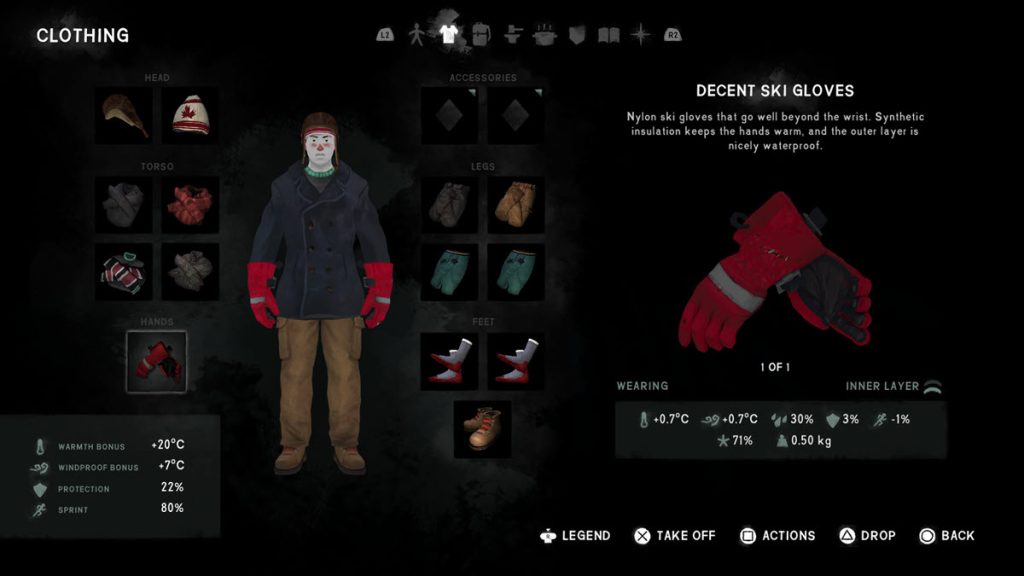
There are also challenges, basically Survival mode, but with an actual goal and victory condition. “Nomad”, the easiest challenge, sounded good to me as a primer: you need to stay in 15 locations across the world, one of which is “Barn”. Cute. As I said, there’s no real map in The Long Dark and it takes hours to get from one corner of the world to another, never mind finding a specific place. You’re not even told what general region these locations are in. You could play for fifty hours and not come across all of them. Ha, I’m thinking, I know where most of these places are, I’ll manage! However, it turns out the “Barn” I was in is not the right “Barn” and the game doesn’t make it clear. I had to check out the wiki to figure out what was going on. So much for playing a low-info survival simulator. What’s especially galling is that the issue is trivial to solve: give the general location of the areas to the player and make sure every place has a unique name. It’s really not hard to fix.
Speaking of cheevos, I’ll tell you my pro gamer strat for getting the achievement for not firing a gun for fifty days… I just never found a gun. That says a lot about the loot tables.
Clearly, The Long Dark isn’t looking so good from this angle. It is perhaps telling that there’s actually a Steam guide helpfully trying to tell you what you should want to do in the game.
It’s worth taking a step back to explain that The Long Dark is part of the club of games that are still being worked on more than ten years after their initial release. For reference, during the same time frame, No Man’s Sky’s scope increased tenfold and it has just recently introduced… (checks notes) Pokémon battles. Huh, how about that. In the same time span, the most exciting addition to The Long Dark is the ability to move furniture. Well, The Long Dark is doing a better job at meeting its deadlines than Star Citizen, so there’s that.
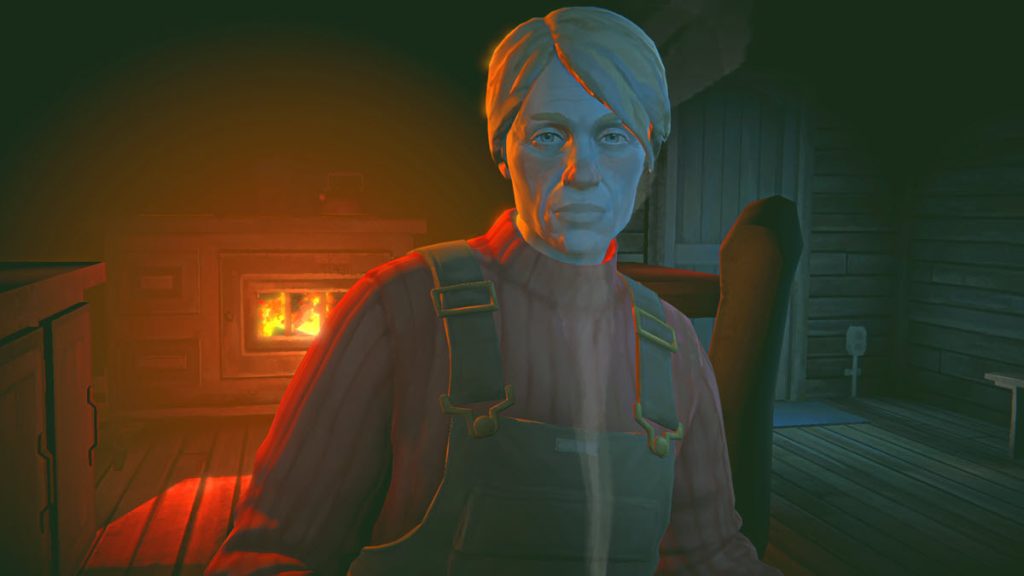
I am being a bit unfair to The Long Dark. Other things were added over the years, but see if you can detect a pattern. They’ve added scurvy to the game, a serious affliction that will destroy your health if you can’t find foods that contain vitamin C. Jacques Cartier would be so proud. However, this is only an issue in very, very long play sessions. Also, after a decade of development, there’s finally an NPC trader… but he only appears after a few weeks and only under very specific conditions. The DLC adds new areas to the world… but the game tells you nothing about them or where they are. It’s not my problem, says the game, just go look up a wiki or something, noob. The DLC does add “Tales”… those are basically quests, like… actual goals. The rewards are meager and the tasks are tedious, but it’s something!
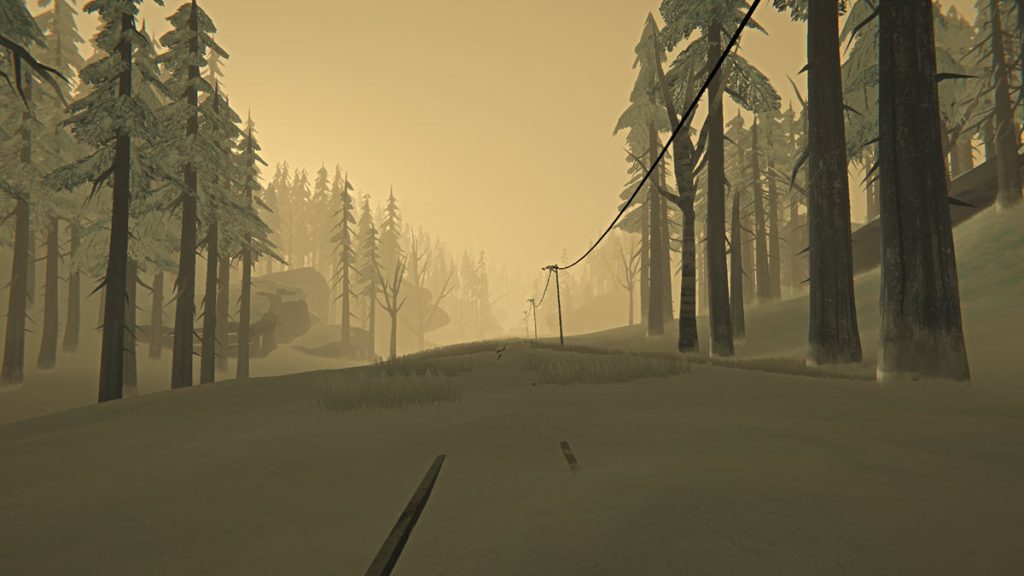
Finally, the hardest mode in the game used to kill most players within minutes. It was so painful that the developers considered surviving a single day as an achievement-worthy feat. Obviously, something even worse was required: Misery mode! It combines the worst of every setting, plus new permanent debilitating debuffs.
Visibly, most of the new content was made with long play sessions in mind, we’re talking a few dozen hours or more. The Long Dark often feels like a game made just for the true believers.
What good game with permadeath would be complete without some form of metaprogression? The Long Dark, however, has one of the most awful schemes I’ve ever seen. The few bonuses offered aren’t even that good, but it’s the requirements that are the cherry on top. Playing dozens of hours is not enough to get halfway to unlock a single metaprogression perk. What’s weird is that the developers of the game often speak about their no-crunch development process and the importance of kindness. This doesn’t seem to apply to the player, however. Buddy, if you want that “-10% calories burned” perk, you gotta work on surviving those 500 days in total. Need I remind you that an in-game day is around thirty minutes to an hour? Do the math.
One last thing I’d like to mention is the shotgun, or rather the lack of it. Considering how long the game has been in development, item variety seems sorely lacking. In particular, why is there no shotgun? I’m not asking for an anti-materiel rifle here, just any old shotgun you could find in every homestead in a rural area. Well, episode 5 adds a shotgun to the game. Hallelujah! Except… it only shoots slugs, which pretty much defeats the purpose. How am I going to shoot (DLC-only) grouse with that? Anyway, even if I wanted to, I can’t, because the shotgun wasn’t added to Survival mode. Presumably, there’s a patch incoming that will add the content of the last episode to Survival mode, but the developers ask you to “wait and see” and “please don’t hassle us about this”, whatever that means.
In the end, there’s a lot to like in The Long Dark: its sense of style, its unique setting, and its uncompromising nature. More than that, it’s a survival sim with no zombies in it or any sci-fi doodad that makes anything possible. In other words, The Long Dark is an actual survival simulator. I can forgive The Long Dark for its glacial pace and its equally frigid development schedule (puns intended, sorry). What isn’t cutting it is just how much time it asks the player and how little it has to give in return. The Long Dark is hungrier for your time than any timberwolf is for your face. Just to be clear, the wolves are very hungry. Let’s not mince words here: The Long Dark is a watch-paint-drying simulator, a cardboard-chewing game.
A very smart person has coined the term “slave engagement farm” to describe a game that tries to suck you in for hundreds of hours with bright lights, big numbers, and a drip-feed of new toys. The Long Dark seems to be trying to pull off some kind of reverse psychology. It also wants hundreds of hours from you, but all it has to offer you is a banged up can of dog food and some twigs, because it’s a “serious” game. No thanks. I’ve had enough.
The sequel to The Long Dark was announced and it promises to increase the scope of the game in interesting ways: co-op, horses, urban settings! However, I’m a bit doubtful considering all the missed deadlines of the original. We’ll see. Shall we do this again in, say, another ten years?
The Long Dark
Rating:
PC
A serious survival sim that’s not for you unless you’ve already played it for 200 hours
