Ed Del Castillo from Liquid Entertainment joins us to talk about whether Metacritic is horrible. Should three stars for Liquid’s newest game, the charming Paper Galaxy, translate to a 60% on Metacritic? What does that do to Liquid’s future business? And should videogame ratings be more in line with movie ratings? Is the system broken, and if so, which parts are broken? Also this week: the future of violent games in public places, the future of unconsoles, and the future of Skylanders, plus a little Campus Life, a little Devil May Cry, and a little iOS discovery called Dungeon Defiler.
From an epic-length state of the Guild Wars 2 address from game director Colin Johnson, commenting on plans for the upcoming months:
…we’ll make improvements to culling. We recently ran small tests on Live to help us move towards eliminating as much culling from [World vs World multiplayer] as possible. The results have been promising, and we have a number of additional culling features in development. If all goes well, our hope is 2013 is the year culling ceases to exist, or is as minimal as possible in the WvW experience.
Culling is Guild Wars’ technical trick to make it such an attractive world. The idea is that when you have a whole mess of characters on screen, the game makes a judgment call about which characters to not show you (i.e. cull) so that you can maintain an acceptable framerate. In theory, this seems like a great idea. But in practice, this often means characters right in front of you are invisible, doing things most games don’t let invisible characters do. Such as attacking you. The problem is particularly pronounced when it’s most important to see everyone, namely during crowded battles when you should be carefully picking out targets. That’s hard to do when you can’t see the target.
Johnson’s post also notes Guild Wars 2 has sold three million copies. Three million! If you were to lay those copies out end to end, you would be at a complete and utter loss when it came to the copies that were downloaded. It was so much simpler to lay things end to end before digital distribution.
(Screenshot from this post at Guild Wars 2 Junkies.)
You don’t need diamonds in Campus Life, a sorority-themed free-to-play iOS treadmill unencumbered by gameplay. Well, you need them, but you don’t need them. Sure, you can just watch them trickle in one at a time until you’ve got maybe seven or eight. The things worth buying cost 59 diamonds, and 112 diamonds, and 32 diamonds, and 66 diamonds, all prices that work their way under your nose whether you like it or not because Campus Life is built entirely and only to sell diamonds, like De Beers, but on iTunes instead of Africa. In another week, you’ll have 12 diamonds. You’re well on your way to affording something this November.
So when Campus Life asks me if I want to challenge my friends in exchange for a single diamond, I’m all, like, you bet I want to challenge my friends! That’s why I’m here, playing this godawful unashamed mercenary excuse for a game. I want my friends to suffer like I did when I got a Campus Life spam challenging me to advance my sorority house to level eight. I’m making a mental note of who on my friends list to grief as I press the challenge button. It’s going to be glorious.
It’s only when nothing happens after pressing the challenge button that I realize with horror I’ve just sent a Campus Life challenge to all 195 people on my Gamecenter list. I never got the option to single out the people I wanted to punk. Instead, I have been punked by Campus Life. All for a single lousy diamond.
You can only mutter “well, it’s no Bayonetta” to yourself so many times before you have to grudgingly admit that the new Devil May Cry from Ninja Theory, out this week, may not be so bad after all. Then you realize there are still 17 chapters to go.
Also out this week is new DLC for Boderlands 2 and Crusader Kings II. One game gets an add-on called The Republic. The other game gets an add-on called Sir Hammerlock’s Big Game Hunt. For ten points, guess which title goes with which game’s DLC!
Gangster Squad is exactly the kind of film noir homage you’d expect to see in theaters in January. If you want to avoid spoilers, jump to this week’s 3×3 at the 39-minute mark. We discuss hats in movies.
Earth Defense Force 2017, portable or otherwise, doesn’t look very good most of the time. It doesn’t even sound very good (“Hey, Joe, stop coding for a sec and read this dialogue into the mic.”). It’s simple and dopey to a fault. Except when I’m comparing the stats of the shotgun I just unlocked to the six other shotguns I’m never going to use. Then it’s an exercise in grind-based loot collecting every bit as pointlessly compelling as Borderlands 2, where I also compare the stats of guns I’m never going to use in an eternal quest for the odd rare gun I might use. It’s based on playing levels you’ve already played at harder difficulty levels to find guns that will make it easier to play levels you’ve already played at even harder difficulty levels. If you don’t want to replay levels, many of which are indistinguishable from each other anyway, you’re in the wrong shooter. Sometimes all you get are a few more points of health. You went from 512 hit points to 517 hit points.
I could build a strong case in a court of law that Earth Defense Force 2017 is made from the stuff of bad games. There’s not a judge alive who would rule against me. “Sustained!” he’d announce, slamming his gavel down. “The one-star review stands!”
After the jump, then why is it one of the two best shooters on the Vita?Continue reading →
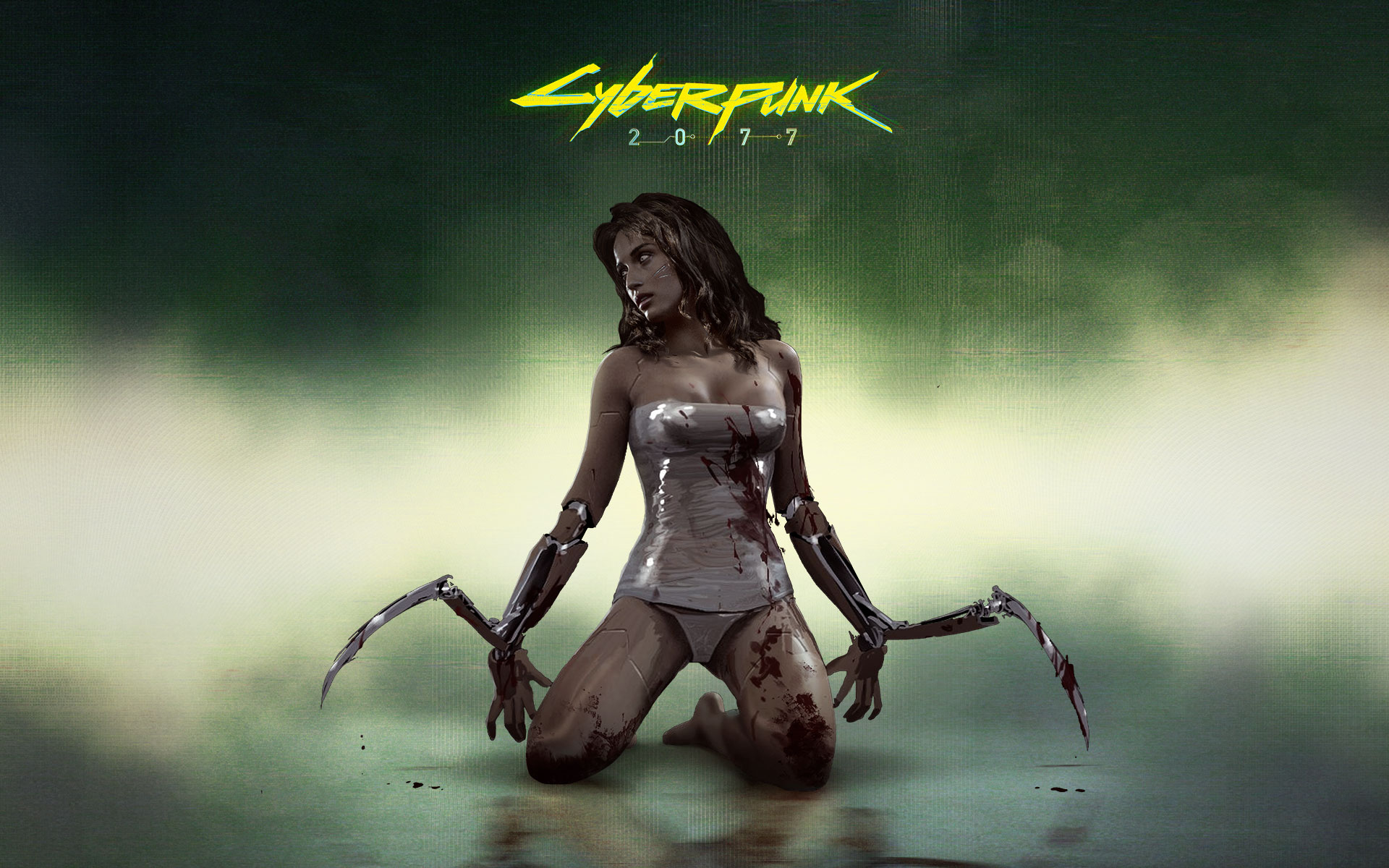
The new teaser for Cyberpunk 2077, a sci-fi game from the folks who made The Witcher, expands on the weirdly disturbing picture of a hot chick partly dismantled to reveal some wicked looking cyber impants. Wolverine’s got nothing on this woman. And now we see that’s she’s apparently done a very bad thing and is more than a match for the cops.
It’s a lovely bit of cinematic. If you read a little deeper and get the point of the ending, it gives a nice bit of narrative foundation for the game. But it also has just enough Blade Runner and Judge Dredd to show that the developers know their roots. And the Radioheady song Bullets by a group called Archive is a perfect fit for the (in)action.
Cyberpunk 2077 is due out “when it’s ready”. Really? You guys are going to cap off a fine piece of creativity with that canard?
A long time ago, strategy articles about boardgames went through an extensive process to get to you. First, they had to be typed. Diagrams had to be mocked up. They then had to be mailed to an editor, who put them in a magazine, which had to be printed and mailed. Eventually, they appeared in your mailbox.
Those days are gone, and I’m a little sad about it. Now, people apparently watch gameplay videos. That’s okay, I guess. There is a set of gameplay videos up for Battle of the Bulge which I haven’t watched yet. Videos are great for watching, but less great for savoring. You can bet that’s what I did with every morsel of strategy advice I ever read for Afrika Korps. Maybe games are more disposable now, or maybe they always were and I just didn’t know it. But there is something to examining a game methodically, and turning it over and over until you have a better appreciation of what it offers. Even if it doesn’t come in a cool magazine.
I’m pretty sure I know what “follow the cosmic butterfly” means. It involves a certain kind of mushrooms.
Veiled drug references aside, Paper Galaxy is a perfectly kid-safe iOS game. But it’s also as adult-safe as any well-made bit of casual frippery. You fire a little moon between planets by timing the moment it sneezes to leave orbit. The objective is to get as high as you can (get it?) before the evil crab nebula rises from below and swallows your moon. The cosmic butterfly thing is a suggested route for you to take. If you can hit the planets in that order, you’ll go faster, which gets you farther but makes it harder to nail the timing when you leave orbit. It’s a nifty self-correcting and moderately skill-based variation on just bouncing ever upward.
There are plenty of these “bounce ever upward” games where you try to reach a new height before . I suppose it’s a vertical variation on the endless runner. But what I like about Paper Galaxy is how it litters the screen with planets that have character. I don’t just mean they’re cute; some of them are functionally different. Comet, suns, gas giants, money planets, speed planets, and so forth. The progression system, which is based on the usual collectible coins and goals (and micropayment, if you’re so inclined), is that you’re not just leveling up your little moon. You’re also improving the galaxy by unlocking new types of helpful planets, improving how often they’ll occur, and even improving their functionality.
It’s worth noting Paper Galaxy was made by Liquid Entertainment, a studio with credits as diverse as the sadly underapprecaited RTS Dragonshard, a Desperate Wives tie-in, and a pretty good Greek God of War style RPG called Rise of the Argonauts. It’s always nice to see a familiar name on the splash screen in front of a cute diversion like this.
Hasbro is finally making changes to Monopoly, which has been scientifically proven to be the worst game ever invented (sorry, Tic Tac Toe and Daikatana). Hasbro will let people on Facebook vote one of the pieces out of the box! That’s like letting Youtube commenters decide the winner of American Idol.
You can go here to see how the various pieces are faring. Naturally, the Scottie dog is sitting pretty. Also the battleship and racecar. I would have thought the iron more likely to go than the wheelbarrow, but as anyone holding Facebook stock can attest, who can predict what’s going to happen with Facebook these days?
I know what you’re thinking: when this is all over and there are only seven pieces left, what if I want to play an eight-player Monopoly game? Hasbro anticipated that. You can also vote on a replacement piece, choosing among a cat, a helicopter, a cell phone, a diamond ring, a robot, a guitar, and a Yoda. I only made up one of those. Okay, two.
Owen Faraday from Pocket Tactics joins us to talk about the best iOS games of 2012, as well as news from CES. We also consider how XCOM is newly ripe for another playthrough, what the heck Zero Escape is, whether Sleeping Dogs will stand the test of time, and how Bridge Constructor Playground might be the most fun on the iOS since your Campus Life sorority dinged level 10.
So I finally earned enough money in Assassin’s Creed Liberation to buy the pocket pistol for Aveline to carry when she’s wearing her lady’s outfit. Now she can use it to defend herself from the thugs who accost her in the rougher parts of New Orleans. I earned the money by running an East Indiaman cargo ship full of ice from England to the New World, and then returning with Haitian spices.
And where does Aveline carry her new pocket pistol? See if you can spot it in the screenshot up there.
Sweetie, no, everyone can see that. For a lady who has a blowgun hidden inside her parasol, that’s awfully indiscreet. You should sew yourself a nice holster or something.
“Worker placement game” sounds so dull. “Worker” is, at best, a generic word. It’s also from a word that means the opposite of fun. It’s a word about Mondays. “Placement” isn’t doing the phrase any favors. Placement is one of the least active things you can do, hardly a notch above loitering. It’s what you do when you set the table before a dinner. Placement. “Worker placement” is basically job assigning. Depositing labor. Task designation. Clerk putting. Office management, really. Even “human resources” sounds better, because if you screw up your perception just so, you can imagine it’s about using people to make soylent green. “Worker placement” is as prosaic a phrase as “peon management”, and like peon management, you’d never know it can be the cornerstone of often awesome gameplay.
So I suggest we call games like Stone Age — now ported to the iOS — not “worker placement” games, but “I steal from you the thing I know you wanted to do and now you have to react or pretend you didn’t want to do it” games. Or — you know you’re thinking it — “cockblock” games.
In The Strangers, freaky people in masks just show up and stab the protagonists. That’s pretty much all there is to it. I’ve never understood why some people find that movie even remotely entertaining, much less scary. Any good home invasion movie should have that early stage where the home invaders aren’t outed yet. For instance, in Funny Games, two dudes just want to borrow some eggs. In Straw Dogs, the local contractors are just a bit lazy. In Wait Until Dark, Richard Crenna is just a family friend. If you’re going to show up in creepy masks and just start stabbing people, I might as well watch Halloween.
In Their Skin, from first-time director Jeremy Regimbal and written by lead actor Joshua Close, is at its best during these early stages. It plays like a black comedy about the anxiety of meeting new people, about adjusting to unfamiliar social beats, about talking to people who seem like not-people wearing people disguises to study actual people. It’s the horror movie equivalent of a sitcom like Third Rock from the Sun, where the supposedly normal family is slightly askew in its attempt to seem normal.
James D’Arcy, whose interrogator was the least freaky non-Asian Asian in Cloud Atlas, is this movie’s greatest asset for his off-kilter eager friendliness and his fascinating Cumberbatch-esque face. But you also have to credit Rachel Miner — I didn’t recognize her, but she apparently had a stretch on Supernatural — for what she does with the usual supporting wife role. That’s the sort of look in your eye that only a good actress can fake. Her attempt at grief is one of the movie’s most startling moments.
Unfortunately, In Their Skin makes the mistake of ultimately being about the wrong group of characters. But until that happens, it’s a canny home invasion movie that takes the concept of class envy to a new level.
You might not know Spanish director Jaume Balaguero’s name, but surely you know his movie [Rec], a found-footage zombie movie. If “found-footage zombie movie” was a genre, [Rec] would easily be the best. But since it’s not really a genre, [Rec] is instead just a fantastic zombie movie.
[Rec] was co-directed by Balaguero and Paco Plaza. Plaza went on to do the ridiculous and not very effective [Rec] 3. Balaguero, on the other hand, has revisited the location and intimacy of [Rec] with a movie called Sleep Tight, set in an apartment building in Spain where something is going horribly wrong. The genius of Sleep Tight is how it unfolds the something going wrong, and how it puts the audience on the side of the monster instead of the victim. If this works, it is almost entirely because of an actor named Luis Tosar who plays the apartment building’s blandly brooding concierge. Sleep Tight isn’t so much a movie as a fascinating Tosar performance. Also, he has the most amazing eyebrows I’ve ever seen. You could make one heck of a fur coat out of those things.
Although Sleep Tight has some tautly directed sequences and even a few gratifying shocks, it feels inconsequential by the time it’s over. You can slot it neatly next to pretty much any movie about a psycho who does terrible things. Might I instead recommend the more memorable Montreal apartment building in Jacob Tierney’s Good Neighbors? Or just Polanski’s classic 1976 movie, The Tenant?
Sleep Tight is available now on DVD and VOD (support Qt3 by watching it here).