During one of the storyline missions in Guild Wars 2 — these will vary based on your answers to multiple choice questions when you make your character — I had to investigate some strange goings on in the sewers of Lion’s Arch, the game’s main city. The mission takes place in an instance of the sewers scripted to involve some things I’ll leave you to discover on your own. But as soon as you walk in, you see a steady stream of rats coming out of the sewers. The idea is that there’s something up ahead that they want no part of.
So I did the mission and then ended up back at the entrance, watching the rats stream out. I’m not proud of what happened next.
During this year’s Penny Arcade Expo talk on X-Com: Enemy Unknown, lead designer Jake Solomon was talking about various ideas Firaxis batted around for the game’s strategic level. He mentioned a strategic level that would play like a card game. He said this in the sheepish tone of someone admitting he wore bright red clown shoes to a funeral. Personally, I wouldn’t have minded a strategic level card game in X-Com. Cards make everything better.
Although I’m not getting a card game layer in X-Com, I did see four innovative card game gimmicks.
The nifty but terminally fidgety 10000000 just got an update. This match-3 plus free-runner plus RPG plus high score chase for the iPhone had an issue of the tiles not clicking into place very effectively, which is a horrible thing to happen in a game you play against a relentless clock. But I’m happy to discover that the latest update fixes that admirably. I’ve been able to play with nary a hitch lining up the tiles I want, unlocking doors, zapping ninjas, swording skeletons, and gathering wood without having to fight the interface.
Finding those tiles is another matter entirely, but that’s a me problem and not a 10000000 problem.
Here’s how the internet works. Someone writes an article. A popular aggregate then plucks an incendiary quote from the article. At which point guys like me blog about the incendiary quote in lieu of reading or actually discussing the article.
But in this case, I’m not even going to get that far. In this case, I’m done with the whole affair after seeing a single word. It all started when Polygon sat down with the developers of Spec Ops: The Line for a long talk about all sorts of things. Then VG247 latched onto the term “cancerous growth”, which lead designer Cory Davis used to describe Spec Ops’ multiplayer, developed by a separate studio. He was frustrated with what he felt was a waste of resources for a game he designed primarily as a single-player experience.
But Davis wasn’t content with “cancerous growth”. He further noted, “The multiplayer game’s tone is entirely different, the game mechanics were raped to make it happen, and it was a waste of money.”
No, Mr. Davis, the game mechanics weren’t raped. Compromised, botched, bungled, fumbled, or even fucked up. But they were not raped. That word means something else. Now go sit in the corner with Missouri’s Republican Representative until you learn to talk like an adult.
This fall, Capcom will publish the first three Phoenix Wrights on the iPad as a single game. Well, it’s technically a single game. You download it to play the first two chapters for free and then you have to buy each full game separately. You also get this bonus feature:
Phoenix Wright: Ace Attorney Trilogy HD will also come with the “Everyone Object” mode (at no additional cost) to help players communicate their displeasure of everyday situations with the help of popular Ace Attorney characters and sayings. With a simple touch of a button, the phrases, “Objection!”, “Hold it!”, and “Take that!” can be emailed to friends or tweeted along with an animated image.
You know it’s a Capcom release when they have to explain they’re not going to charge extra for something.
As an online game that you jump into to play simultaneously with a bunch of other people, the launch of Guild Wars 2 was remarkably successful. But as a game with the name “guild” in the title, the launch of Guild Wars 2 was an unmitigated disaster. I guess you could say they got it half right.
After the jump, belonging to clubs that wouldn’t have you as a memberContinue reading →
It wouldn’t be a launch without a catastrophic failure and a lack of communication from the developers. But for most of Guild Wars 2’s first evening, ArenaNet decided to play it a little differently. The game launched exactly at the announced time, it was easy to get onto servers that weren’t listed as full, and the game ran smoothly for the most part. Other than being dropped a few times, which just meant quickly logging back on to find my character patiently waiting in the same place, the Guild Wars 2’s launch was a thing of beauty for how utterly unremarkable it was. It was the sort of launch that didn’t even seem like a launch. And you almost never see a launch like that.
For about seven hours, anyway.
At about 4am Saturday morning, the game basically shut down. The only error message implied that it was my router’s fault that I couldn’t get online. For a couple of hours, the only server status message from ArenaNet was that they were experiencing heavy volume and they are “monitoring the situation”. Now I can’t even get to the launcher.
But boy was it nice while it lasted. At a certain point, there was just too much to do, too many things to see, too many things to progress, too many places to go. I had to get away. So I ducked into the world vs. world to wander around and see what I could do as a solo player. Not much, of course. But I ran across someone else who had the same idea. We dove into the ocean to enlist the help of some little fish people. They’re like a cross between a seal and an otter and a Gungan. If you grind a bit for them, driving evil sea snakes out of their temple and gathering pearls, they’ll waddle out of the water. On land, they can summon a storm that heals your faction and randomly throws lightning bolts at enemy factions. Unfortunately, Guild Wars 2 shut down before I could see them in action. They better still be there when I get back.
If you’re interested in level design, theme parks and casinos are great teachers.
Brendon Chung’s commentary mode in Thirty Flights of Loving includes comments like the above quote, a slower look at some of the game’s dizzying edits, and even deleted scenes, such as an earlier incarnation of Anita’s sharpshooter skill that didn’t fit the character. That picture up there tells you all you need to know about Anita, except for the part about her being a confectioner. Don’t worry, it all makes as much sense as it needs to.
Thirty Flights of Loving is Chung’s sequel to Gravity Bone. These aren’t games, and they’re not even stories. They’re snatches of interactive imagery stitched together in the Quake engine, more a series of feelings and images than anything else, cinematic poems about adventure, love, and betrayal. Thirty Flights of Loving is currently available on Steam and it includes Gravity Bone.
The original Darksiders started slowly. What’s more, it took its time unfurling bits of gameplay. You’d be near the end of the game and it would basically say, “Wait, hold on a sec, I’ve still got this nifty gimmick to show you! It’s right out of Portal, but I saved it up until now. Here!” That these gimmicks were borrowed wasn’t the slightest bit troubling. I’ll take a game that knows how to borrow over a game that thinks innovation is inherently better any day. Darksiders II also takes its time getting good, although the borrowing doesn’t seem so obvious this time. In fact, Darksiders II feels a lot more like its own creature.
However, unless you veer a little from the main storyline, Darksiders II may take longer than intended to get good. I was plowing through it, just hitting the waypoints for the main storyline, ignoring the side quests — that blacksmith can get his own dang hammer and who cares about all these collectibles? — and making pretty good time. I was mostly unimpressed, but content enough. But then I got sort of stuck and decided to explore. At which point I realized all those glowing blue stones I’d been seeing were for something I’d skipped because I didn’t talk to someone by the side of the road. And those tokens I could spend with Vulgrim are actually useful. And when you go out of your way to figure out how to reach that chest, you have a lot more treasure to feed your possessed weapons, which are suddenly a lot more useful. And it’s a pretty trivial matter to get enough money to learn all the combat moves. Darksiders II gets really good once you stop playing to finish it.
However, even if you do just follow the main storyline, even if you are just making a beeline to the end, Darksiders II gets good once you come to the Eternal Throne. If you’re not sold at this point, which is fairly early in the second world, you’re probably never going to be a Darksiders II fan. The basic concept of the Eternal Throne — which I’ll let you discover — has been done in a few different games, but this bit of Darksiders II is an epic fantasy set piece at its best. Leave it to the developers at Vigil Games to take their time wowing me.
Among the changes coming to Diablo III are completely revamped legendary items. Senior designer Andrew Chambers notes:
In many ways the Legendary items that we released with the game were just Rares with flavor text. You called us on it, and we’ve listened.
The updated legendary items will have new visuals and — more importantly — new custom effects. This will be part of the 1.0.4 update due by the end of August.
In case you’re considering going to hunt down a few legendaries now (i.e. scour the auction house for a good deal before these items get better), hold on a sec.
…these changes will only affect Legendary items that drop after the release of patch 1.0.4. This includes items that haven’t been identified yet (as items are rolled when they drop).
Most of the shootering I do on the PC these days is with friends on a LAN. Since we have a wide range of skill levels, our games of choice tend to be cooperative fare, like Payday: the Heist (the recent Wolfpack DLC is really good), The Darkness II, or Modern Warfare 2. As sleek, accessible, and energetic as Team Fortress 2 is, it never really fit the bill as a game for a small group of guys, some of whom are more FPS challenged than others.
All that changes tomorrow with Team Fortress’ co-op Mann vs. Machine mode. It looks like it’s time to finally reinstall.
I’ve been playing a lot of iPad games recently that involve getting better scores. That means I spend a fair bit of time poking around the leaderboards, mainly to see how many of my friends’ scores I’ve beaten. But it’s also nice to see where I am on the global leaderboards. Am I in the top 50%? The top 30%? Dare I dream to one day reach the top 10%?
Except that something’s rotten in the state of Apple’s Gamecenter. Or could that guy whose name I keep seeing be that good?
I’ve only played Road to Enlightenment, the debut boardgame from Conquistador Games, once. So this isn’t so much a review as it’s the breathless enthusing of a kid who wants to get back in line to ride the rollercoaster again.
Small World is an ingenious bit of design work for how it takes very simple rules and then breaks them in very simple ways. Every time you play, you create random pairings of races and traits, each of which alters the basic rules. You pick a faction from this lottery of randomly paired elements, and you play that faction until they’ve expanded as far as they can get. Then you pack it in for a new faction, leaving the old faction to linger for a while, earning you a few victory points until the remnants are picked off by younger thriving Johnnies-come-lately. It’s like world history. Greece, then Rome, then England, then America. But here it’s halflings, then giants, then sorcerers, then kobolds. I didn’t mean to equate America with kobolds. It just came out that way.
The beauty of Small World is how these combinations can surprise you. In a recent game against my iPad — games against humans are more gratifying, but not always an option at 11pm when you just want a quick fix — I happened across the priestesses, a modest race that gets to stack all its units into one region when it goes into decline. This is the priestesses’ ivory tower. The ivory tower is a convenient single target for marauding races who want to knock them out of the game completely, but until then it earns a hearty stack of victory points every turn. So you usually put the tower in the mountains, to help defend it. I mean, where else would you find any self-respecting ivory tower? In farmlands? On a plain?
In my game, the priestesses were paired with a trait called sea-faring. This means they’re the only faction who can occupy oceans. So as soon as they spread as far as they can go, as soon as I opt to pack it in to play a new race, it occurs to me that an ivory tower in the ocean can never be attacked. There is only ever one sea-faring race in a game, and since there’s no other way to attack or occupy an ocean territory, my ivory tower is basically impregnable. Overpowered? Perhaps. But the thing about balancing a game like this is that the other player could have just as easily gotten the sea-faring priestesses.
So my priestesses camped the ocean, recalling their glory days, raking in an extra six victory points per turn. My iPad’s rampaging wizards, then goblins, then amazons couldn’t do a thing about it. That was one of the few games I actually won.
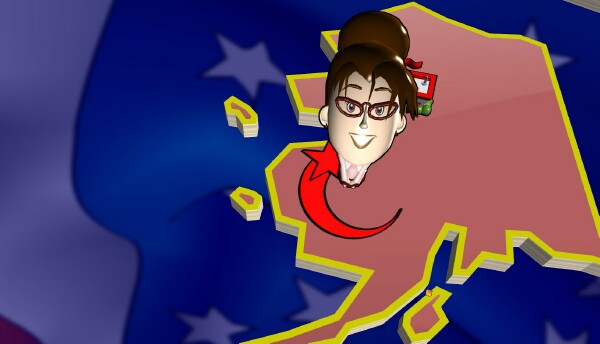
Political Machine 2012, the latest iteration of Stardock’s Presidential-campaign-as-strategy-game series, assigns numbers from one to ten for each of its candidates stats. I suppose I can live with the game giving Sarah Palin a five for intelligence. At least it’s higher than Michelle Bachman’s intelligence, which is four. That’s nothing if not charitable. I can maybe even live with giving Palin a four in fund-raising. But measly nines for charisma and appearance? That’s just hateful.