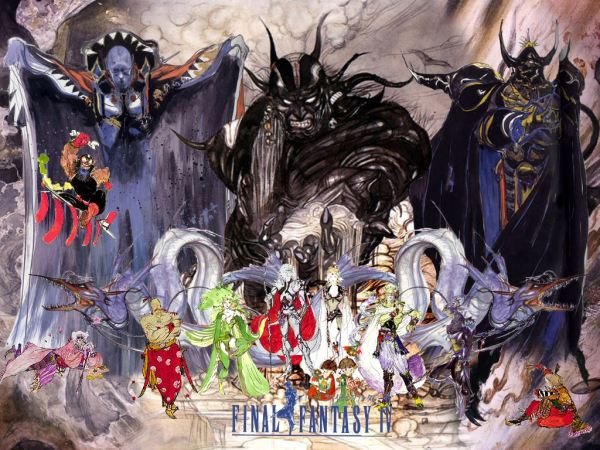
Since the very beginning one of my favorite aspects of the Final Fantasy games has been their distinctive, lavish visual design. Even in the 8 and 16-bit era the character art, enemy designs and lush environments have been a strength of the series.
Much of the art was created by the Japanese artist Yoshitaka Amano. Amano began working for Squaresoft in 1987 and was responsible for the character designs in every Final Fantasy game through Final Fantasy VI. Because of the technological limitations of the NES and SNES, the games weren’t always the best showcase of his distinctive style. Luckily there was one place you could see his illustrations in all their glory.
After the jump, they’re art books, I swear! Continue reading →

I have a mental disorder known as Obsessive Compulsive Disorder. Before I was diagnosed, I thought of OCD as the disease that makes you wash your hands constantly, but there’s so much more! Other than the “wake up in the middle of the night and check your door locks” kind of crazy, I also have a few others, though it’s not necessary to recite them here.
You may wonder what this has to do with Gears of War 3. I’m getting to it. Back off, man!
After the jump, I ch-ch-ch-choose you, Thrashball Cole! Continue reading →

Many games are built around short self-contained conflicts. But then what? You win, you lose, so what? Why does it matter? Are you just playing to pass time? The answer, of course, is yes, but videogames are all about denial of that fact.
So videogames add context, ranging from high score screens to exhaustive grinds. For instance, real time strategy games put their battles into a campaign. Some of them fold in RPG-style leveling up. Starcraft II’s battle.net uses a hearty ranking system and unlockable badges. The Total War games drop battles into a larger turn-based strategy game. In League of Legends, you earn points you can spend on microtransactions.
Fighting games are mostly terrible at situating their battles into a larger context. Mortal Kombat tries, but it mostly comes down to buying koncept art in the Krypt. BlazBlue has a legion mode where you manage an army on a grid, but you have to be able to play the game in the first place. That’s not likely to happen this lifetime for us mere mortals. Soulcalibur IV has RPG character building and Super Smash Bros. Brawl lets you collect stickers to power up in the story mode. But one fighting game schools them all.
After the jump, Dissidia 2 gives you reasons to fight Continue reading →
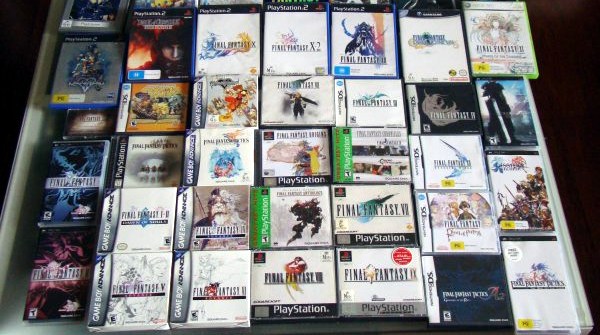
As a child I was extremely fastidious about large purchases, or even when deliberating over what large gifts to ask for before Christmas and my birthday. I never liked surprises on such occasions and for my sanity, and their own, my parents made sure I understood the gifting parameters and I made sure I knew what I wanted. When it came time to upgrade from my NES to a 16-bit system, this dynamic led to an extraordinary level of research on my part.
In the year leading up to my eleventh birthday I did my due diligence reading every game magazine I could get my hands on. I went so far as to repeatedly check out an issues of the Consumer Reports published magazine Zillions, targeted at children, from my school library. The issue in question featured an in depth analysis which compared the relative benefits of the Super Nintendo, Sega Genesis, and NEC’s TurboGrafx-16. I also, in turn, rented each 16-bit console and a few different games for a weekend test drive. When I rented a Super Nintendo for the first time I also brought home Final Fantasy II, properly known as Final Fantasy IV.
After the jump, Square sells hardware. Continue reading →

My first command, this expedition, has gone downhill rapidly. The enemy leader is fighting against my grasp, so I tighten my stranglehold and she quiets down for the time being. I can’t tell if it’s the loaded snub so close to her head or the idea of what will happen to her if we get an evac, but her muscles are coiled and trembling. I’m backing up against the wall, watching the corner. Anya and Marcus are watching the one entrance while Baird and Dom grab some grenades from the bunker. I can hear them, grunting in that language of theirs, preparing to come in here, kill my men. All I pray is for my men to die quick, honorably. It won’t be so easy for me.
After the jump, here they come. Continue reading →

I’m a sucker. I know this and Square-Enix knows this. I’m not alone, either. Like a lot of gamers my age the early Final Fantasy games hold a special place in my heart and that warm glow of nostalgia is enough to ensure that I will never stop re-buying those games. To date I have bought most of the 8 & 16 bit Final Fantasy games three or four times. I put up with absurd load times in the PlayStation compilations. I bought a Gameboy Advance SP as a dedicated Final Fantasy jukebox when Square began porting the Wonderswan Color remakes for the Western market. I’ve avoided the hideous 3D remakes of III and IV for the Nintendo DS on sheer principle.
Luckily, at the same time as Square-Enix has been uglifying Final Fantasy for the DS, they’ve also been creating what have to be the definitive 2D versions for the PlayStation Portable. In 2007 they released Final Fantasy: Anniversary Edition, compiling remastered versions of Final Fantasy I and II to celebrate twenty years since the release of the first game. Now, for the 20th anniversary of Final Fantasy’s first appearance on the SNES, Square-Enix has released Final Fantasy IV: The Complete Collection for the PSP. Like the Anniversary Edition, it features updated, high resolution sprites, backgrounds and fantastic new 3D spell effects. But best of all, it packs in the episodic sequel, The After Years, previously only available on Japanese cellphones and WiiWare, and a brand new bridging story, Final Fantasy IV: Interlude.
After the jump, I’m finally getting what I’ve always secretly wanted: a new 16 bit Final Fantasy Continue reading →

I’m hunkered down behind a wall of packed dirt and loose stone. The bullets rip the air a few inches from my face. The wall behind me and the surrounding dirt and cobblestone path explode into bits of debris that rise to form a cloud of dust. A smoke grenade comes sailing in and I slide further down my cover to avoid being stunned. My enemies believe I’m stunned, and I want them to.
After the jump, I count on it. Continue reading →

In David Mamet’s Redbelt, a movie he inexplicably made about karate, Chiwetel Ejiofor plays a champion karateist. He explains to a woman how martial arts can teach her to control difficult situations. To demonstrate, he indicates a place across the room from her.
“Could I strike you from there?” he asks.
“No,” she says.
He stands close enough to grapple her, where his arms can’t move freely.
“Could I strike you now?”
“No.”
“Where can I strike you?”
She takes a step backwards, spaced so that his arms would be able to throw a punch and connect.
“Don’t stand there,” he concludes.
And that’s what I like about fighting games.
After the jump, let’s go to gain a little patch of ground Continue reading →
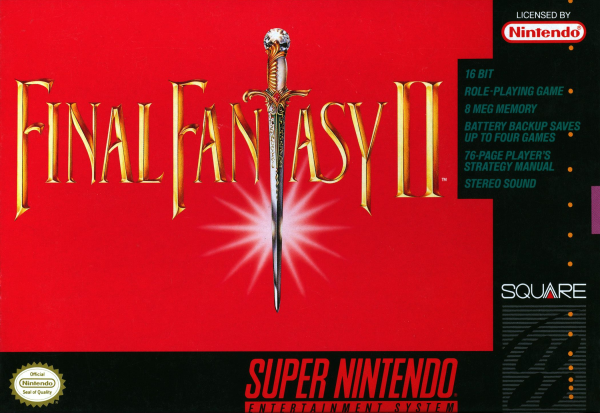
The first Final Fantasy was very different from what would be released little more than a year later as Final Fantasy II in America (and is properly known as Final Fantasy IV). People misremember how open the original was, your progress was always gated in the world by very specific choke points even if the game didn’t always tell you where to go next, or why. And while you were able to create your own party of characters, you still never made any decisions that affected the game’s outcome. Final Fantasy IV used that linearity to craft a much tighter, more resonant story. It also eliminated the character creation and substituted a large cast of well defined characters around whom the narrative revolved.
In Japan this was an evolution that took four years and four games, but for the English audience there was little more than a year between the two releases. The change was stark and shocking. By this time the Japanese role-playing game had strayed very far afield of the computer or pen and paper that had once been the inspiration. More than any game before it, Final Fantasy IV placed character drama at the forefront. The result was perhaps the most influential game the genre has ever seen.
After the jump, the primordial ooze from whence all JRPGs are descended. Continue reading →

This year will be the 70th anniversary of the launching of the final German drive on Moscow, Operation Typhoon (in German: Taifun). And it’s the 70th anniversary of the invasion of Russia itself, obviously. Don’t bogart my point, which is that this game diary entry is about Operation Typhoon. It’s probably one of the most significant battles in the history of the world, and some would argue that the outcome was decided before it started. Others would argue that it didn’t have to happen at all. The latter group would be wargamers.
Apologies to Italians, Hungarians, and Rumanians for what they’ll read after the jump Continue reading →
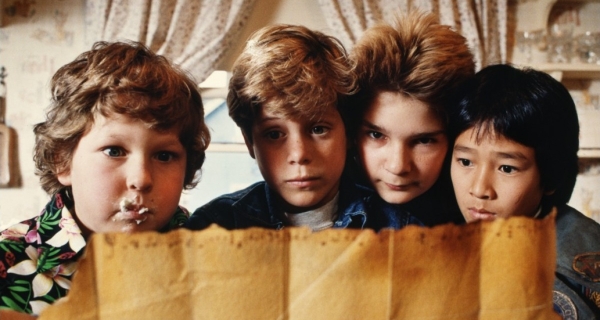
When I was in elementary school two of my best friends, Jeff and Nick, lived within easy biking distance, just three houses away from each other. Nick was a latchkey kid and had the run of his house for a few hours each day after school. Obviously, that was where we always went to hang out. During the summer break, this translated into even more unsupervised time which naturally made his house the home base for all our youthful shenanigans. We built elaborate water parks in his backyard, watched movies were weren’t supposed to, and fought a secret war in the neighboring woods against a pack of rival kids from a nearby cul-de-sac. It was an ideal, free-range childhood.
We also played a lot of video games, mostly the NES titles all nine-year-olds were into at the time: Mario, Metroid, Contra, Mega Man. We played crappier games, too, like Battle Toads or Silver Surfer, games that had us beating our heads against a wall each time the difficulty spiked and passing the controller around until we prevailed. Our tastes were simple and we usually just played whatever had the coolest box art at the local rental shop.
But then we met Chad.
After the jump, my introduction to true nerditry. Continue reading →

One of the modern FPS mechanics Section 8: Prejudice uses is unlocks through advancement. Don’t get too worked up about it though, since all of the weapons and almost all of the equipment and armor mods are available at level one. You start out with the basic tools to get the job done but as you advance up you get more tools in the toolbox to specialize, surprise, and more closely match your style of play.
After the jump, unlock-o-rama by the numbers Continue reading →

World of Tanks is a hard game to categorize. It’s certainly not an FPS, since the vehicles that are your “character” evolve over the course of thousands of battles in a process that owes much to RPG’s. On the other hand, it’s not really an MMORPG, since there are never more than 29 other players on the battlefield with you. I suppose “FPS/MMORPG hybrid” is the best way to describe it, aside from the horrendous acronym that results. Whatever label you prefer, the fact is that balance is crucial in such a game. With no PvE content and a player base that’s paying close attention, World of Tanks needs to get the balance right. As of today, I’d say they’re doing a mediocre job at best.
After the jump: matchmaker, matchmaker, make me a match Continue reading →

The Ice Palace is easily my favorite dungeon. Flocks of man-eating penguins line the walls. When Link enters a room, they run and toboggan toward him, their beaks yawning. At the same time, ice spirits come flailing out of the other walls like stunt men afire. The iced-over floors makes dodging a slippery giddy panic, and at times it looks a little like an episode of Benny Hill.
I’ve been playing long enough that all my instincts for solving Zelda puzzles have reactivated. Show me a configuration of blocks on the floor, a statue, two switches, and four torches, and the whole solution flashes in my mind like the crime footage in CSI. I pass effortlessly through locked doors, and descend to the depths of the Ice Palace where I pincushion the boss — a trio of floating eyes named Kholdstare — with arrows.
After the jump, I can’t stop now. Continue reading →

“Citronella Armor” is the name for the achievement you get when you complete a Swarm mission in Section 8: Prejudice without dying on Medium or Hard difficulty. You don’t actually get new armor, it unlocks some ammo type or something. I’m not too sure because I haven’t gotten it yet. Mainly because I’m trying to win missions and unlike some horde modes of recent games you can die an respawn as many times as you like.
After the jump, I don’t recommend dying repeatedly Continue reading →


