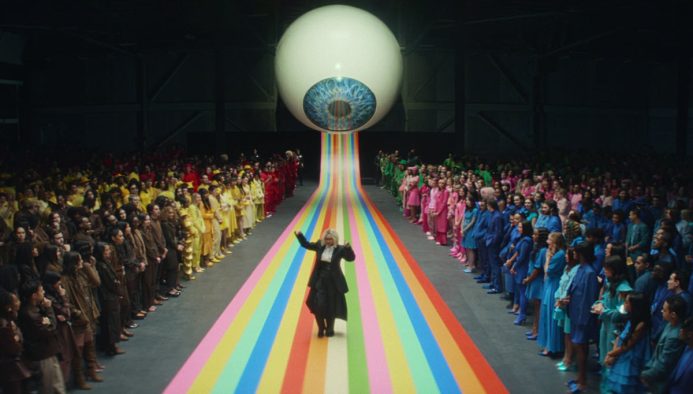
I went into Boot Riley’s I Love Boosters with some trepidation. Sorry to Bother You, Riley’s previous and first movie, felt so distinctive. So subversive, so slyly goofy, so warmly funny instead of resentful. It felt so much like one person’s voice, one person’s bottled-up inside joke finally escaping. How could Boots Riley possibly capture that same grinning lightning-in-a-bottle quality a second time? Surely he’d written and directed his masterpiece and from there on out, it would be iterations or sophomore efforts all the way? What could possibly top LaKeith Stanfield’s rap performance for Armi Hammer, which has aged in such wonderfully uncomfortable ways since 2018?
Continue reading →
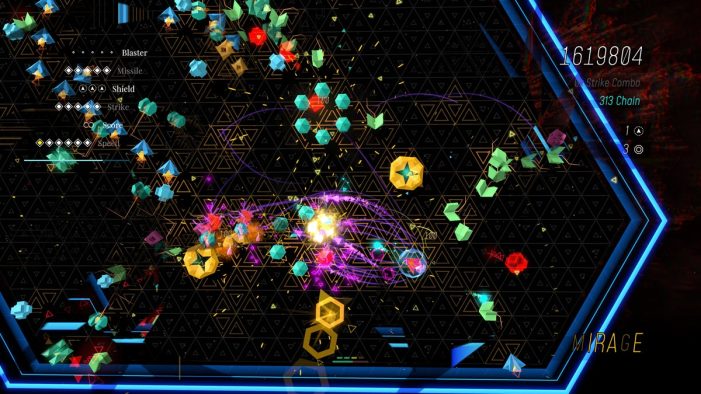
Twin-stick shooters like Sektori are a dime a dozen, and they’re especially cheap when they’re abstract. Arcade action without some sort of theming — ancient Greece, plucky spaceships rescuing dudes, giant bugs, ghost and goblins, swords and sorcery — isn’t just naked, it’s barely there. Unsexy when sexy can make all the difference. Quaker meeting houses to Catholic cathedrals, plain donuts to sprinkles and pink icing, greyscale resale value to cherry red with painted flames. So what’s a game like Sektori to do in the Geometry Wars postbellum?
Continue reading →
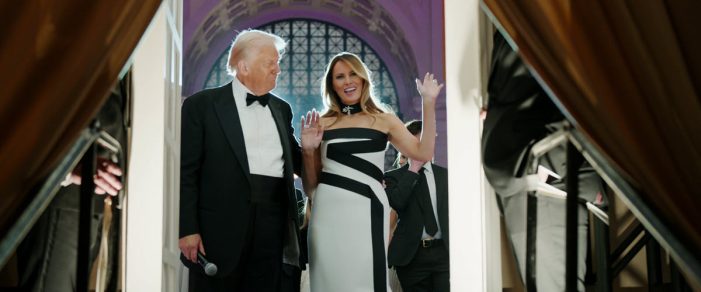
Her life is a fairy tale, the music insists. She strolls from room to room, her visage fixed and ghastly, a lipsticked rictus struggling to assert humanity with its rigid approximation of warmth. Her halting and barely comprehending voiceover mimics intimation in jagged English. Everyone surrounding her is anxious and tentative, showing her fabrics and dishware and deference, a hushed cadre of aides and security, caterers and tailors, servers, servants, attendants all. She is the center of everything, uncaring, grotesquely regal, a gaudy reminder of something we thought had washed away long ago, now discovered clinging to the shoe of history. The tailor retreats behind a curtain to fetch something else and now a Laotian immigrant speaks about coming to America. Melania, who wore a jacket emblazoned with the words “I really don’t care” to a child immigrant detention center, waits through the woman’s too many words. Her eyes, holding back daggers, flick to an aide off-camera: how much longer will this take?
Her father’s handheld camera pokes in like a court jester with nothing to say because it’s all already too ridiculous anyway. Brett Ratner cuts to some faded family photos in ornate frames pretending classiness. Michael Mann’s longtime cinematographer Dante Spinotti angles into the light to break out a spangle of celebratory lens flare. The music reminds you it’s all as magical as a goddamn fairy tale. You don’t even know, it patters. You can’t even believe. Absolute fucking magic, it moans, whorishly brittle and insistent, into your ear.
Continue reading →
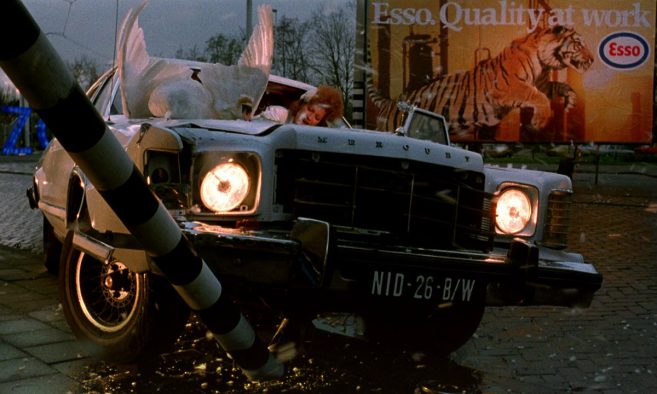
Why do some people love sausages and other people hate sausages? No fucking reason.
–Rubber, by Quentin Dupieux
Absurdism is the sausage made by feeding European flesh into the machinery of industrial slaughter. Before World War I, it had found expression among various high-falutin’ philosophers who explained that searching for meaning is futile. All is vanity, etc. But the horrors of World War I cultivated a global zeitgeist, kicking off the celebration of the non sequitur as a learned response to enormity. It was all the rage on French stages. The sort of thing you might learn in Paris, like drinking absinthe. Which is probably why I first encountered it doing student theater. You give a student a stage and some actors, and there’s no telling what kind of nonsense they’re going to make happen. Genet, Ionesco, Sartre. Then absinthe at cast parties.
Continue reading →
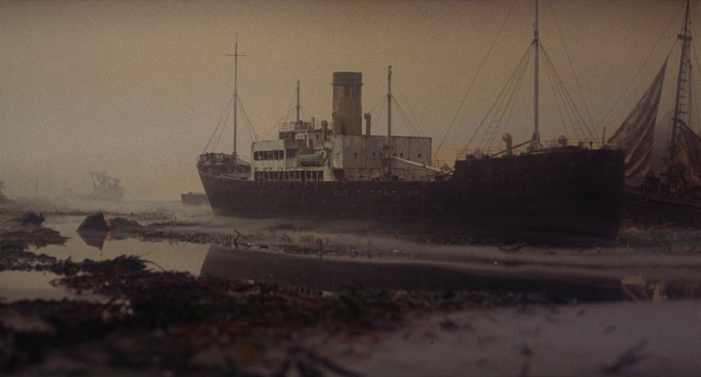
Seven-year-old Tommy Chick was drunk with excitement at the prospect of seeing 20,000 Leagues Under the Sea. It would be on Wonderful World of Disney, channel 7, this Sunday night. For as long as he could remember, he had doodled pictures of Captain Nemo’s Nautilus, often in the clutches of a giant squid. And at last, it was going to play out before his very eyes!
Continue reading →

My first encounter with Thomas Pynchon was indirect, though the filter of a filmmaker whose latest movie felt suddenly weird, unfamiliar, a little ill at ease, perhaps even “off”, as if he’d come under a strange new influence, or was maybe just drunk. Paul Thomas Anderson’s Inherent Vice didn’t feel like any other Paul Thomas Anderson movie. When I first saw it, I was confused. What on earth had happened to this movie? Why was it so conspicuously and bizarrely different from his other movies, so unlike the Paul Thomas Anderson I remembered? What was this raucous audacity, this untidy shimmer as if it were shot through a distorted lens? What was this strange aftertaste, like some spice from a distant land surreptitiously stirred into the mix? What were these shifts in tone, these ludicrous outbursts, the slithering vulgar undercurrents of eroticism? Why the sensually indulgent voiceover from a fortune teller, invisible to most of the other characters, in an ethereal performance from a folk harpist named Joanna Newsom? Why does Martin Short abruptly show up, as ridiculously out of place as a talking dog? It wasn’t just detective fiction, it was detective fiction by way of something else.
Continue reading →
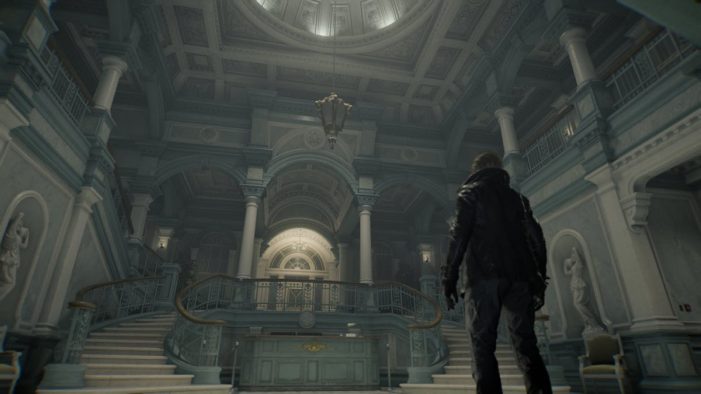
Jill Valentine has bleached her hair and gotten a desk job. When her boss sends her to a serial killer crime scene, zombies happen. This is when she realizes she’s in a Resident Evil and needs a male sidekick to do the combat parts. So Chris Redfield gets vectored in to take turns playing the game with her. They go to a — stop me if you’ve heard this one — creepy mansion with a secret lab underneath it. Resident Evil: Deja Vu.
Continue reading →
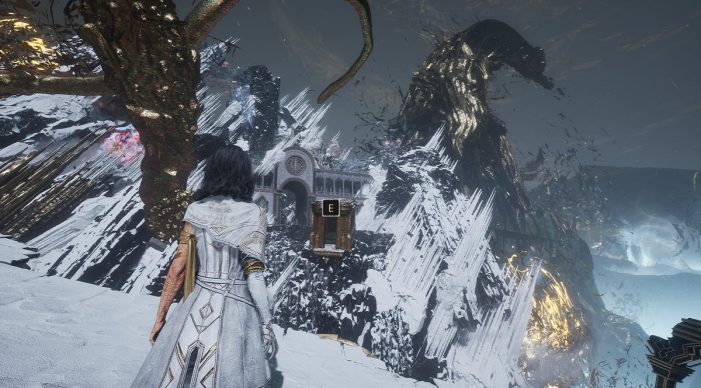
Having played a few minutes more than a realworld day, as an election-night pundit might say after taking up the first round of reports from fair Pennsylvania’s polls: “I’ve seen enough.”
Continue reading →
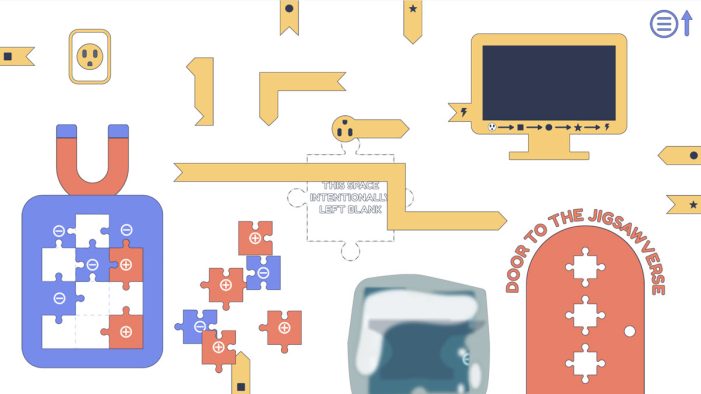
Strange Jigsaws is an apt enough title. Most of these puzzles are iterations on jigsaws, and many of them are nothing if not strange. But this is not a jigsaw puzzle. The average window shopper might mistake it for a lo-fi Glass Masquerade, that series of digital jigsaw puzzles with a luminous stained glass window aesthetic. But the Glass Masquerades live in the category of time-wasters, games you power down your brain to play, much like doing an actual tabletop jigsaw puzzle. Strange Jigsaws is more active, more brain food than mind bath, something you grind and process and digest rather than soak in.
I kind of wish Strange Jigsaws were called something else, because it’s only tangentially linked to jigsaw puzzling, and it’s more than just a set of puzzles. It’s got a narrative thrust, and it eventually reveals itself as a journey. It’s a guided tour through the mind of a man who doesn’t just make puzzles, but who cannot resist tinkering. Strange Jigsaws is his inner monologue turned outward, the diary of someone who looked at a jigsaw puzzle one day and simply couldn’t keep his hands off it, who couldn’t resist turning jigsaw puzzles into, well, something else entirely.
Continue reading →
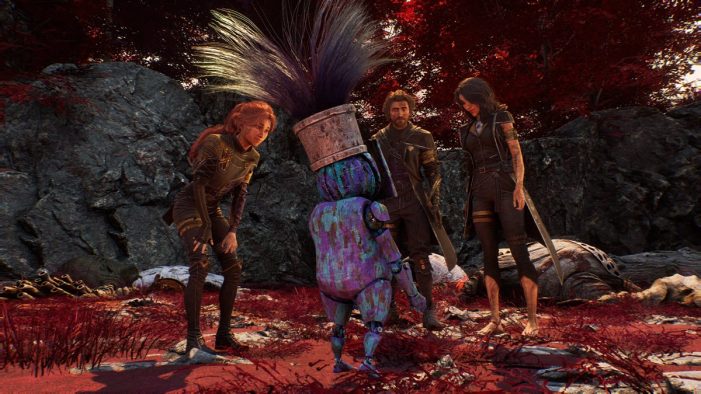
I expect a JRPG to take its time getting underway. They tend to open slowly, as they amble casually through their opening hours. They meander among bouts of worldbuilding, new systems tutorials, and character introductions. You’re not really playing a JRPG until you’ve paid several hours of game tax. Even then, there might be several more yet to come. JRPGs are not for the impatient.
But I don’t think I’ve ever played a less eventful first ten hours than the first ten hours of Clair Obscur. I am utterly nonplussed. I simply don’t get it. I don’t understand the lack of worldbuilding, systems, or characters. And what is there seems underdeveloped. The worldbulding is inscrutable and arbitrary, the systems are simple and few, and the characters are glib videogame puppets with luxurious hair and meager motivations. This is the critically acclaimed Clair Obscur: Expedition 33? This is what won our forums’ yearly awards?
Continue reading →
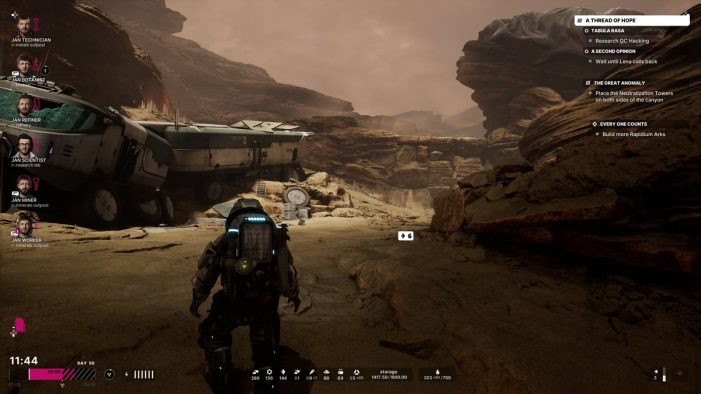
It was on a Monday, April second — I was cruising in the vicinity of Betelgeuse — when a meteor no larger than a lima bean pierced the hull, shattered the drive regulator and part of the rudder, as a result of which the rocket lost all maneuverability. I put on my spacesuit, went outside and tried to fix the mechanism, but found I couldn’t possibly attach the spare rudder — which I’d had the foresight to bring along — without the help of another man. The constructors had foolishly designed the rocket in such a way, that it took one person to hold the head of the bolt in place with a wrench, and another to tighten the nut. I didn’t realize this at first and spent several hours trying to grip the wrench with my feet while using both hands to screw on the nut at the other end.
–Stanislaw Lem, Star Diaries, “The 7th Voyage of Ijon Tichy” (1957)
Lem, who is often referred to as a “science fiction” writer, has anticipated cooperative videogame puzzles years before videogames have even been invented. Our hero, Ijon Tichy, has encountered a situation in which you need another player present. Coincidentally, this is how The Alters opens. And in both cases, another player isn’t available. Because the Alters is single player only, and Star Diaries isn’t even a videogame! So what now?
Continue reading →
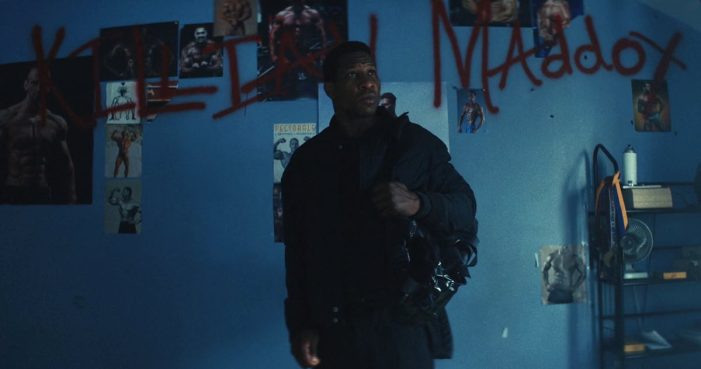
As Killian Maddox strolls out into the parking lot with his groceries, his mind squirms with the enormity of what-ifs and could-haves. If only he had… What might have happened if… It could have been that… But out of the turmoil, he comes to a decision and a halt, all at once. A car’s tires screech mildly, followed by the unmistakable car-on-car tump of a fender bender.
Surely the sound effect is something Magazine Dreams director Elijah Bynum added in post-production. The timing is just too perfect. It happens exactly as Killian makes his decision. The effect onscreen is almost invisible, but it’s there: Maddox’s resolve has all the force and nuance of a minor car accident.
Continue reading →
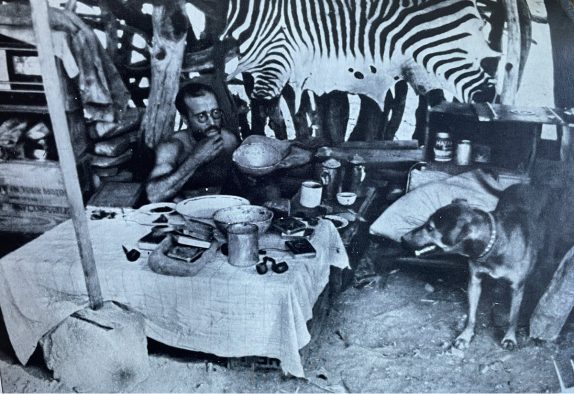
For the most part, The Sheltering Desert is a survival adventure about two men who take refuge in the Namib desert during World War II. But on a deeper and perhaps more fundamental level, it’s a story of transformation. Of what happens when your life is dictated by the demands and rhythms of a harsh wilderness. It’s the story of decivilization, or perhaps recivilization. Learning to live life by different rules.
Continue reading →
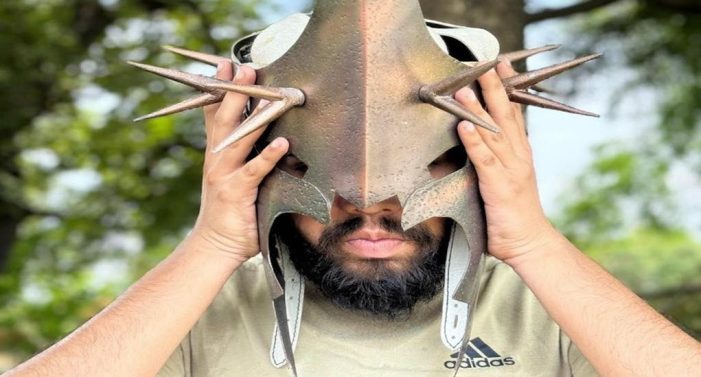
Django Wexler’s How to Become the Dark Lord and Die Trying didn’t teach me how to become the Dark Lord. But it did teach me other things, such as how fantasy worlds are uniquely demanding, how comedy is hard to do, how not to write a female character, how action scenes are usually a waste of word count, how some writers need vigorous editors, and how some people play too many videogames. Although many of the lessons I’d already learned elsewhere, so I guess it would be more accurate to say How to Become the Dark Lord reminded me rather than taught me.
Since I’m reviewing this at the behest of someone who enjoyed it and said he hoped I’d enjoy it, I feel bad confessing that no such thing happened. To elaborate feels pointless and even a little cruel. But I’ve been charged with a task — a quest, even! — and I intend to fulfill it. So I suppose maybe this book did teach me a little dark lordliness, in its own way.
Let the pointless cruelty commence!
Continue reading →
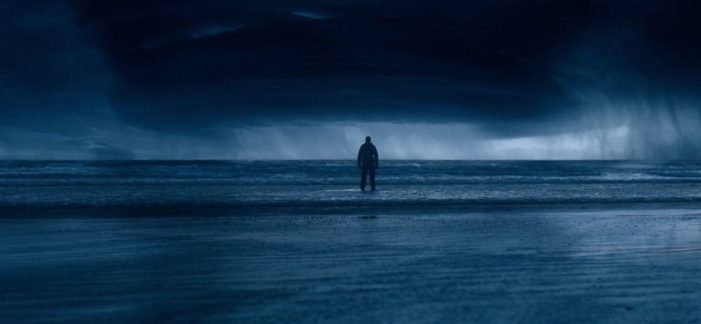
Anemone establishes itself vividly, confidentally, and almost entirely non-verbally. A man prays and then leaves his family on an urgent mission. Another man waits alone in a remote cabin, clutching a nearby axe when he hears a noise at the door. The stakes seem high, the tension almost unbearable, the characters grimly determined. Something desperate is afoot. A suicide mission, a sleeper cell, a secret plot? Rain and violence are in the air in equal measure. Anemone is a movie about an approaching storm.
But when the clouds finally burst, part of the revelation is that this boldly directed movie is built on a facile script. The collapse is so disappointing that it’s hard to believe the writer is also the director. Ronan Day-Lewis shows a keen understanding of cinametic language, so why doesn’t he understand that his story is so pedestrian? How can someone so comfortable with sweeping grand imagery and bold symbolism resort to such threadbare melodrama? As Anemone gets down to the business of revealing its characters’ motivations and resolving their dramatic conflicts, it’s sense of ingenuity and daring falls away. What’s left is the stuff of workaday TV. The Day-Lewis heir has no clothes.
What a terrible waste of Daniel Day-Lewis, our director and screenwriter’s father, returning to acting after nearly ten years away. To his credit, he throws himself into the maudlin monologues and pointless fisticuffs. He gamely rolls around in the narrative and the literal mud, bring the same ferocity he showed in There Will Be Blood, treating the material as seriously as if this were a Lincoln biopic, committing himself as madly as if he were wearing a tophat in a Martin Scorsese movie. And Sean Bean keeps pace with him faithfully, both men wearing their years proudly, looking every inch the grizzled veterans they are. Samantha Morton eats from a bag of crisps as well as either of them. There are also a couple of younger actors.


