


The Alters explores the promise of selfpunk…and loses itself along the way
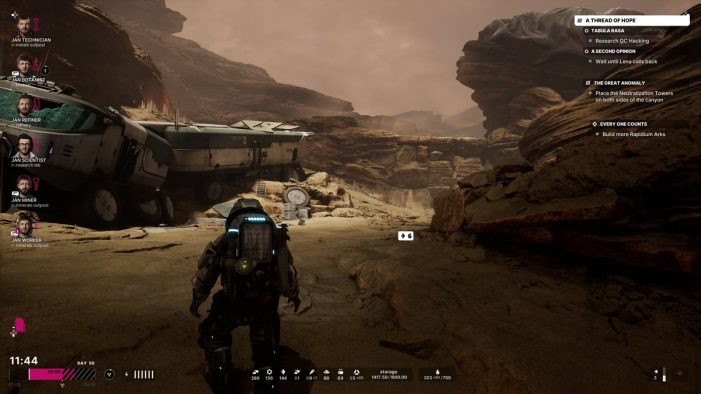
It was on a Monday, April second — I was cruising in the vicinity of Betelgeuse — when a meteor no larger than a lima bean pierced the hull, shattered the drive regulator and part of the rudder, as a result of which the rocket lost all maneuverability. I put on my spacesuit, went outside and tried to fix the mechanism, but found I couldn’t possibly attach the spare rudder — which I’d had the foresight to bring along — without the help of another man. The constructors had foolishly designed the rocket in such a way, that it took one person to hold the head of the bolt in place with a wrench, and another to tighten the nut. I didn’t realize this at first and spent several hours trying to grip the wrench with my feet while using both hands to screw on the nut at the other end.
–Stanislaw Lem, Star Diaries, “The 7th Voyage of Ijon Tichy” (1957)
Lem, who is often referred to as a “science fiction” writer, has anticipated cooperative videogame puzzles years before videogames have even been invented. Our hero, Ijon Tichy, has encountered a situation in which you need another player present. Coincidentally, this is how The Alters opens. And in both cases, another player isn’t available. Because the Alters is single player only, and Star Diaries isn’t even a videogame! So what now?
Fortunately for Tichy, he’s flying in the vicinity of several gravitational anomalies that cause time travel. His various iterations of himself team up and after much fussing and fighting, they manage to repair the rudder. Selfpunk in 1957! When the player’s space trek is similarly disrupted in The Alters, where the constructors have foolishly designed a lever that requires two players, there are no gravitational anomalies nearby. But there is a “quantum computer” and a “womb”. So clones instead of time travel. Six of one, half dozen of another.
The player’s various iterations team up to pull the lever and then play a many-layered videogame called The Alters, about clones managing minor base building, minor resource management, minor colony simming, minor choice-and-consequences adventuring, minor exploration, minor logistics construction, and even minor minigames. The result is a multi-layered game that all but buries its own intriguing selfpunk premise under a few too many strata of marginal gameplay.
“Selfpunk?” you may ask, as if you’d never heard that word. Okay, fair question. I only just now invented the term, because if I’m going to catalogue an undiscovered genre, I call dibbs on naming it. So, yes, selfpunk. What is it, how does it work, and what’s it got to do with The Alters?
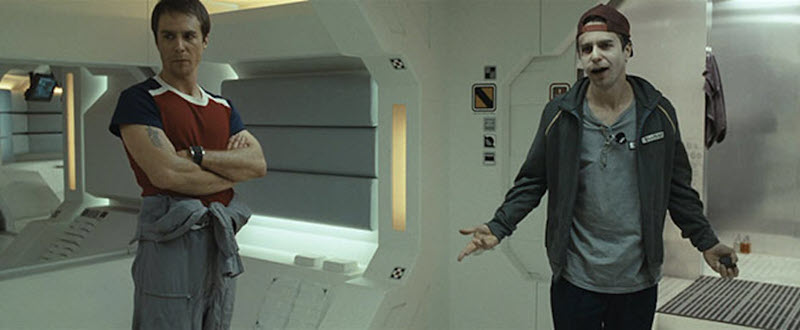
Selfpunk is based on violating individuality to juxtapose your possible selves. It usually involves being able to talk to or interact with yourself, about yourself. This usually involves changing or improving something about yourself, but sometimes it’s just a way to consider the road(s) not taken. It relies on some sci-fi rationale to prop up a premise. It’s a solipsistic narrative hack, engineered by cloning, time travel, parallel timelines, or multiverses, and often a lens through which to consider regret. Whatever the vector, selfpunk is a way to do it over or do it better.
I’m sure written media is shot through with examples of selfpunk (for instance, here’s a selfpunk review of Firaxis’ first XCOM). Sadly, when it comes to sci-fi, I’m not very well read. I’ll have to leave it to another subgenre taxonomist to call out selfpunk books and short stories. But I do know movies! Following is a sampling, by no means comprehensive but at least broad, of selfpunk cinema.
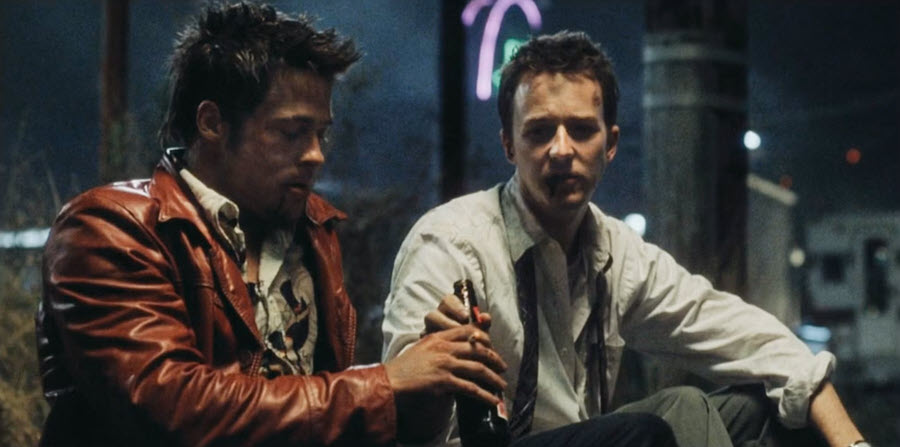
The most obvious example of selfpunk is actually from a book, and it’s notoriously ballsy for not relying on science fiction to prop it up. Instead, Chuck Palahniuk’s FIght Club is a straight-up cheat relying on a narrator so unreliable he never even gives us a name. It’s an exercise in imagining a better version of yourself and the amazing things he might accomplish, and furthermore being able to have a beer or start a social movement with the better version of yourself. Fight Club even suggests, tentatively, that your better version of yourself might make a fine father figure for you to revere and eventually overcome.
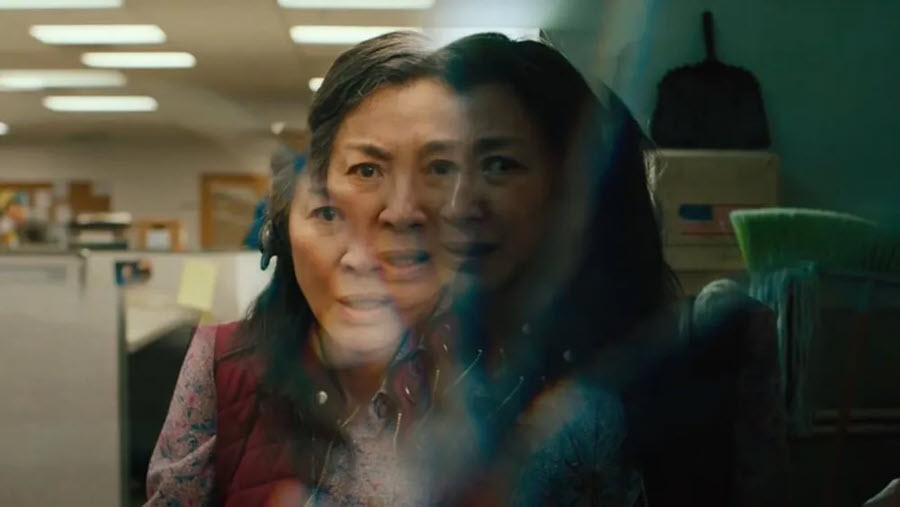
But the more recently prominent and widely known example of selfpunk is Everything Everywhere All At Once, in which a middle-aged laundromat owner rehabilitates her relationship with her daughter. That’s the emotional heart of the story, although our heroine ranges far and wide through scattered multiverses to sample various versions of herself. Writer/directors Daniel Kwan and Daniel Scheinert incorporate bits of Terminator, The Matrix, and True Lies, harnessing the glee of Taiwanese martial arts cinema and a healthy dose of absurdity to tell their story. It’s the glorious realization of selfpunk as more than men gazing at their navels.
Another less conspicuous example of selfpunk is Joseph Kosinski’s Oblivion, which seems at first glance like a Tom Cruise vehicle. The selfpunk is held close to the vest until a third-act reveal, which sends in the clones. The ultimate point of the movie is that your boring life with your boring job and your boring relationship might actually be holding you back from your secret destiny. In the end, you and yourself can save the world together! It’s arguably more power-fantasy than self-help,but I’d put it in the selfpunk category.
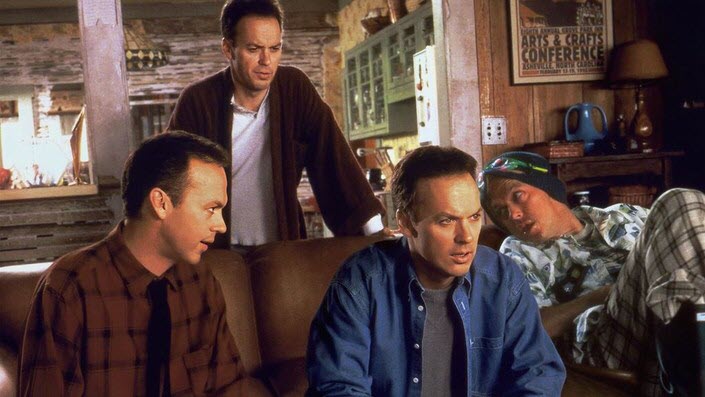
Other examples of clone-based selfpunk go back to the 1996 Michael Keaton comedy Multiplicity, where he makes clones to literally help himself manage the demands of day-to-day life. Duncan Jones’ Moon and a recent Australian movie called In Vitro come to mind as movies that use cloning as a way to talk to yourself and ultimately give yourself a do-over, a chance to address your own shortcomings, to fill in gaps in your life where you might have done something differently. Coraline Feargut’s The Substance is a horror-themed selfpunk story based on cloning as an extension of beauty care. It’s gory body horror and messy conclusion definitely put the punk in selfpunk.
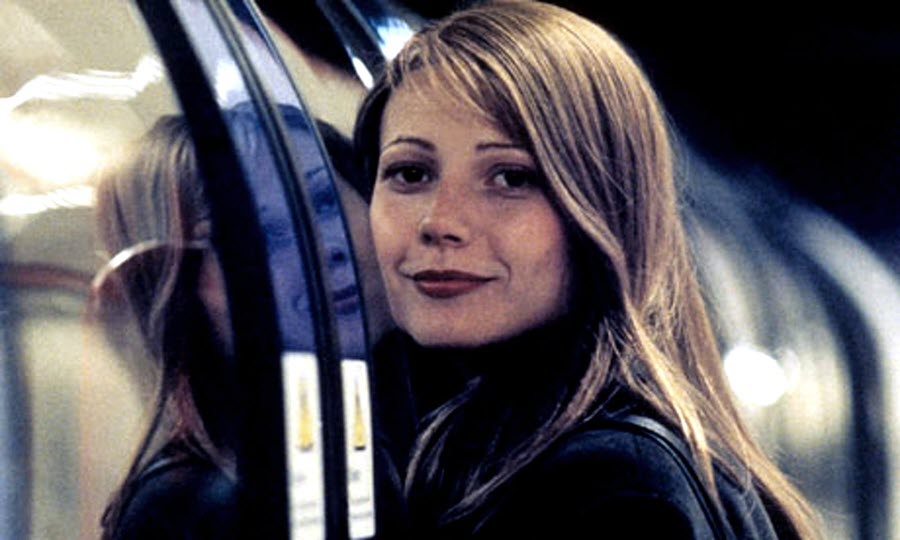
In the late 80s, Sliding Doors and Blind Chance were released within a year of each other. These are selfpunk movies based on parallel timelines. One is an American romcom starring Gwenyth Paltrow that everyone’s heard of and the other a Krzysztof Kieslowski film that probably inspired Sliding Doors but no one’s heard of except arthouse cinema hounds. They both consider parallel lives radiating out from a single point in time, a model established in 1941 by the Jorge Borges story, Garden of Forking Paths, where each decision spawns its own parallel reality. Sliding Doors and Blind Chance run with the concept to juxtapose a dual protagonist’s choices and their outcomes. In both movies, lives pivot on the capriciousness of whether or not someone catches a train on time.
Similarly, Joseph Gordon-Levitt was in 2008’s Uncertainty, a movie that splits off into a thriller and a relationship drama, radiating out from an actual coin toss. British director Christopher Smith plays with selfpunk in his horror time-travel movie Triangle in 2009, and also his parallel timelines thriller Detour in 2016, but both movies are primarily interested in narrative jiggery-pokery. I’d call them puzzle boxes first and selfpunk second.
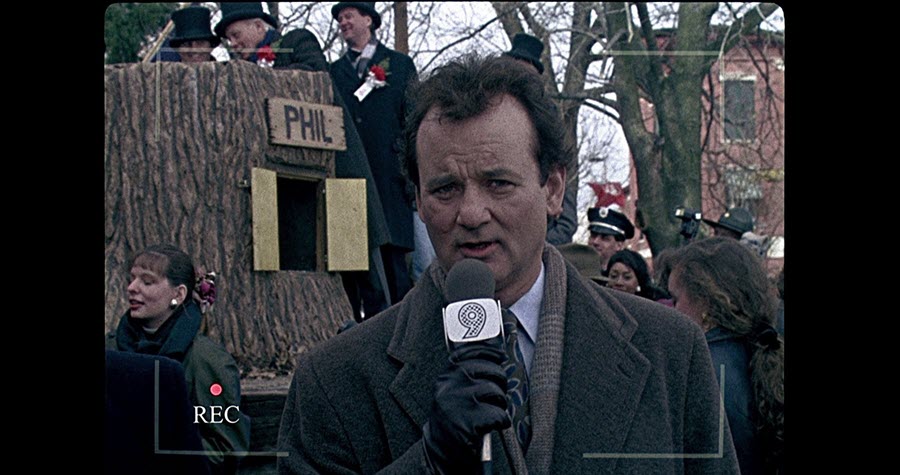
Selfpunk can also use time travel, as per Lem’s Star Diaries. Time travel is a broad category, and obviously not all time travel is about helping or improving yourself. But there are some time travel stories in which that’s the main point. Groundhog Day and Live Die Repeat are probably the most notable examples. I recently saw a modest indie comedy from Australia called Time Addicts that I loved, mostly because of the two lead actors. And while it’s arguably in the category of general time travel, it’s got a touch of selfpunk. Could there be any greater expression of selfpunk than a character attending and even assisting her own birth?
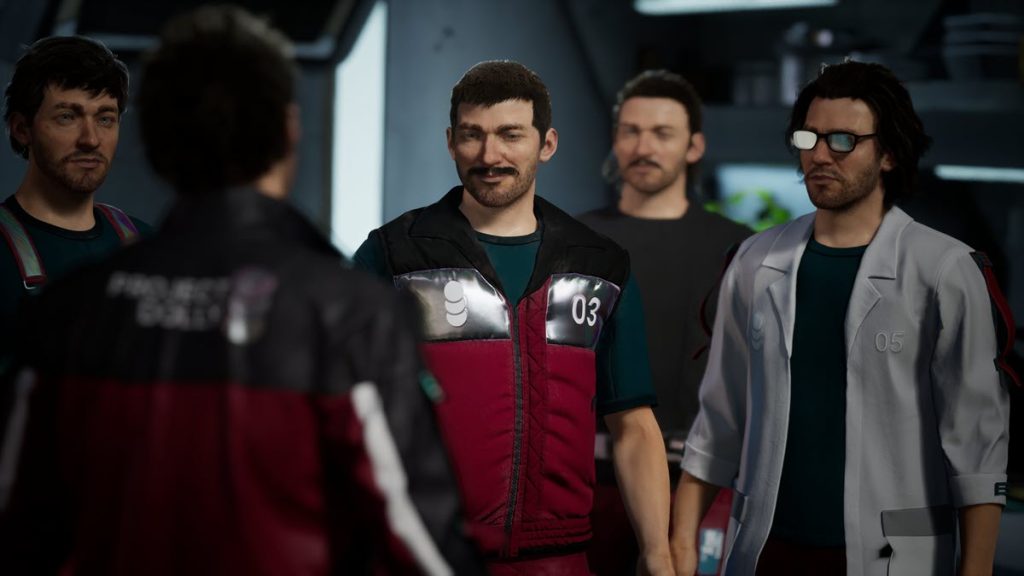
So why the tangent calling out an invented genre when we’re here to talk about a videogame? Because the greatest strength of the videogame is how it fits into this genre, so I wanted to establish my terms first. Sadly, it doesn’t live up to its inspirations very well. The Alters is selfpunk, but it’s not very good selfpunk, and it’s furthermore diluted with far too much middling videogaming filler.
The Alters is set on a space station that requires multiple crew members. Everyone but the protagonist — a blue-collar schlub named Jan Dolski — has died in mysterious circumstances. So to survive, Dolski has to clone himself to fill the vacancies. But these aren’t just clones. Instead, there’s some technobabble about a quantum computer that uses technobabble technobabble to technobabblically technobabble, which makes clones from a rare space mineral called “rapidium” that technobabbles the technobabble technobabble. But to ensure that a clone is suited to a particular crew position, the quantum computer creates an alternate timeline, splitting off from some notable life decision Dolski had made. It’s a garden of forking Dolskis.
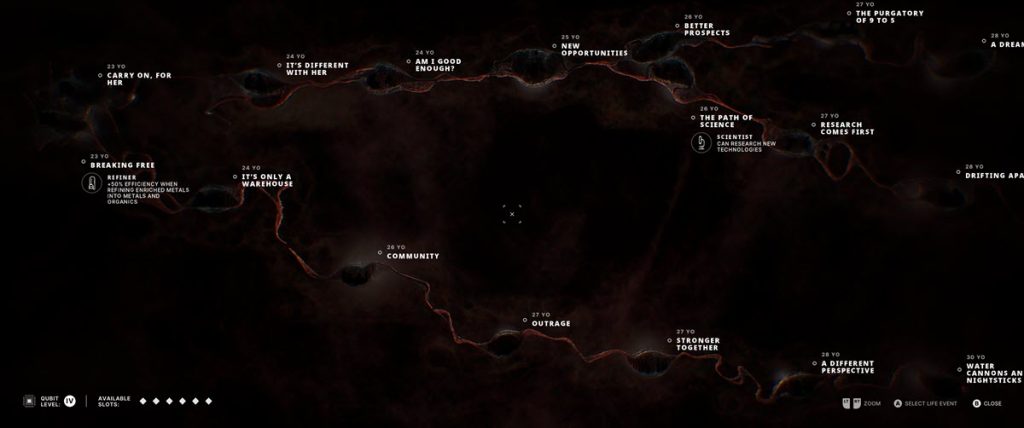
Which is where the selfpunk comes in. For instance, imagine the scientist clone got his Ph.D. whereas the miner clone was a unionist labor leader. So now Jan Scientist and Jan Miner — that’s how The Alters identifies its “alters” — are both members of the same crew. Each of them shares the same memories of the same lifetime, but only up to a point of divergence. That’s where their different decisions split them off into different “timelines”, which is how the scientist became a scientist and how the miner became a miner. The scientist might have left his dying mother to go to college, whereas the miner stayed by his dying mother’s bedside to the end. Now they’re working with each other, perhaps disagreeing on how best to survive this shipwreck, having conversations, interacting, conversing, considering their respective lives. They are a lens through which to consider regret, missed opportunities, the roads not taken.
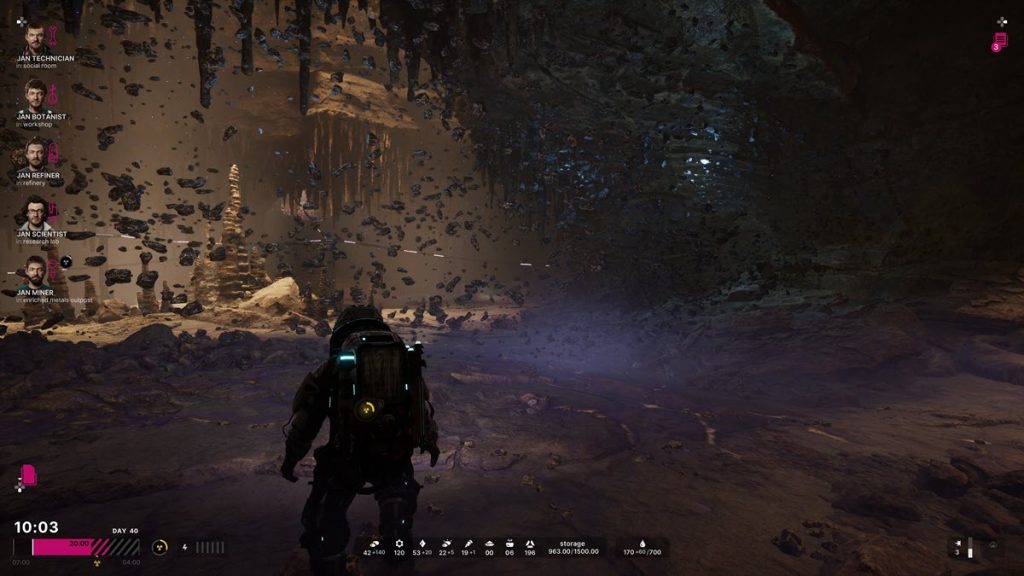
For the most part, The Alters suggests these clones are operating with implanted memories, along the same lines as Blade Runner’s replicants. These implanted memories trick them into thinking they’ve lived entire lives rather than having been grown in vats. Like Blade Runner, The Alters posits that a clone’s past is “uploaded” into its brain. But as it unfolds its scripted plot, The Alters suggests that the alternate timelines might be actual parallel realities. It suggests that instead of uploading memories that extrapolite from a point of divergence, there’s actually some crossover between reality and uploaded memory.
It’s all very fuzzy and imprecise. The vaguely explained premise turns out to be more baffling than intriguing. For instance, it’s not clear to me why the quantum computer can’t just make a copy of Jan Dolski who happens to know science or mining. Why do the clones need to believe they’ve lived entirely separate lives, complete with their own elaborate fictions about relationships, decisions, and events? Why not just upload the knowledge and skills? Why not a tidier “whoa, I know botany”? For a game that loves to roll out technobabble, The Alters is strangely silent on some of its most basic points.
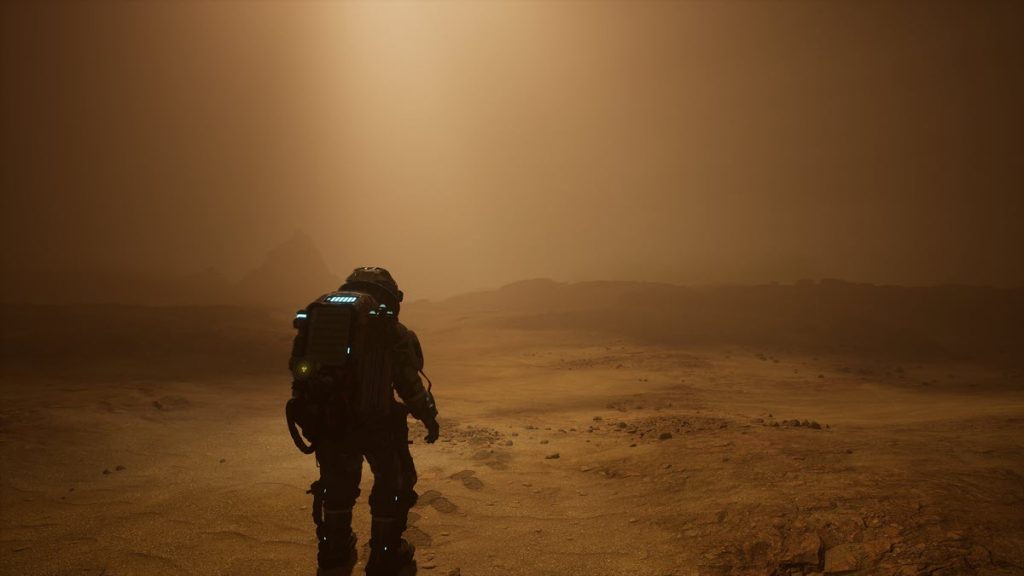
The bigger question is whether the uploaded memories are really fiction. Because it turns out they’re not. Is the implication that these aren’t just clones, but actual travellers among multiverses? Do the anomalies you encounter in the game, which are described as interdimensional punctures, imply parallel worlds? Is this all a matter of biology or metaphysics? Are we doing ontology here? Or are we just cobbling together a ramshackle videogame plot?
As The Alters played out, I had trusted that it knew the answers to these fundamental questions, and that there would be some sort of reveal or at least resolution waiting at the end. I don’t think there was. The ending felt scattered, ponderous, and ultimately confused about what it was even telling me. Was reality altered? Were there holes between parallel timelines? Are there bleeding multiverses? Or was it just a bunch of clone stuff? Did I perhaps fork my garden of Dolskis into a deadend of incoherence? And does selfpunk even need to make sense if you get to spend so much time talking to yourself?
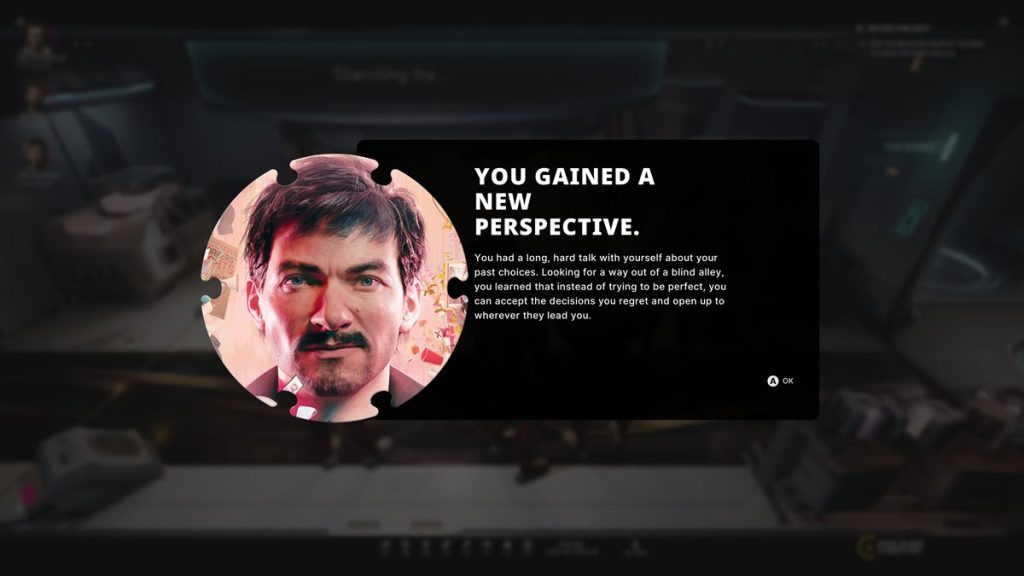
I might not have minded the lack of resolution if I had enjoyed the actual selfpunk more. Despite flashes of humor and even a couple of moments that approaches brilliance, so much of the character interaction was trite, stilted, or trite and stilted. Almost all of the conversations are between the original character and an alter. Which is a disappointing but probably necessary limitation for a branching but scripted story. The clones rarely interact with each other, and almost everything is filtered through Jan Dolski Prime. The Alters sidesteps the messiness of an actual latticework of relationships by forcing everything though one character’s perspective, and furthermore gating who’s allowed to be cloned and when. Which is to be expected in a scripted game design. But it makes the premise more modest than it could be. Compared to something like Lem’s Star Diaries, The Alters feel small. Instead of confident storytelling, it struggles to create the illusion of forking freedom.
Too many of the conversations were squandered on incidentals, usually belaboring the rationale for having to build some technobabble doo-dad because of technobabble reasons. So much dialogue squandered on some nonsensical explanation for an obstacle to gameplay progression, for gating the next event behind some expenditure of resources. None of these were particularly interesting, or even challenging, given the thin veneer of actual gameplay. But they padded out the playing time — mission accomplished? — and added more trite dialogue. So much of the dialogue was the sci-fi equivalent of having a quest vendor explain in detail why he needs eight bear pelts.
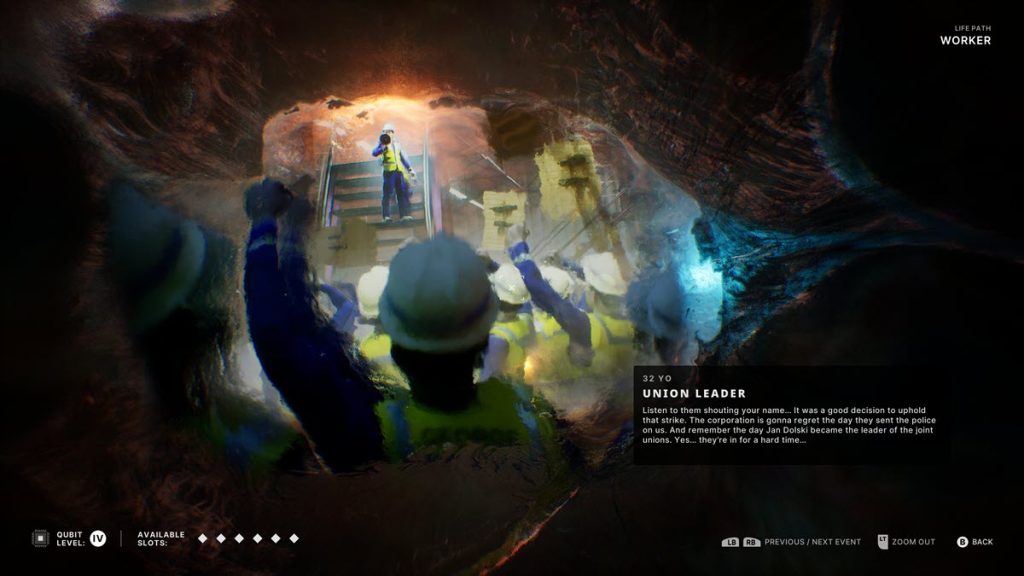
Mostly the writing for the inter-Dolski conversations – introspection turned inside-out — is unremarkable, and it has a tendency to get preachy. Which might have worked if it weren’t so jejune. Selfpunk is great for tackling midlife crises, doubt, and regret. Unfortunately, most of The Alters reads like a twentysomething holding forth about his profound life experiences. The relationship stuff is especially cringeworthy. There are touches that highlight its Polish development team, such as the pierogis and the preoccupation with labor relations (to its credit, the drama in The Alters feels very blue-collar). But mostly, it just feels like the cookie-cutter life drama: dead mother, abusive father, and lost love are the main nodes for each alter. Jan Dolski makes for a pretty dull protagonist. You won’t find exotic or even interesting flora in this garden.
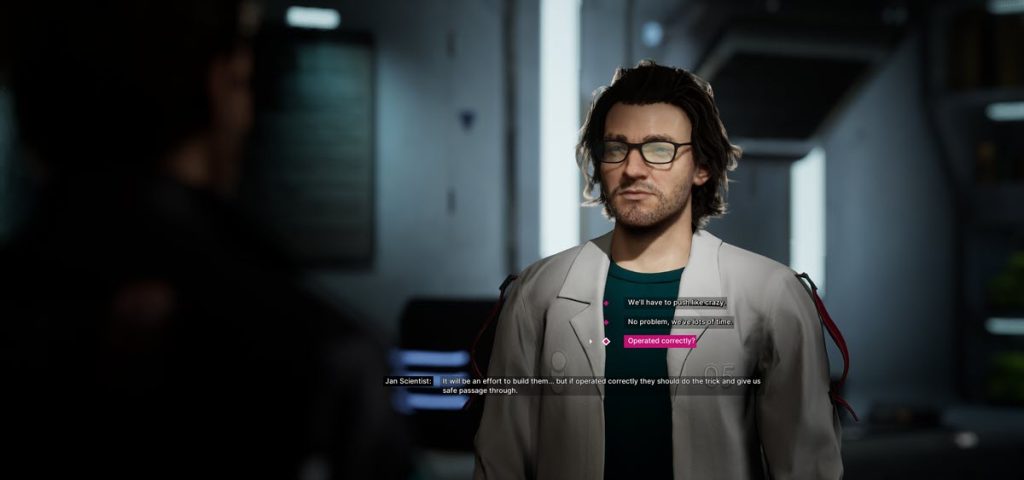
It doesn’t help that all the conversations have that halting videogame pace. The usual menu structure smothers any sense of flow, giving every interaction the feel of a meal order instead of a discussion. The Alters barely even tries when it comes to the visual element of these interactions. The cinematics, as such, are just a series of still images. All the menu-based dialogue is a single over-the-shoulder static shot of the same character model, but this one has a beard and that one wears glasses. For this one, the voice actor assumes his gritty Jack Nicholson impersonation, for that one he adopts a Valley Guy lilt for no discernable reason. There are plenty of talented voice actors who could have given each of a half dozen Jan Dolskis their own quality, color, or tone. Sadly, one of them wasn’t cast in the role.
The effective moments are too few and far between for a game this long, for this amount of busy work, for this many systems of negligible interaction, for a story this meandering and clotted with technobabble. Why can’t a game where the conversations are so integral have found some more dynamic way to present them? Why does videogaming continue to present interaction — the foundation for drama — in such a sadly limited way? Why doesn’t it understand better how people interact and how their dialogue flows?
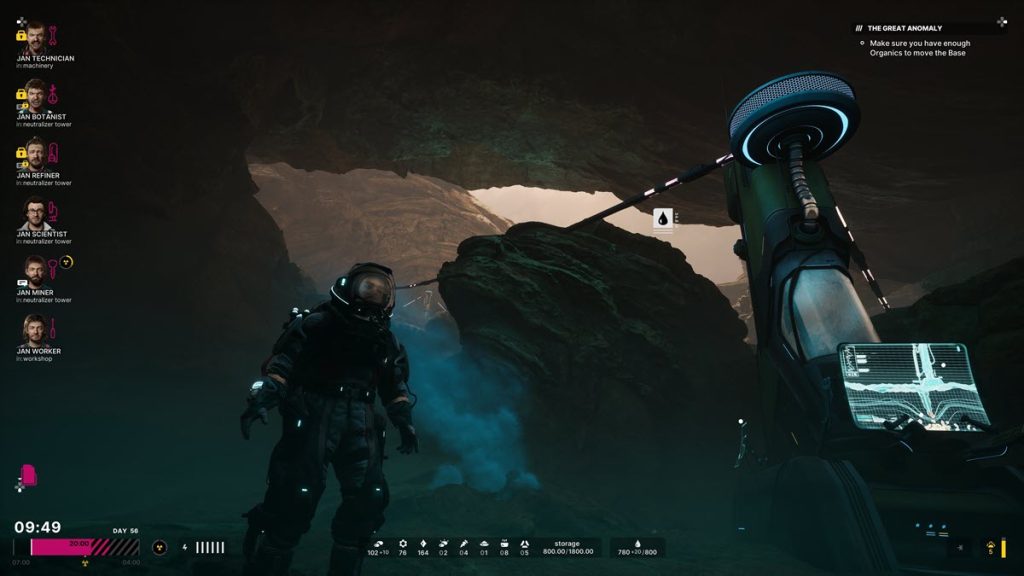
It’s probably worth noting that developer 11bit Studios cut their teeth on heavy resource management games peppered with moral choices. This War of Mine and Frostpunk are survival-oriented games first, and choice-and-consequences trees second. They both rely on interrupting the gameplay with decisions about whether to pet the puppy or kick the puppy, but couched in dire survival terms and backed by meaningful gameplay implications rooted in resource management.
But The Alters flips the script: it’s a choice-and-consequence dialogue tree first, and a resource management survival game second. And a distant second, at that. The resource management and survival are trivialized by being so easy and inconsequential. All these layers of gameplay, and yet they’re so poorly integrated with each other. None of them matters much. If everything is hemmed into such small areas, why pretend at open-worlding? If crew morale is merely a formality — simply choose “calm him down” when it pops up on the menu and hand over whatever gifts you find to their assigned alter — why bother with all the mood categories? If resources are so easy to come by, what do I care how long my alters work each day? If the only meaningful team crises are the scripted ones at the end of the game, why bother with team-building activities like beer pong, a tabletop deck-builder, and movie watching? (Although the beer pong isn’t nearly as bad as it could have been, the deck-builder is decent and deserves a better place in the game, and the Youtubers 11bit Studios hired for the movies are actually pretty funny.)
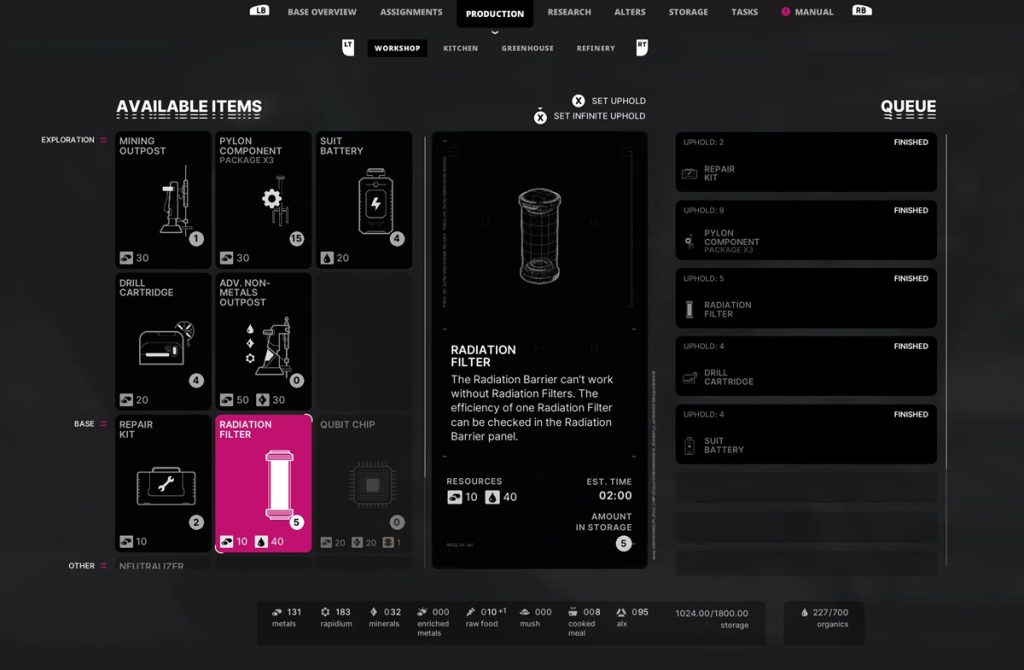
Because the gameplay is so marginalized, so ultimately irrelevant, there’s no place for the conversation outcomes to have any real impact. It’s usually obvious what to say to avoid making someone angry, which felt like the only tangible effect. But even then, an angry alter didn’t matter much. Choices had no karmic weight. Which made it really hard to care about the dialogue, and therefore the game as a whole. I’m not even convinced there’s much branching available, at least in terms of how the story will unfold (the endgame eventually forces you through a series of A or B choices that shape the final ponderous cutscene). These selfpunk conversations were worse than trite and stilted. They were pointless.
The aesthetics, from the futuristic hardware to the alien world’s few “biomes” to the minimal infrastructure you build, are serviceable, but unremarkable. With one exception. And this exception seems to emerge from a gameplay conundrum. One of the gameplay layers is building a base in which the Jan Dolskis can walk around doing various tasks (usually the player’s only task inside the base is to track down an alter who wants to talk). Normally, a videogame would do a topdown view of a single-story base. As you expand it, you would add rooms one at a time, spreading outward. Then you wouldn’t have to mess with camera controls or the hassle of multiple layers.
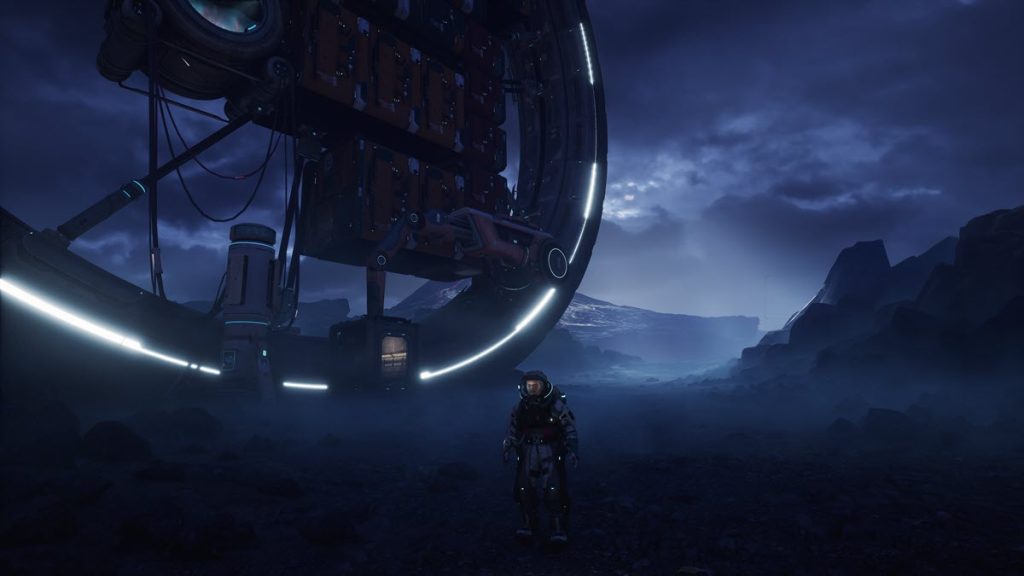
But there are three gated moments in The Alters when you have to move your base. Since this could be problematic with a single-story accumulation of rooms, 11bit Studios imagines something strikingly different: your base is a giant bicycle tire, with the rooms situated where the spokes would be. It looks like some massive European art project, and it’s especially weird seeing it on the move, trundling across the surface of the planet, as if someone’s errant tire were casually rolling down the road. It’s especially striking seeing it in the distance as you’re platforming around to reach a waypoint or build up your infrastructure. Once you get inside, it’s a cutaway view, as charming and manageable as any cutaway view. But from the outside, it’s truly and wonderfully strange. Who knew living inside a bicycle tire could feel so science fiction-ey?
But living inside a tire isn’t enough to sustain a whole game. Especially one as ambitious as The Alters, one so invested in exploring the themes of selfpunk, in letting me navigate a forking garden. Such a promising concept, unevenly implemented and poorly realized, drawn out for far too long, with a confusing and unsatisfying payoff. The Alters belongs in that unfortunate vein of storytelling in which being long-winded is confused with being profound, and the gameplay that should serve as its support structure is just busywork. But at least I can damn it with the faint praise that there’s no better example of selfpunk in videogaming.

The Alters
Rating:
PC
An ambitious exploration of a garden of forking paths...that gets lost down in the weeds
