[Editor’s note: Every two weeks, we’ll pick a classic game to play and discuss. Then the choice of the next game will be made by a randomly selected participant from the current discussion. It’s like a book club, but with videogames. We’d love to have you join us. Register for the forums and hop into the discussion! This week’s choice, by krayzkrok, is Sacrifice.]
Pick a game, they said. Make sure it’s a classic, they said. It has to be available for less than $10, they said. What kind of lunatic forces someone to choose from the thousands of classic games out there, many of which they’ve likely never played? Perhaps I should toss a coin? A multidimensional coin with thousands of sides.
Okay, I have a plan. I am going to pick a game that I’ve never played before, one that I suspect many have never played before, one that’s often mentioned in conversations about under-appreciated games, and conversations about games that still hold up today. All the while resisting the temptation to choose Descent? Right then.
My Classic Game Club pick is Sacrifice. Developed by Shiny Entertainment, published by Interplay, and released in 2000 for Windows and Mac, it completely passed me by at the time despite being highly praised for its innovative RPG/RTS hybrid gameplay. According to Wikipedia, players control wizards who fight each other with spells and summoned creatures.
Wait, that sounds awesome! Why did I never buy this?
According to Wikipedia again, it was the first video game to “make full use of video graphics cards that can process transform, clipping and lighting instructions.” You had me at “full use”.
The reason for choosing Sacrifice, aside from all the above, is partly the fault of the previous Classic Game Club pick of Command & Conquer: Red Alert. Despite my fond memories for that game, it just didn’t click with me. I wondered if I might be over RTS games, but then I realized that I need more from my RTS games these days. Sacrifice certainly has RTS elements, but it apparently does something quite different. It does away with all that resource-gathering and base-building nonsense that I’ve never really enjoyed, and it puts a greater focus on the tactical combat. Which reminds me of another favorite game of mine, Ground Control. Furthermore, the creature summoning mechanic and the completely “out there” Bosch-inspired art direction convinced me it was time at last to give Sacrifice a go.
Sacrifice is available from Good Old Games and Steam for the trifling sum of $9.99. It was clearly written with the future in mind, so there are no DOSBOX shenanigans required, and hopefully it should work out of the box. If you can’t stand horiziontal black bars on your widescreen monitor, you can force widescreen support by hacking your registry. It only affects the in-game resolution, in case you get as confused as I was about the main menu remaining resolutely unadjusted. Just for fun, the game also sometimes resets the resolution tweak when you quit the game, so if you really like widescreen you’ll soon get used to retyping those hex values into your registry. I found the best results by setting the desired graphic detail in the options first, and then editing the registry.
After the rip-roaring success of my Let’s Play video last week (upwards of three comments!), I’m going to do these more frequently. Now they’re going to be every Thursday, until I get bored. But why would I get bored? Video games are fun, and some of them are sexy! Like this one. It’s Voyeur, from 1993, a time without software content ratings. So they were free to jam-pack it full of sexy sex and turgid boners. Watch this video of me playing the first part of Voyeur and see what I mean.
[Editor’s note: Every two weeks, we’ll pick a classic game to play and discuss. Then the choice of the next game will be made by a randomly selected participant from the current discussion. It’s like a book club, but with videogames. We’d love to have you join us. Register for the forums and hop into the discussion! This week’s choice, by Otagan, is Command & Conquer Red Alert.]
They call me ‘Killer,’ but I live only to serve the People, and the People’s history will judge me.
-Joseph Stalin
The venerable Command & Conquer Red Alert is the 1996 sequel to Westwood’s legendary Command & Conquer. Eschewing the pseudo-modern setting of its predecessor, Red Alert is based around an alternate history wherein Albert Einstein invents the “Chronosphere” after the end of World War 2 and uses it to travel back in time, assassinating Adolf Hitler before he rises to power.
Hi there, my name is Tony Carnevale. For years now, America has been clamoring for me to record video footage of myself playing through Kingdom: The Far Reaches while I say silly things about it. Clamor no more, for here it is!
This version of Kingdom: The Far Reaches was released in 1995, as a repackaged version of a 1984 game called “Thayer’s Quest”, which was originally released in arcades and for a home laserdisc game console called Halcyon that only had two games ever. That even makes the Wii U’s library look vast! Join me on my quest to, uh, save the kingdom, I guess. And also to figure out what the hell is going on.
I’ll be doing one of these videos each month, playing a different game each time. See you in September!
[Editor’s note: Every two weeks, we’ll pick a classic game to play and discuss. Then the choice of the next game will be made by a randomly selected participant from the current discussion. It’s like a book club, but with videogames. We’d love to have you join us. Register for the forums and hop into the discussion! This week’s choice, by CraigM, is Wing Commander 3.]
I grew up a huge fan of science fiction, I became obsessed with Star Wars as soon as I discovered it. When my family finally got a PC my first game was a flight sim. And when Wing Commander 3 came out, here was a game combining sci-fi flight sims with Luke Skywalker! It was tailor-made for 12 year old me. Unfortunately at the time the only computer I had access to was an old Apple IIE, and most of my gaming was done on the Sega Genesis. By the time I had the ability to play the game, it had already faded from its glory days. It is one of the greatest omissions in my gaming history, and it thrills me to no end to see if this game really lives up to its reputation.
There are other reasons to pick Wing Commander 3 other than reputation. Space sims are quickly gaining traction. Look no further than Elite: Dangerous and Star Citizen to see examples. The designer of Star Citizen is none other than Chris Roberts of Wing Commander fame. So now is the perfect time to see why his name can garner $48 million in crowd funding. That kind of cash is evidence of fierce loyalty that only could come from some truly seminal games.
Wing Commander 3 is also notable for its story. It might seem odd for a flight sim of any stripe to be heralded for narrative, since they often rank with strategy games for their perfunctory nature, but it remains one of the frequently cited strengths of the series. Full motion video, with live big-name actors, underpin the storytelling. The Kilrathi have managed to gain enough notoriety that even my complete absence of any experience with the series does not prevent me from knowing who they are.
[Editor’s note: Every two weeks, we’ll pick a classic game to play and discuss. Then the choice of the next game will be made by a randomly selected participant from the current discussion. It’s like a book club, but with videogames. We’d love to have you join us. Register for the forums and hop into the discussion! This week’s choice, by Pod, is Blood.]
Blood. Blood! BLOOD! I quite like the short, snappy, literal-minded names given to the early FPS games: Doom, Quake, Blood, etc. It’s nice that they let you know what you’re in for before you begin playing, and in this game you’re in for lots and lots of blood.
This 2.5D first person shooter is based on the Build engine most popularly seen in Duke Nukem 3D. It has the characteristic 3D-walls-and-sprites look that accompanied other Build games, and much like Duke Nukem and Doom, it features fast gameplay, lots of guns, lots of explosions, and irreverent humour focused on references to B-movies. I think it’s meant to be the cutting edge of 2.5 shooters. Interestingly it came out in 1997, which is after the dawn of non-shit 3D games like Quake and Tomb Raider (in fact, one of the cheat codes proclaims that “LARA RULES”), but yet it stuck to the sprites and fake-height walls of the Build engine. I don’t know why Monolith chose that engine. Easy to use? Well proven? Good business deal? They wanted lots of enemies on-screen, which was difficult with early 3D? Whatever the reason, I’m quite glad they did, as I think that Blood still looks very nice. There’s something about sprite based enemies in a 3D world that I find charming, something not present in its successor. Blood 2 strayed a bit too far enough into that early-3D, uncanny valley that these days looks less like an arcadey videogame and more of a big blurry 3D mess. I think you can definitely see the attention to detail in these 2.5D environments, enemies, and sounds that you don’t really find in the early 3D games as they were more technically constrained.
I have fond memories of playing the game, which is interesting given that I only played the shareware version, and therefore only played a fourth of it. But what I do remember is vivid enough to make me want to go back. For instance, the way the game starts. You wake up in a grave with a pitchfork and proceed to sprint at and stab zombies in the face. These days zombies are a cliche, but somehow I don’t think my enjoyment of this beginning will fade.
Also, the bombastic weapons were memorable. Flare guns that set fire to people, TNT to throw at people, Tommy guns to rat-a-tat-a-tat at people. You can dual wield flare guns and sawed off shotguns! Who doesn’t love dual wielding things? And the weapons have alternate fire modes. I have no idea if Blood invented this, but it was the first game I played that featured this. I remember being in some grey castle area full of monks, near a courtyard with a fountain in it, and accidentally pressing the ‘X’ key. The Tommy gun did a little dance as it sprayed bullets in the alternate fire mode. I was overjoyed to discover that button.
Of course, one of the trademark features is lots of blood and gibs. Possibly dismemberment? I know that you get to shoot the heads off zombies and then punt them about like footballs. I also remember the acolyte dudes screaming lots as you set them on fire. And I don’t think you can turn it off.
I even remember some of the levels. The initial graveyard. Then there’s a level set entirely on a moving train (that you can fall off!), then there was a circus level, though I remember that sucking. But even then, these levels stick out in my head a lot more than Quake’s, even though I replayed Quake last summer. Black and white tiled Gothic castles full of lightning.
But really, I picked Blood for the Classic Game Club because it’s just come out on Steam, which reminded me how great it is and that I want to play it again. I’m hoping Blood further reinforces my love for Doom-style gameplay, and brings those of you who never really experienced early FPS games over to the dark side.
It’s that time of year again! America celebrates her emancipation from all those tea-drinking monarchists loitering off the coast of Europe and I post a list of my favorite games so far. It might seem a bit arbitrary to pick out games at the half-way point of the year. But it’s not! Like movies, games come out at very specific times during the year. A publisher that wants to make a lot of money saves the big guns for October and November, to cash in on holiday shopping. So if you sit down in the beginning of July to consider the year so far, there’s less AAA noise. There’s more room on a top ten list — this isn’t the Academy Awards, so we can’t just make the lists longer — for smaller games.
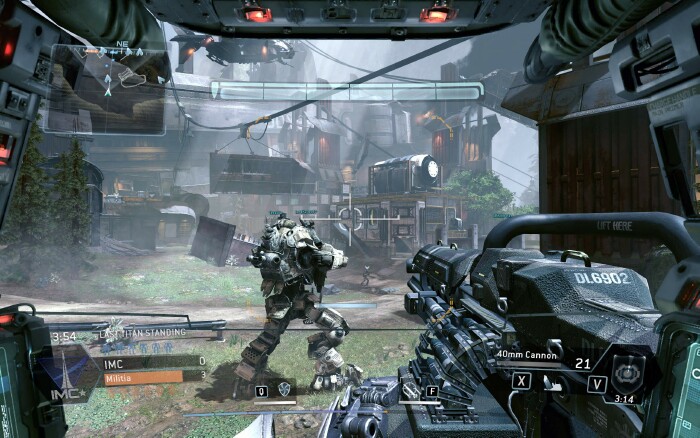
That said, why is there a picture of Titanfall up there?
[Editor’s note: Every two weeks, we’ll pick a classic game to play and discuss. Then the choice of the next game will be made by a randomly selected participant from the current discussion. It’s like a book club, but with videogames. We’d love to have you join us. Register for the forums and hop into the discussion! This week’s choice, by Nightgaunt, is Martian Dreams.]
Everything about Martian Dreams makes me giddy. First of all: Mars. Martian Dreams doesn’t give it the gung-ho treatment of a Red Faction. Nor does it have the technical coldness of a rover or colonization sim. Rather, it admirably constructs a place that could have flowed from the imagination of Ray Bradbury, who knew that Mars and Martians could tell us a lot about Earth and ourselves. Then there’s the history. This is history through characters: Percival Lowell, Nikola Tesla, Andrew Carnegie. Mark Twain! Marie Curie! Tiffany and Rasputin! I love the joyful, colorful way they are sprinkled around on Mars, each with their special role to play in the story.
I love the balance in the game between exploring a world and following the story. This is really an adventure game in RPG clothing. Mars is a broken world, and it has broken the human societies that have arrived there, and there are some specific things you need to do to fix it all. This is a ripping steampunk yarn with an appropriately pulpy sensibility.
Martian Dreams was made by Origin in 1991, and it sports all the gameplay features of its parent-game, Ultima VI: The False Prophet. A nearly seamless open world, rich environments populated with hundreds of items, a solid and useful conversation system, accessible combat. As Warren Spector tells it, Origin realized it should still produce games between the major releases headed by Richard Garriott and Chris Roberts, so it looked to its more junior designer-producers, Jeff Johannigman and Spector. They made these self-contained spin-offs from the Ultima world, both with pulp slants: Savage Empire and Martian Dreams, respectively. And they are self-contained. Martian Dreams sloughs off all the Ultima baggage with some quick time travel and a rocket-load of characters you are never going to see in Brittannia.
If you’re skeptical, at least you can get it free from Good Old Games! This version has the very useful map, a manual and reference card that will help you get used to the primary interactions if you’re not familiar with the Ultima 6 engine, and also a cluebook that might help save you some time on a few of the quest branches. You will need to take some notes, particularly of lat/long coordinates of different landmarks.
One of the advantages of an actual physical pinball table is that it’s always and only going to exist on its original platform: the real-world. It won’t be traipsing off into other dimensions or realities, where you have to consider buying it again because maybe it looks better, or maybe that’s where your friends are playing now, or maybe you need to set a high score there because you have the compulsive need to at least get your name on a leaderboard. An actual physical pinball table offers the dumb, loyal, here-and-now consistency of analog objects without EULAs.
Of course, they also have moving parts that fall apart. Not to mention there’s no room in my garage for a real pinball table thanks to all the plastic instruments and the Tony Hawk Ride skateboard I’m storing out there. So pinball is a strictly virtual pursuit for me. But what a confusing pursuit these days, with the next-gen systems and the iPad and the sudden ongoing relevance of Nintendo. Where does a guy pitch his pinball tent? Now that the Xbox 360 has been thrown over by a Playstation regime in my house — move over Tony Hawk Ride! — what’s the Zen Pinball platform of choice these days?
After the jump, my frank advice for the roving bands of homeless pinball wizards.Continue reading →
This isn’t a game review. There is nothing objective about anything you’re about to read. Not that making this a review would somehow mean it would have to be an objective enumeration of the game’s features and technical specs, although you and I both know that there are plenty of websites doing exactly that, as though they were describing accounting software. But there is a big difference between a guy getting an advance copy of a game from a publisher and playing a few times over one day before rendering an opinion, and a guy spending a year playing a game, first in boardgame format and then on the iPad, over a dozen major rules changes and a hundred separate builds, and then trying to tell you what he thinks. Each one needs to be taken with an industrial dose of whichever variation of the sodium chloride idiom is currently in vogue in your vernacular of English.
After the jump, it’s up to you to decide which you find more helpful.Continue reading →
E3 dumps a cornucopia of impressions and insight onto the internet. Thank goodness we didn’t find ourselves under that umbrella. I played as much as I could, and wanted to talk about a few games that almost entirely changed my perspective upon spending some more time with them.
After the jump, how do you gauge that? Hot? Cold? McDonald’s coffee?Continue reading →
[Editor’s note: Every two weeks, we’ll pick a classic game to play and discuss. Then the choice of the next game will be made by a randomly selected participant from the current discussion. It’s like a book club, but with videogames. We’d love to have you join us. Register for the forums and hop into the discussion! This week’s choice, by rezaf, is Darklands.]
After the Quarter to Three Classic Game Club started with a strategy game and continued with a Star Wars FPS and then a stealth game, I thought RPGs were in for some time in the spotlight. My number one choice would have been the gold box RPGs from SSI. I’ve replayed each of them numerous times in years past, but I haven’t returned to them in a decade or so. Unfortunately, none of them is available on Good Old Games. An alternative I considered was Temple of Elemental Evil. It’s a much newer game and hands down the best tactical implementation of D&D games in modern times.
But I ended up picking another game instead. Microprose’s Darklands. It’s one of my favorite RPGs of all times (I actually had the poster at the top of this entry on my wall for a couple of years), and it’s quite different from its modern cousins. It features many things never seen in CRPGs. For instance, its unique theme. Darklands is set in Medieval times as the superstitious contemporaries of that age saw it. There are dragons and undead, gargoyles and dwarves, but you have to look hard to find them. Much more prominent are thugs and robber knights and the likes. Praying to the saints will make them tip the scales in your favor, or alchemists will brew potions that might tip the scales in your favor. But there are no mystical superweapons; just ordinary Medieval arms and armour.
Creating your character is a miniature RPG on it’s own. It’s up to you whether you take inexperienced youngsters who have all the strength of their youth, but lack social connections and formal education, or seasoned veterans, who will start to lose their edge in the years to come. In most RPGs, this would be a non-issue, as game’s don’t last years. Not so in Darklands.
There are some major plotlines — one I remember involves the Templars — but you don’t have to tackle them. You can go look for a dragon or try to hunt down some other mysterious beasts. You can investigate a strange cult in a remote village somewhere in the countryside. Or you can just play goody-two-shoes in cities across greater Germany, rooting out robber knights and becoming famous in the process. You can retire from adventuring at any time and the game will present you with your score, representing how your actions will be remembered. Or you can retire individual characters who have grown old, replacing them with new blood. You can spend years investing your hard earned money to make your priest or alchemist more knowledgeable in his art while your knight earns a pittance as a guard for a blacksmith. You have a lot of freedom in the game, which is one reason why I hold it in great regard. Also, Darklands was a pioneer of the type of combat later associated with the Infinity Engine RPGs like Baldur’s Gate and Icewind Dale.
The Good Old Games package contains the cluebook, which may be worth a look in case you want to know exactly how things work. Otherwise, the manual and the game itself intentionally keep you in the dark a bit, which you might not find appealing. You can find some info and tools (some people like to use a Quest Lister) on Darklands.net. But as it goes for many old titles, the game runs in low resolution, which might be off-putting to some. If that’s an issue for you, consider sticking with it for a while anyway. You’re in for a unique experience.
E3 has come and gone. Attendees squint around in its wake, cobbling together a means of remembrance from the show. What were the themes? Was this the year of early access? When Battlecry is dated for “Beta 2015” it’s hard to think not. Maybe it was finally the unveiling of next-gen games? Maybe there were #trends to talk about. Sure, let’s do that. I feel like I’ve learned something. I daresay, even a few things.
E3 began this morning when the doors of the Staples Center were thrown open. The press briefings technically precede E3, which is why presenters can say things like “…and I’ll see you at E3”. Because they’re not, technically, at E3 yet.
By holding off until the literal last minute — the floor opens within minutes of Nintendo announcing the last thing they’re going to announce — Nintendo doesn’t get in on the previous day’s buzz. Instead they get the last pre-word. And, once again, they used that last pre-word to win E3 before it even began.
[Editor’s note: Every two weeks, we’ll pick a classic game to play and discuss. Then the choice of the next game will be made by a randomly selected participant from the current week. It’s like a book club, but with videogames. Join our forums if you’d like to participate. This week’s choice, by a poster who identifies himself as Rock8man, is Thief II.]
I thought this might be a good time for us to re-evaluate how we feel about stealth. Do we still have the patience to observe a guard on his patrol and wait for the right moment to slip by him? Or are we now so wired for instant gratification in our games that perhaps the Thief series will no longer resonate with some of us?
We will be playing Thief 2: The Metal Age. You can purchase the game from Good Old Games here. They currently have the latest (unofficial) patches incorporated into the download so that all the rigamarole you needed to go through during most of the last decade to get the game running properly is now a thing of the past. You can play on modern monitors on high resolutions, and run it on any modern system. Just download, install, and play.
I have to admit, as big a fan as I was of the original Thief, I only got to about the third level in Thief 2 when it originally came out before I got sidetracked. I always meant to go back, but when I did try to go back, my computer at the time had a lot of technical problems in getting the game running. So I’m really happy that the technical hurdles are finally behind us when it comes to running this game.
Another confession: For me, playing Thief was all about getting in and out with the least amount of interference possible. I’ve read many a tale from my fellow gamers about their deft use of the blackjack. But I always viewed the blackjack with as much disdain as the sword. Aside from the first guard you have to take out in the original Thief as a tutorial for how to use the blackjack, I finished that game without ever resorting to it again.
So it was quite the surprise to me when I fired up Thief 2 after all these years, and one of the objectives on Expert difficulty is to incapacitate 8 guards with the blackjack! Oh my! Apparently the Thief 2 designers did not share my feelings about the blackjack. Also, the game starts you in a level where you’re actually interacting with a Lady you have to rescue. And yet, the game doesn’t really have the animations and robust enough AI to pull this off as something that feels even remotely real. In Thief 1, when most of your interactions are with the undead and with guards who listen for your footsteps or spot you in a well-lit room, the game managed to create gameplay systems and AI that felt real enough to be very immersive. Not so much here at the start of Thief 2. It all feels a bit awkward. Like they’re trying to achieve something that their engine is not capable of. Couple this with the ridiculous requirement to club 8 guards, and my return to Thief’s universe is less a tense thriller and more a slapstick comedy of errors as I sometimes miss the guards and end up in a circle strafing loop until I clear out the level and knock out all the guards. Hurumph. So much for patience and stealth.
Come on Thief 2 designers. I know you can do better. I hope the 2nd level fares better.