
A Valley Without Wind 2 is nothing like A Valley Without Wind 1. So many of the things that made me eventually love Valley 1 — it takes a while to wrap your head around that game, and you might give up before you realize you love it — are missing in this overhaul, which has just been released as a separate executable available for free to owners of Valley 1. Valley 2 has no crafting, no collectibles, no inventory, no spell customization, no fancy traversal gimmicks, no dungeon exploration, no grinding. It is basically missing 90% of the gameplay that dragged me into Valley 1. The sorts of moments I detailed here are entirely gone. Even the music is different. The original game’s 8-bit retro ditty has been replaced with a Japanese pop song, but in English.
So what Valley 1 fan is going to want anything to do with Valley 2?
After the jump, me Continue reading →

Metal Gear Rising: Revengeance is out this week. I’d like to say I’ve played it. Technically, I have. But only the first thirty minutes or so, and then about an hour of the next five minutes. Look, Metal Gear Rising: Revengeance, I’m no stranger to brawlers. I understand precise timing. But I can’t get past your robot puma that has a chainsaw on its tail. You’ve obviously put that battle in here to teach me parrying, which I’ve accomplished several times successfully in the tutorial mission that I’ve replayed a couple of times to make sure I understand it. But after no less than 20 attempts at this puma with a chainsaw on its tail, I’m just going to assume that you’re not for me. Which is fine, since I still have Devil May Cry.
Crysis 3 is out this week. It’s very Crysis 3.
Finally, Paradox’s March of the Eagles focuses on combat during the early 19th century, when combat was one of the least interesting things happening.
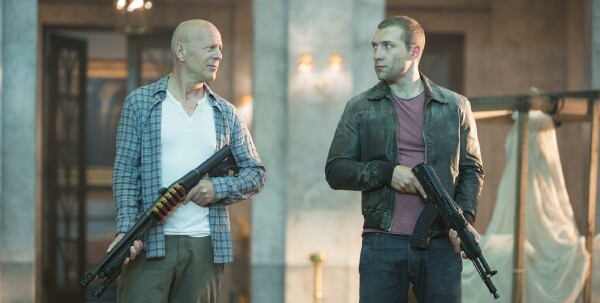
We see A Good Day To Die Hard so you don’t have to! Then we talk about elevator scenes in movies for this week’s 3×3, which starts at the 50-minute mark.
Next week: Dark Skies
Podcast (movies): Play in new window | Download
Subscribe:

The fine folks at Eugen Systems, one of our latest greatest hopes for real time strategy, have been awful at thinking up names for their games since their debut with Direct Action, which was clearly not about fighting wars through proxies. I would be hard pressed to come up with a more generic and uninteresting title than Wargame: Airland Battles, their next game. All I can deduce from that title is that there won’t be any naval units.
The main bullet point for Airland Battles is the addition of aircraft (pictured) to the same basics from Wargame: European Escalation. Which is another awful title for how all it tells you is that you won’t have any battles on continents that begin with the letter A.
But for me, there’s something even sexier in Airland Battles than the sexy airplanes. European Escalation appealed to me partly as a collectible game in which you unlocked awesome Cold War units. But one of the problems with that game was the “deck building” that followed the unlocking. There were no meaningful rules about how to arrange your deck. You just chucked stuff into the box. There. Deck built! There was no incentive to use the less useful units. Of all the toys in that very generous toybox, most of them go unplayed with.
Eugen has a very different idea with the deck building in Airland Battles, which gives your deck bonuses if you restrict your cards — err, units — to certain themes.
For example, if you create a Marine infantry Deck from 1980 with 100% Russian troops, you will receive very high bonuses, compared to a Deck made up of little bits from all nations on your side.
Read more here, where the developers spell out in detail what they’re doing and why they’re doing it. Airland Battles is due out this spring. It’s not soon enough.

Immortal Heroes is a pretty terrible name for this latest expansion to Ascension, the deck building game that has effectively ruined most other deck building games for me. But it’s a title that gets to the main new gameplay mechanic, a deck of cards representing soul gems that sits off to the side of the table. Each card in the soul gem deck is from the previous Ascension sets. So when you draw a soul gem, as many of the new cards allow, you’re basically invoking an immortal hero. Hence, Ascension: Immortal Heroes. It’s a touch of randomness within the randomness. Draw a card that lets you draw a card. I like it. Let’s hurry up and get this puppy onto the iOS version!
There are two more gameplay tweaks in Immortal Heroes. Ongoing trophy monsters are the equivalent of constructs that cannot be destroyed. And placeholder event cards let you control the frequency of the global events that shake up the rules and bring fanatics into play, which are now a fundamental part of Ascension’s combat dynamic.
Immortal Heroes works great as a standalone set of cards, but loses its punch when shuffled into the other decks and your soul gem deck can go untouched for so long. But it demonstrates that the developers at Gary Games haven’t yet run out of good ideas.
After the jump, ten reasons to get Immortal Heroes Continue reading →

Who knew commanding a spaceship was such a joyless task, characterized by constantly needing three widgets and only having two? Shifts, a short single-player lack-of-resources management starship voyage strategy game, tasks you with finding five habitable planets before your ship falls apart completely. Mostly your ship will fall apart completely.
And I’m okay with this. As we all know from Darkstar, Galaxy of Terror, and 2001, space isn’t friendly. The dungeons in a rogue-a-like are happy theme parks next to the vast fuel sucking vacuum between barren planets. The dramatic tension in Shifts is whether you’ll run out of fuel or supplies first. Not whether you’ll fail, but how you’ll fail.
This could have made for a pretty good “see if you can do better next time” challenge, along the lines of Elder Sign: Omens, but even more streamlined so it’s easily and always playable in a single sitting. No such thing happens in Shifts, an abrupt “wham, bam, thank you ma’am” exercise in it all being for naught. Not only is your score not saved, it doesn’t even exist. Shifts is a binary pass or fail endeavor, unsatisfying whatever the outcome, because you’re simply dumped back to the main menu where you can choose to play again or read the credits for the aptly named Threadbare Games.
Each turn, you assign crew members to shifts, which determine what your ship can do that turn. It’s all driven by icons and numbers, which may as well be interchangeable. The engineering chick isn’t the engineering chick so much as she’s the one with the swoopy bangs. I still can’t tell the science chick from the executive officer chick beyond one is the fish icon and the other is the party icon. The simple gameplay and simple no-frills theming don’t give the characters any meaningful character, and your ship is a set of three numbers that you don’t want to get to zero. Fuel is as good as hull integrity which is as good as colony arks.
Consider Shadow Watch, a similarly streamlined game about characters with asymmetrical powers who get better at what they do as the game goes on. The same thing happens in Shifts, but it’s a weird combination of simple and undocumented. It’s easy enough to figure out the “brobots” that boost a character’s power, but what good are the upgrade stars? Who knows. Who cares? Not Shifts, a solid idea that needs a bit more work to be a good game. Right now, it’s as merely clerical as the name implies.
2 stars
iOS
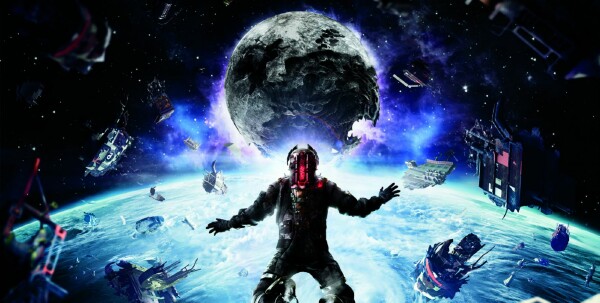
Graham “Giaddon” Trail joins us to talk about why we love Dead Space 3. Spoilers abound, so you might want to finish the game if you care about the story. In which case, ha ha, you care about the Dead Space 3 story.
Podcast (games): Play in new window | Download
Subscribe:

Playing Gearbox’s Borderlands 2, it’s hard to imagine this is the same studio that stitched together and released Duke Nukem Forever. Playing Aliens: Colonial Marines, it’s not at all hard to imagine.
After the jump, hopping xenomorphs Continue reading →

Aliens: Colonial Marine is out this week. I’ve played through the campaign, about half of it co-operatively, and I’ve sampled some multiplayer. The review won’t be posted until tomorrow, so the wallet threat level will have to stand in until then.
Also, Paradox is publishing yet another Dungeon Keeper clone, this time developed by Cyanide, called Impire [sic].
Also out this week is a free 2.0 update for A Valley Without Wind that completely overhauls the graphics and gameplay for this boldly weird endless Metroidvania action RPG, which I really liked. I haven’t tried this overhaul yet, but no one refuses to leave well enough alone like Valley Without Wind developer Arcen Games.
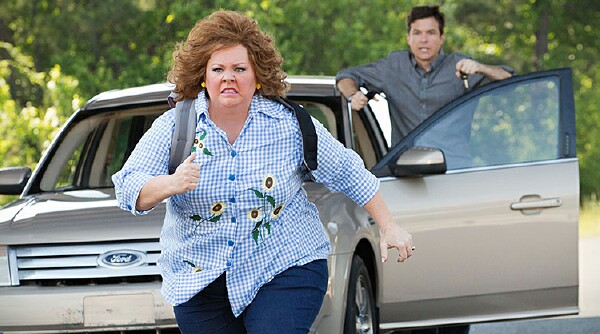
This week’s podcast is a two-to-one split on the critically panned but commercially successful Identity Thief. If you want to avoid spoilers, jump to the 37-minute mark for this week’s 3×3 of bad ideas with great execution.
Next week: A Good Day to Die Hard
Podcast (movies): Play in new window | Download
Subscribe:

On hardcore. Or pure survival. Or retro.
The Dead Space games were designed around the idea of shooting monsters in the limbs, which often flail wildly so you’ll have to use stasis to freeze them. This makes it much easier to aim for the shoulders and thighs, or whatever equivalent exists on some Thing inspired squirming amalgam of dog, zombie, and octopus you’re fighting at any given time. You can subvert this concept entirely by playing on the easier difficulty levels and just pouring ammo into the monsters. Dead Space is a perfectly viable meat circus if you want to do it that way.
But to really enjoy the combat model, and to traffic in the survival horror economy, and to get the achievements, you’re going to want to play the harder difficulties and especially the new game plus modes like hardcore and pure survival. However, you have to prep first.
After the jump, cue Eye of the Tiger for your training montage Continue reading →

Jon Shafer is at the gates to talk about Jon Shafer’s At the Gates. He also sticks around to chat about fellow former Firaxis dev Brian Reynolds’ latest career move, whether EA’s Dead Space 3 micropayments are evil or just crass, what’s the deal with Noomi Doody Pookie: Wrath of the White Witch, how many hours it takes to get to the gamey center of Persona 4 Golden on the Vita, and why you shouldn’t ride your zombie horse to Thieves Landing in the Undead Nightmares add-on for Red Dead Redemption. Also, Jason McMaster plans a daring assault on Zynga headquarters!
Podcast (games): Play in new window | Download
Subscribe:

To run in Red Dead Redemption, you can hold down the X button. It’s more like a determined trot. But to really run, you have to mash the X button repeatedly. Which is a distinctly Rockstar idiosyncrasy. I’m pretty sure that’s how it worked in Grand Theft Auto IV and L.A. Noire. Probably even Rockstar Table Tennis.
But other games don’t make you mash the run button. They know that’s a pain in the butt. They let you just hold down the button to go as fast as you’re going to go. Many games these days don’t even make you hold down the run button. Just tap it and you’ll keep running until you stop, freeing up your run finger/thumb to do things like reload, change weapons, slide, and bunny hop. I’m not convinced they’re doing it right.
After the jump, xxxxxxxxxxxxxxxxxxxxxxxxxxxx Continue reading →

Tim Roth’s first movie was 1984’s The Hit, in which he played a hitman too hot under the collar for his own good, paired with the world weary and wiser John Hurt. If The Hit had turned out differently, The Liability could be its sequel, with Roth grown world weary and wiser thirty years later, and now paired with his own irresponsible young partner. Hence the title.
I love movies about dumb characters who don’t know they’re dumb. As the eponymous liability, Jack O’Connell has the same star quality Roth showed in The Hit, if not the same shrewd cool. What would be mugging in most performances comes across as energetic sincerity for O’Connell. He’s a really good actor, with excellent comic timing and a grand rapport with Roth. Some of my favorite moments in The Liability are O’Connell saying something stupid and Roth unable to muster the wither for a withering look. They’re a lovely team.
The Liability resembles In Bruges in some ways, including its sharp sense of dark humor. It sports truly clever twists and even flashes of astonishing style. A hypnotic “throw me the idol, I’ll give you the whip” scene plays like something Nicolas Winding-Refn would shoot, complete with the neon synth beat of a sexy pop song and the threat of violence coiled tightly just under the surface.
At one point, when Roth’s character is talking about his background, he mentions what sounds like “Angola”. Did he just say Angola?, you might wonder. Whatever. There are other things going on worth following. But later in the movie, when it’s clear that, yes, he did indeed say Angola and it’s relevant for a reason that was otherwise just a quirky detail, the payoff is one of those rare delights you’ll remember for a long time to come.
The Liability is available on video on demand. Watch it here to support Quarter to Three.

ABCs of Death, a wretched horror anthology in which 26 directors around the world were each given a letter of the alphabet to use as the basis for a short film, captures what it’s like to be a fan of horror movies: lots and lots of dreck, some of it gross, much of it inept, almost all of it forgettable. Yet buried underneath it all, you might find a rare gem. Are the three gems in ABCs of Death worth the 23 other shorts you have to sit through?
It won’t be easy. These shorts range from tedious to dull to flat-out “what the hell were you thinking, Ti West, because now you’ve made me like House of the Devil a little less?” They imply a Japanese preoccupation with farting and jacking off, as well as other countries’ directors expressing their fascination with turds and furries.
But the reasons to persevere are D for Dogfight, Q for Quack, and P for Pressure. Marcel Sarmiento, the director of the uneven but interesting Deadgirl, directs the sleekly hilarious and beautifully textured Dogfight, which is literally about a dogfight. The centerpiece of this live action short is a really awesome dog performance. Adam Wingard, the director of A Horrible Way to Die and the framing device for horror anthology V/H/S, seems fully aware of the futility of doing anything meaningful with five minutes and a random letter of the alphabet, particularly when his letter is Q. Both Dogfight and Quack realize that a good option for a horror short is a touch of black humor.
But then there’s Simon Rumley’s Pressure, which is hands down the best thing in this anthology, partly for how it plays with its title (few of these directors seemed to give a damn about their assigned letter, much less whatever word they came up with), but mostly for how it’s actually a horrific short about a character instead of just a hurried concept. Pressure makes the point that horrible things aren’t always only horrible things. This should come as no surprise if you’ve seen Red White & Blue, Rumley’s masterpiece revenge story, arranged in a heartbreaking lattice of confessionals, cross-motivations, and character reveals (Red White & Blue is available in Netflix’s instant view catalog and I cannot recommend it enough to anyone who can handle Jacobean excess). Pressure is exactly what I would expect the director of Red White & Blue to deliver.
ABCs of Death is available on video on demand services. Watch it here to support Quarter to Three.


