


What you’ll see if you see Melania, disgraced director Brett Ratner’s Trump tribute
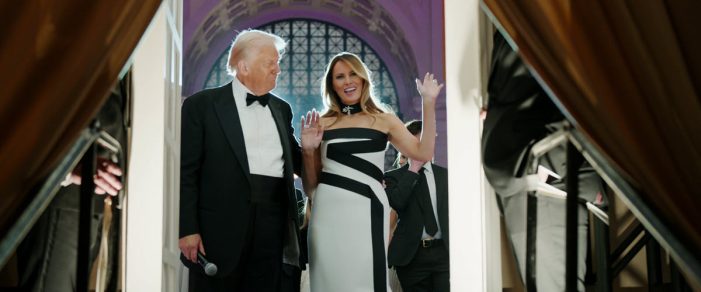
Her life is a fairy tale, the music insists. She strolls from room to room, her visage fixed and ghastly, a lipsticked rictus struggling to assert humanity with its rigid approximation of warmth. Her halting and barely comprehending voiceover mimics intimation in jagged English. Everyone surrounding her is anxious and tentative, showing her fabrics and dishware and deference, a hushed cadre of aides and security, caterers and tailors, servers, servants, attendants all. She is the center of everything, uncaring, grotesquely regal, a gaudy reminder of something we thought had washed away long ago, now discovered clinging to the shoe of history. The tailor retreats behind a curtain to fetch something else and now a Laotian immigrant speaks about coming to America. Melania, who wore a jacket emblazoned with the words “I really don’t care” to a child immigrant detention center, waits through the woman’s too many words. Her eyes, holding back daggers, flick to an aide off-camera: how much longer will this take?
Her father’s handheld camera pokes in like a court jester with nothing to say because it’s all already too ridiculous anyway. Brett Ratner cuts to some faded family photos in ornate frames pretending classiness. Michael Mann’s longtime cinematographer Dante Spinotti angles into the light to break out a spangle of celebratory lens flare. The music reminds you it’s all as magical as a goddamn fairy tale. You don’t even know, it patters. You can’t even believe. Absolute fucking magic, it moans, whorishly brittle and insistent, into your ear.
She goes to President Carter’s funeral. Her father speaks and she attempts to fix a loving gaze on him. She muses that her dead mother is with her every day. Donald Trump tries to say something not inappropriate. He fails, but Ratner leaves it in, because it’s all he’s got, all he’s ever going to get. “My beloved mother was the richest threat in my life,” Melania narrates phonetically. Perhaps she said thread. There’s no way to know. For some reason Saint Patrick’s Cathedral is involved. It’s swamped with poinsettias, which are literally Mexican immigrants, huddled around the altar as if seeking refuge. A priest grins disingenuously, almost leers, at Melania and lets her hold forth for the cameras. When he offers a blessing she accepts as if she’d been offered a glass of champagne. She closes her eyes and feigns piety while he does his business.
She Zooms with Macron’s wife about her beebast initiative, which is something something cyberbullying. Los Angeles burns. She pretends to care by watching it on Fox News, later recording a voiceover someone wrote about how she thinks about the families and the schools. Then she meets with one of the hostages taken by Hamas, finding herself in the orbit of suffering. She extends lingering hugs and affects sorrow as best she can, as if judges were going to hold up cards (there would be no tens, but perhaps a single eight among the sixes). With the queen of Jordan, she discusses the well-being of children around the world. Melania reminds herself mildly that she and the queen are both passionate about helping foster children get an education. Only 3% of them go to universities, someone tells her to say. “We need to do better,” she reads from her script. For this one, there would be no eights and the sixes would be generous.
Her husband fumes about some national championship coinciding with his inauguration. He feels slighted. She feigns amusement. “Do they have any idea how many people will be coming?” he interjects while aides try to recite a schedule. Then she ponders to these assembled aides whether it will be safe. She expresses concerns. She claims that Barron doesn’t want to get out of the car. Donald asks how soon he’ll be in the White House, how soon can he begin “straightening out the country”. An aide tells him 1pm and then blandishes robotically, “We’re all very grateful”.
“Arlington is not just a burial ground, it’s the soul of our nation,” she says of Robert E. Lee’s former estate. The grounds are lousy with Brett Ratner’s cameras and Trump’s donors. The heavens frown gray and wet, the dead soldiers refrain from comment.
During the talent portion of the movie, she demonstrates that she knows (some of) the lyrics to Michael Jackson’s Billie Jean, so Ratner pays for the rights. 6, 6, 6.5, 4. When she finally strolls into the White House as the new First Lady, she’s dresses like Michael Jackson in the Smooth Criminal video.
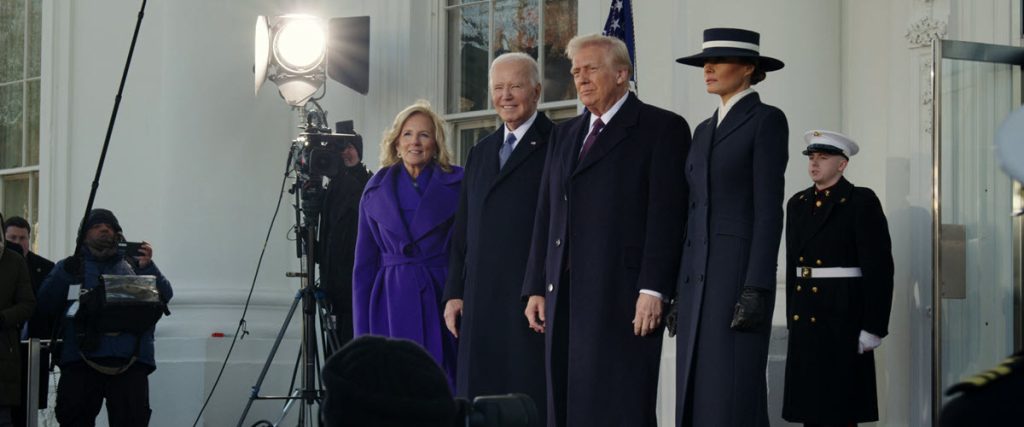
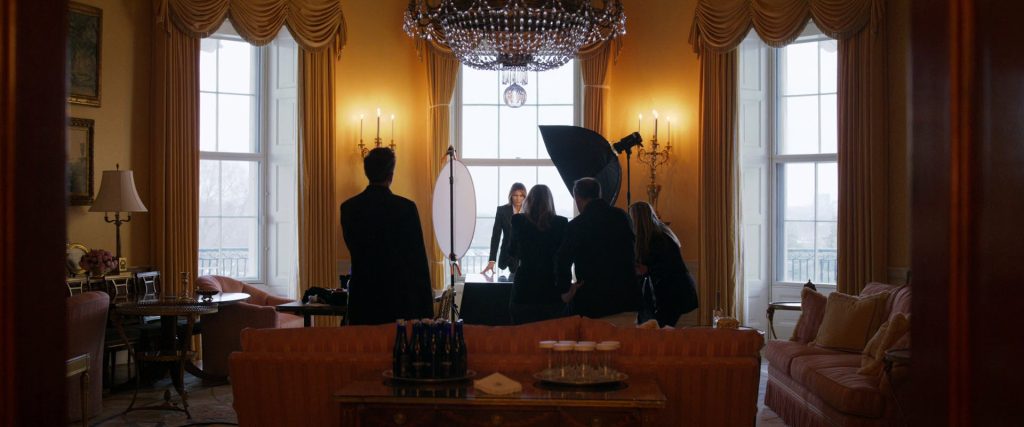
Ratner’s camera dogs her throughout the inauguration day pomp. She will later record voiceover about feeling the weight of history. Then she slips into some weird high fashion dress with black squiggles on it to attend some balls. Finally she retires to the White House, waving the camera to come in with her. She sends the food away and her husband pretends interest in a painting. From offscreen Ratner says, “I can’t believe we’re in the White House now.” Portraits of previous First Ladies look down from the walls in horror. Ratner ends with Melania doing a sassy photo shoot from within her new home.
Over the years of doing movie podcasts, we used to open by bracketing a movie between two other movies, one better, one not as good. This was a way to start the discussion and give us each a perspective from which to talk about the movie we’d just watched. In that spirit, if you want to watch a movie about a woman with poise, grace, and resilience, and furthermore one who offers sobering commentary on the state of the world, I cannot recommend strongly enough Put Your Soul on Your Hand and Walk as a movie better than Melania. But, really, it’s an irrelevant comparison, as that’s a documentary and Melania is tribute, paid by disgraced filmmaker Brett Ratner to gain entry into the court of American reality TV royalty ascended to high office. This is no documentary, and it’s arguably not even propaganda. It’s porn for Republicans, the fetishization of Trump’s cult of personality. A $35 million bauble, a portrait of the patron’s wife painted to curry favor, slathered thick and oily across a cinematic canvas.
Furthermore, this was a Patreon pick not because anyone cares what I think about Melania — I could have told you that without having watched it — but because it’s a political watershed by which we divide ourselves into those who cheer and those who jeer. So in that spirit, let me pair Melania with other cheerleading for right-wing authoritarian parties. In that spirit, my over is Triumph of the Will, a movie far better than Melania.
Leni Riefenstahl’s Nazi propaganda speaks boldly and clearly, unashamed of itself, a defendant defiant and without remorse, oblivious to the assembled evidence. It is proud and blinkered and confident about Hitler with its shots of a million joyous people in 1934 Nuremberg — a city whose name will soon imply something very different — assembling to demonstrate all they will do in the service of the man who has just consolidated his power over their government. It exhorts everyone watching to feel the same way, to share in the devotion, to be part of a glorious thing called Hitler’s Germany. Even if all its pomp and dictatorship is tedious, the communal joy and cinematic skill on display in Triumph of the Will is undeniable. We love Hitler, it sings. As a historical document, it’s shocking and invaluable, a bright blot shone through a camera, inadvertently damning in the glare of history the very thing it declaims.
Brett Ratner’s Melania, in contrast, is a sad wheedling little creature, cravenly pandering to its subject, feigning itself a common and relatable thing, no different than a housewife from an average place in America like Beverly Hills or the Jersey shore, worthy of our envy, and therefore our admiration, and therefore our respect. She is, the movie hopes, what you aspire to, what you think you could one day be, your destiny realized, your true desserts at last come true. Ratner doesn’t have the filmmaking prowess to declaim. He barely even chronicles.
Ratner’s movie is an expression of the modern right’s “fuck you I got mine” appeal, an icy queen held forth for the people to whom Jesus would impart the parable of the workers in the vineyard in Matthew 20:1-6. But to no avail, since they are also the people most likely to interpret it as meaning labor will never be happy no matter how much you pay them, therefore automation and offshoring will be our salvation, amen. Like any parable, it speaks as much in the receiving as the telling. Fuck you, they’ve got theirs or its on the way and they’ll have theirs soon, and Brett Ratner’s limp encomium shows them how it will be. Melania, Ratner hopes, will enthrall them.
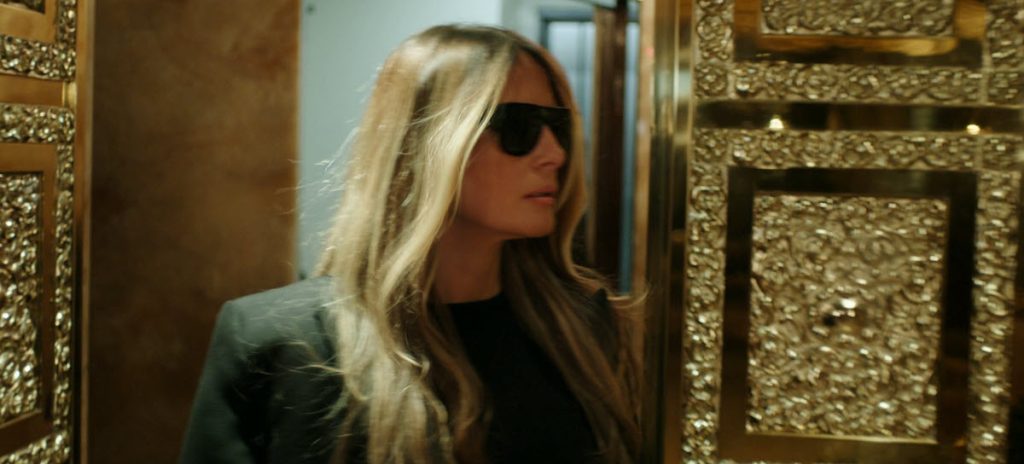
She walks in kitsch, by that light
Of reality TV’s gilded sty;
And all that’s worst of dark and blight
Meet in her vacant vulpine eyes,
Thus sunglass’d ‘gainst that wealth and bright
Which caprice to other lives denies.
As for my under, I’m having a hard time imagining something worse than Melania. So I’ll pick any of the miserable little documentaries made by Dinesh D’souza. Not that I’ve seen any of them, but they couldn’t possibly inspire a videogame reviewer to rewrite Lord Byron.
(Why on earth am I writing a review of Melania? Because it won the Patreon review request drawing! Only you can save me from — and subject me to! — such things, so please consider supporting me for $10 or more on Patreon so you can take part in the monthly review requests.)
