


Painkiller [sic] is no Painkiller
In Love and Death on Long Island, John Hurt plays a reclusive author named Giles De’Ath. Convinced by his agent to finally come out of his self-imposed cultural shell and experience modern entertainment, he ventures to a local cinema to see an E.M. Forster adaptation. But not being hip to the modern multiplex, he instead stumbles into a teenage sex comedy called Hotpants College II. He watches patiently for a time, aggrieved at the inanity of it all, before finally realizing his mistake and drolly noting, “This isn’t E.M. Forster.”
That’s how I felt coming into this game: “This isn’t Painkiller.”
Painkiller was a singular and very single-player shooter, with clever distinct levels, alternately claustrophonic or vast and open, all deliciously dark and desolate and stuffed with shatterables. The monsters were meaty and died gloriously and lived vividly, with unique behaviors that demonstrated what good AI means in a shooter. You carried a crazy variety of weapons, many of which you’d never seen before. The whole thing built to a haunting and unforgettable finale. Painkilled [sic] isn’t that. Not by any stretch of the imagination.
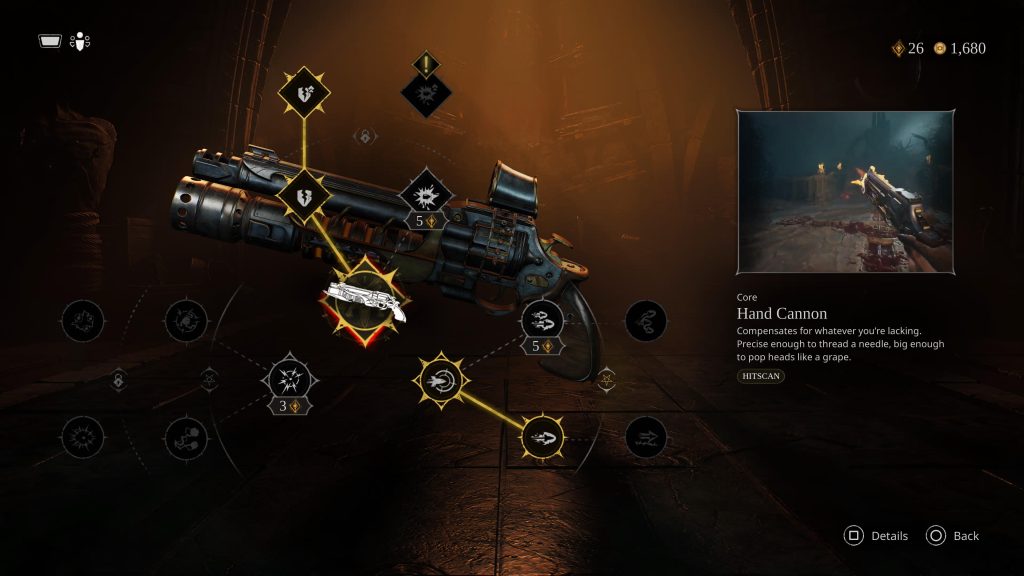
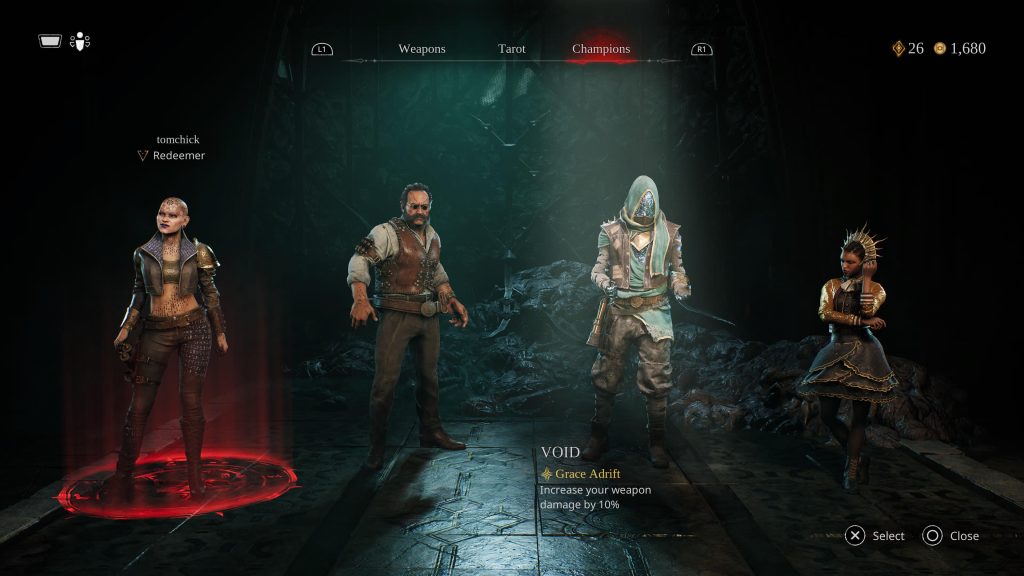
Painkiller [sic] has six weapons, mostly familiar, four of which you have to unlock. Even then, you can only carry two weapons into the game, and the upgrade system requires investing in specific weapons, so you’re mostly going to carry the two you’ve most upgraded. To get additional weapons, you have to spend gold, which is also required to unlock tarot cards and the expensive costumes for the different characters. Costumes you’ll never see, this being a game played from a first-person perspective. Think of it as a favor to the other players, showing them how you can dress up your dolly, make it more edgy.
The tarot card system starts you with two cards that give you bonuses. You can pay to randomly unlock new cards, and for any given raid — you play “raids”, not levels — you can slot up to two cards. Any cards you bring into a raid will “burn out”, and you’ll have to pay again to renew them. This comes from the same currency you’re spending to upgrade everything else, so spending it on temporary card bonuses isn’t a terribly attractive proposition at first. Most of your early Painkillering [sic] will be cardless. To sample locked weapons and upgrades, you can always play the vaguely rogue-like mode where you choose among random weapons, upgrades, and cards as you progress.
All this makes for a grind-based experience, which isn’t surprising given that it’s also intended to be an online-only multiplayer experience. You always play as one of three players, even if you’re offline. And anything you do offline is strictly firewalled. It just wouldn’t be fair if you advanced by playing with bots while I advanced my character by playing online. What an outrageous proposition, that we each might earn the same goals by different means. There’s no room for that sort of latitude in videogaming. It simply won’t do.
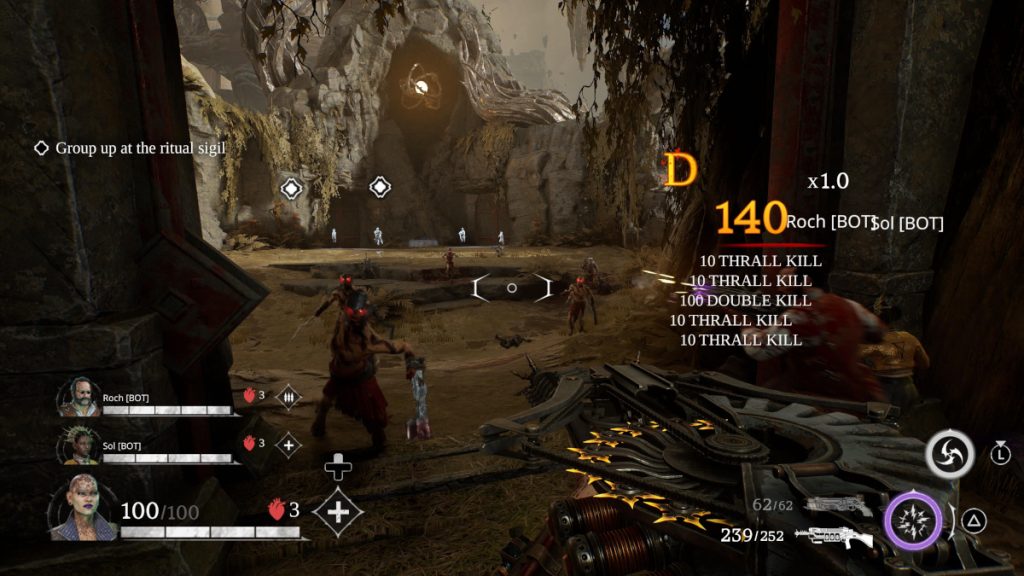
Yet even offline, you’re still only one of three players, with a pair of bots always tagging along, jumping around, stealing your kills, getting in the way of your mastery challenges, but at least sometimes applying elemental effects with their weapons so you can do things like shatter frozen enemies or kill them while they helplessly float in the air. To be fair to the bots, you can tell them where to do, who to attack, and even which power-ups to pick up. They’ll even use the health and ammo power-ups at your command, but the other two they’ll trigger at their own discretion.
Your performance in a raid is gauged by how quickly you finish and by how much gold you collect, which are more or less mutually exclusive. If you’re scouring the level for gold, you’re not going to finish quickly. And if you’re making a beeline to get through the level, you’re leaving gold on the table, where it’s squirrelled away in nooks and crannies, many of them well off the beaten/linear path. Your score is also determined by difficulty level and a combo system that racks up points based on consecutive kills, tallying them along the right side of the screen like a grocery list, and even giving you a letter grade, as if you were writing a book report or taking an algebra test.
But I’m not sure how your score matters beyond filling up an experience point bar after each raid, which will progress your rank, which I guess matches you with appropriate players? I was only playing offline, since I don’t pay Sony’s monthly online fee, as I was reminded by a persistent nag screen every time I started Painkiller [sic]. All I ever got was a promotion from “adherent” to “redeemer”, which slightly changed the little icon next to my name. I’m guessing it’s all just dick measuring for online players, which renders the whole scoring system moot for those of us offline.
(By the way, Painiller [sic] does that really dumb thing of inverting the control wheel when you invert your view, which is something publisher Saber Interactive took months to address in their Expeditions: Mudrunner game. I realize those of us who invert our Y-axes might be viewed as freaks by some people, but we’re out here, Saber Interactive, and we’re not going away. It would be much appreciated if you put in whatever apparently extreme extra effort it must take to let us interact with control wheels.)
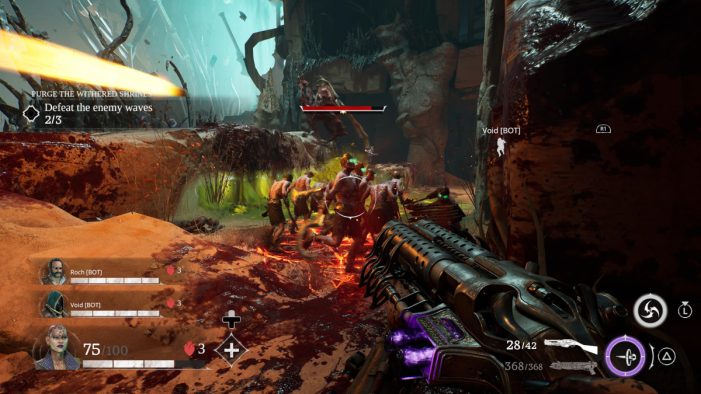
Painkiller [sic] is all very glib and familiar to the point of feeling redundant, but it’s got a sort of easy comfort food quality for the most part. Run through a twenty-minute level, pop a thousand demon heads, fly around propelled through the air by jump pads, groove on the empty gameplay calories, and try to forget someone in marketing decided to call it Painkiller when the obvious inspiration was Bethesda’s Doom reboot, but for three people. Ultimately, the empty gameplay calories will cause a crash and you’ll realize you could have been playing something else. Whereas Painkiller constantly rolled out new levels, with new enemies with new behaviors, Painkiller [sic] does no such thing.
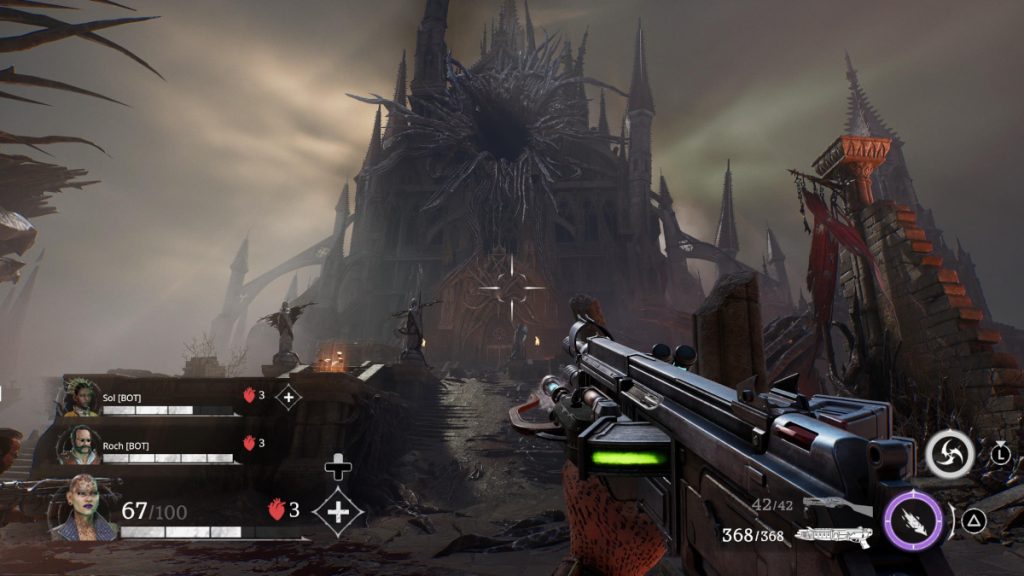
Even the weapons, with their initially promising upgrades and elemental effects, eventually blur together in a noisy bifurcation of “do you wanna kill a bunch of weak guys, or do you wanna focus on one powerful guy?”. It’s all swaddled tightly in a stultifying sameness, shunted through narrow corridors and compact arena-rooms, against the same sets of enemies you were fighting in the last room at the end of the last corridor in the last biome, doing the same objective busywork over and over again. Three biomes, each with three levels, each ending with a boss, and then you’ll unlock an amazing final level. I’m just kidding. You unlock a room with a big noninteractive bubble that doesn’t seem to do anything, as near as I can tell. The artwork elicited the occasional, “huh, how about that?” but never once a “whoa”, or an “oh wow”, or even an “ooh”. It’s the sort of familiarity that will breed contempt as you grind along, and the reveal that there’s nothing behind the final locked door is a kick in the nuts that will guarantee a little contempt.
I unfortunately ran into a few crashes and one especially infuriating bug. This sort of instability might be common these days, but it’s absolutely unacceptable on a console game that should have undergone a rigorous certification process (stop laughing, please). It’s especially frustrating in a grind-based game like this where you can lose up to a half hour of progress given the length of the raids and the absence of anything like save points. After one crash, I didn’t find this misleading prompt very amusing:
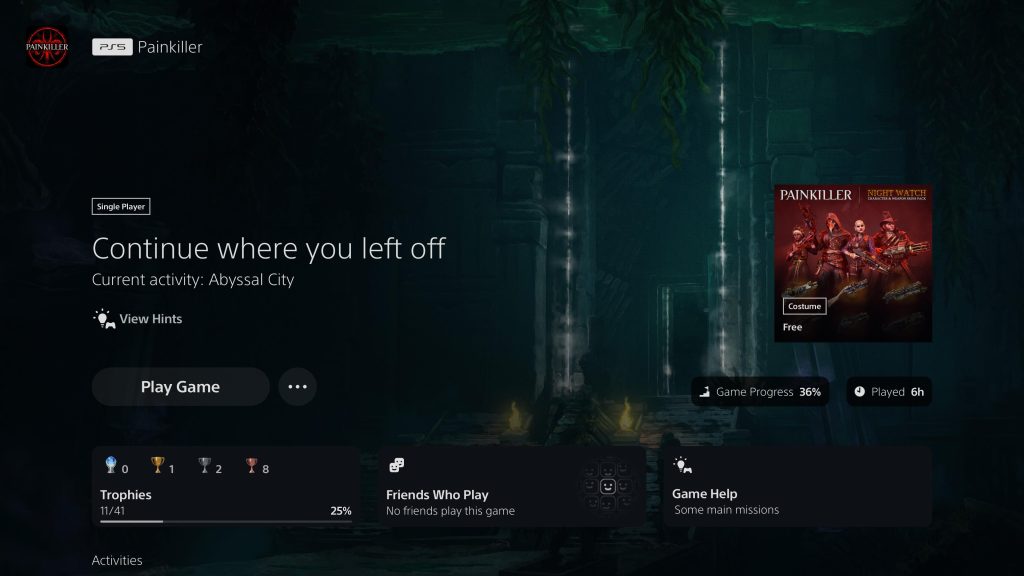
Painkiller [sic] was not ready to be released.
I do wonder how differently I might feel if this product weren’t called Painkiller, or even if it had some sort of subtitle, like Painkiller: Turbo, or maybe Painkiller: The Fast-Paced Multiplayer Horde Shooter With Lots of Jump Pads and Minibosses. I might have accepted it as a sloppy and sometimes fun pursuit, an alternative to the usual zombie hordes. This might have been a three-star review instead of a two-star review, although I doubt it. But the developers and publishers decided to name their product Painkiller, invoking People Can Fly’s 2004 masterpiece, and the developers — entirely new to this kind of game — were unable to deliver the promise on the front of the tin.
“What’s in a name?” you might ask. It’s worth noting that famous question was posed by someone very young and very immature, someone whose judgment was so clouded that she would eventually pay with her life. But those of us not overwhelmed by teenage love and hormones know what’s in a name. Whether it’s a family or a franchise, a name comes with promises and expectations. And in the case of Painkiller, slapping those promises and expectations on this glib little forgettable ditty might as well be someone biting his thumb at me.
Painkiller
Rating:
Playstation 5
You, sir, are no Painkiller. You're not even a very good horde shooter.
