
I’m pretty sure everybody reading this has at one time or another had the experience of overpromising something, only to underdeliver in the end. Whether it’s a competitive game of League of Legends or a magical presidency of hope and change, we all know what it’s like to make commitments we’re just not able to keep. While I know I never actually promised anything as part of this series of articles, I was secretly hoping to be able to do one thing before I finished, and that was explain in detail how the combat system works. Unfortunately, I’m here to tell you that isn’t happening. Several weeks of scrutinizing the combat results and flipping through the manual has driven home the fact that short of learning assembly language or whatever COBOL derivative developers use to make games these days, the only way I’m going to be able to come through with that information is to steal it from Gary Grigsby’s hard drive. And since that’s something I’m loath to do unless fighting the terrorists, I’m going to have to settle for the layman’s version. I hope you’re not too disappointed.
The good news is that it doesn’t really matter, anyway.
After the jump, make peace with our bipartisan compromise solution to combat results. Continue reading →
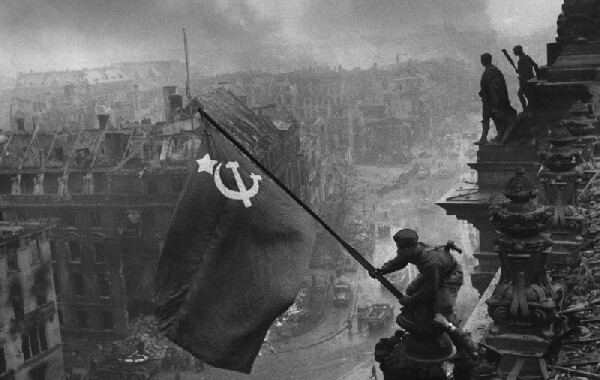
Victory conditions are wargames’ great balancers. Without them, you’d have to play many games for fun, because one side would have little chance of winning. No one thinks that the Germans had any chance of winning the Battle of the Bulge, in the sense of achieving their strategic objective, which was the capture of Antwerp. But failing that, how can you call any other result a victory? Germany was going to be completely laid waste in the next six months, so who cares if the Panzer Lehr brigade made it to Dinant? Pacific theater games are the same way: the chances of the Japanese defeating the U.S. militarily, or forcing a surrender, were probably nil. What would a Japanese victory in the Pacific look like, anyway? Rising Sun over Sacramento? Unlikely. So for a Japanese player, you might just have to make it to September 1945, which would be a month longer than the historical Japanese lasted. That’s the whole, “Can YOU do better than Admiral Yamamoto?” slogan from Avalon Hill that I remember 25 years later, whereas I can’t remember the specifics of a scientific article I read last week.
After the jump, math, geography, book quotes, and 100+ bombers Continue reading →

The German crossing of the Dnepr River and the subsequent battle for Smolensk has been the subject of relatively few wargames. Probably the best-known among people who know about that kind of stuff is PanzerGruppe Guderian, published by Simulations Publications Inc. (SPI) in 1976 and republished by Avalon Hill in 1984. It had some interesting innovations in game mechanics: untried units on the Soviet side were flipped over to reveal their strength only at the time of their first combat, which could be a surprise to both players and made exact odds calculation impossible. The slashing armored tactics on the German side were modeled by very generous overrun rules, which allowed attacks during the movement phase at very low odds differentials, unlike any other game to that date. No rules were included for bare-chested fighting.
On the computer, SSG released Across the Dnepr in 2003 as an add-on to its excellent Korsun Pocket. It had terrible balance issues, and I haven’t tried the second edition, released in 2010 as an add-on to Kharkov: Disaster on the Donets. I’m curious to see how the new version works, so that’s now on the list. The first Panzer Campaigns game from HPS and John Tiller was released in 1999 and entitled Smolensk ’41, and happens to have been the best one of the series. Draw your own conclusions.
I’m about to find out how the War in the East version stacks up, because at the beginning of Turn 5 I’m at the Dnepr, and don’t plan on stopping.
After the jump, Guderian’s not all that Continue reading →
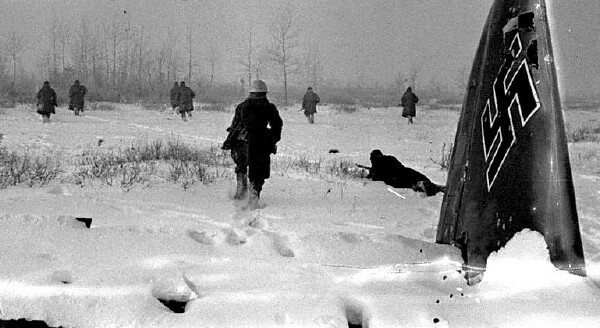
The battle for Leningrad was one of the more horrific episodes in a war full of horrific episodes. At the same time, it’s a fascinating drama, full of intriguing angles. There’s the Finnish angle, where the Finns first declared war and then Carl von Mannerheim’s army basically stayed put for three years north of the city, resisting German pressure to launch an assault. The whole “Road of Life” across frozen Lake Ladoga is a ready-made movie script, and was the subject of numerous Soviet films. And the siege itself is an amazing catalog of events of both heroism and barbarism. So of course the most important philosophical, ethical, and historical problem this battle raises is: what kind of tires did the Russian ice trucks use, and are they properly modeled in the game?
After the jump, Leningrad or bust Continue reading →

In the interests of continuing to keep it real, I am going to be straight-up honest with you and admit that I have no idea how the part of the game we’re going to talk about today works. At all. I’m not even going to pretend to understand by finding some scholarly quotes and then systematically demonstrating that War in the East does this particular thing better than some game no one has ever heard of. Instead, I’m just going to throw up my hands right now and say that if anyone can help a comrade out, I’d be grateful.
After the jump, anyone? Anyone? Glantz? Continue reading →

A lot of people might not have realized it, but railroads used to be pretty important. Without them there would have been no hoboes in Bugs Bunny cartoons, and without the ability to sit around and build track, sell goods, and upgrade trains, a lot of college students would probably have passed their physics midterms.
After the jump, it turns out railroads were also pretty important for attacking Russia. Continue reading →

The biggest obstacle to playing a wargame for people who haven’t played wargames is understanding what the game expects of you. Yeah, you need to capture Moscow or whatever, but the whole in-between part is so opaque I think people just don’t even bother. Part of the appeal of games is being given tasks which you can accomplish and then figuring out how to do that. I’m convinced that is the appeal of the otherwise-unfathomable-to-me RTS campaign paradigm, where some guy talks for a while and then you have to figure out the puzzle of how to defeat the space orcs.
But when the event is a more recent historical one, you kind of bring your own preconceived notions to the table. For example, it initially really bothered me that routed units in War in the East could just relocate to a new hex every time I moved adjacent to them. In my mind, I thought that routed units should just be eliminated when they engaged in combat. On one Three Moves Ahead podcast I think I called War in the East’s system “ping pong” or “kick the can” warfare. I’m pretty clever and smart. And I obviously know everything about invading Russia in the 1940s. So when I say I have all the answers, you can pretty much take that to the bank.
After the jump, it turns out I was wrong. Continue reading →

Every war has to start somewhere.
Because mine is turn-based, it starts with XXVIII Corps attacking across the Niemen River into Lithuania. The opposing Soviet rifle division immediately routs. The game tells me they lost 2999 soldiers. Seems like a lot.
After the jump, is it enough? Continue reading →

Board wargaming is almost an aesthetic, and believe me it pains me to use that word as a noun. After all the counters are placed, reinforcement charts filled, turn record tracks assigned, but before the first move, the game is all possibilities — possibilities which play out on that same map that you laid out before you started. Berlin might end up with a “Soviet control” marker on it, but for now it is your ultimate sanctum, with your most valuable factory and headquarters units, and leader counters, all safe from immediate harm. In a different game, Hougoumont starts with stacks upon red stacks of Wellington’s finest, which later sharply outlines the moment when it is all clear except for the blue of Bauduin’s 6th Division. And in yet another, placing a single Confederate gray counter on Washington likely means you’re starting to pick up and sort all the other pieces for storage back in your counter trays, agonizing over that last battle die roll and arguing over the river bonus. In between, lots of cardboard infantry did a lot of marching.
After the jump, War in the East speaks its own language Continue reading →

There is something very comforting about a bunch of square pieces of cardboard on a hex grid. For someone who grew up at a certain time and frequented hobby stores, an oval inside a rectangle above two numbers separated by a dash has only one meaning: if you put them on a cardboard square, with some luck, you might be able to move them all the way to Moscow.
I can say with the certainty of imperfect memory that War in the East is the first time I’ve gone to a book to help me play a wargame. I pulled my thirty-year-old copy of Manstein’s Lost Victories off the shelf because I couldn’t figure out the best way to use 41st and 56th Panzer Corps to approach Leningrad. Was I supposed to stay completely west of Lake Ilmen? What did a real panzer general do? That’s something I’ve never done, because up until now the game and the history were thematically linked but conceptually separate. Sure, I knew what happened historically, but that wasn’t helpful when trying to line up 42 combat factors for a 3:1 attack. War in the East channels the past straight to my bookshelf in a way The Russian Campaign never did. That statement is blasphemy in this household, but it is pretty much true. Please excommunicate me now.
A long time ago, I wrote an article about the difference between realism and detail in wargames. It ended up being required reading for a course at the U.S. Army War College*. For those of you who skipped class that day, the point was that if you want your game to reward good decisions, it makes no sense to incorporate a level of detail the player is incapable of managing. If things are happening at a level below that of what the player can reasonably affect, there’s no reason to include, except for show. Or “chrome” as old wargamers would say.
*Actual, non-ironic fact.
After the jump, War in the East breaks these rules but keeps on winning Continue reading →


