


Second opinion: in Resident Evil: Requiem, we celebrate a series’ life and undeath
Tom reviewed Resident Evil Requiem and gave it a measly one star. But can you really trust Tom? That young firebrand accused Resident Evil 7 of “transpacific awkwardness”. I’m still not quite sure what it means, but I assume some people at Capcom were devastated.
Accordingly, I have been mandated by the Qt3 Department of Fairness to give the game a second opinion. First of all, you should know that I am a true fan of the series. I even have the figurines (don’t ask). I had an official fan club number too, but it turns out the whole thing is a way to nag you into giving the games free promotion on social media, so screw that. If you’re wondering about my journalistic integrity, well, the joke’s on you, I’m not a journalist and I have no integrity.
So what does a true fan think of Resident Evil Requiem?
I’ll tell you what a true fan thinks. I think… it was okay, I guess.
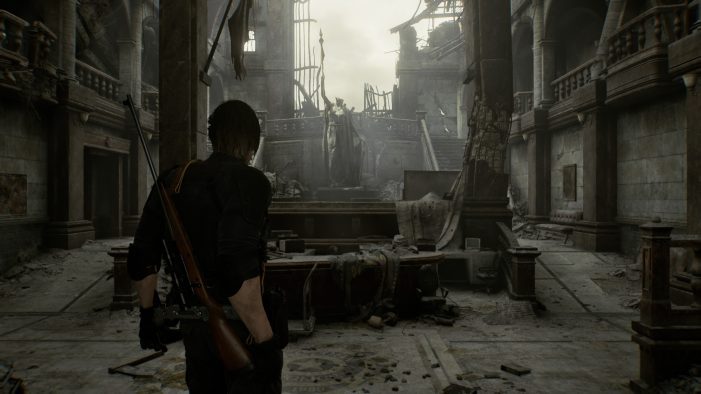
Tom’s right that the game is basically a “best of” Resident Evil. You could probably make a whole article out of all the references. Even the side games are getting a nod. Heck, Alyssa from Resident Evil Outbreak is in there. Sadly, she’s been demoted from playable character to early throwaway death. There’s obviously a big mansion. I’m pretty sure that if we destroyed all the buildings with a double staircase in its main hallway, the world would be safe from bioweapons forever. (“Re9uiem” is the ninth Resident Evil. It also turns out that Final Fantasy IX is the nostalgia entry of the series. Is there a pattern? You tell me.)
Cameos are all nice and good, but it’s more than that. The game has two protagonists and you’re basically getting two games from two different eras of Resident Evil in one. Grace is from the old school. You play as her in the first person (by default). All of her items take exactly one block of space. Her offensive options are limited. On harder difficulties, she needs ink ribbons to save.
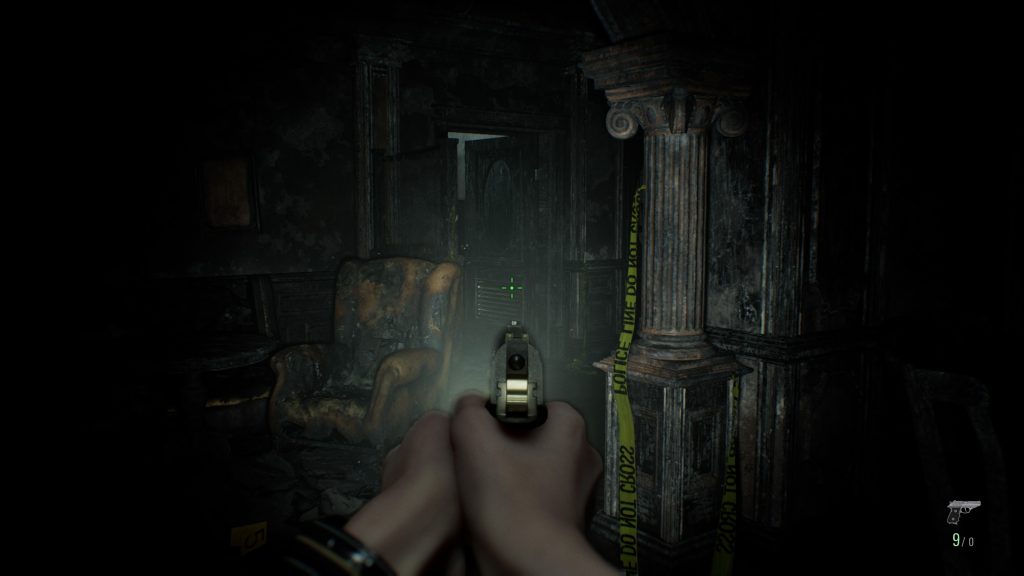
Well, to be precise, Grace is “new” old school. Some of the fans still want “true” old school: fixed perspective and tank controls, something the series hasn’t been doing in more than twenty years. Those fans are like WWII Japanese soldiers hiding in the jungle, refusing to surrender. Bless their hearts.
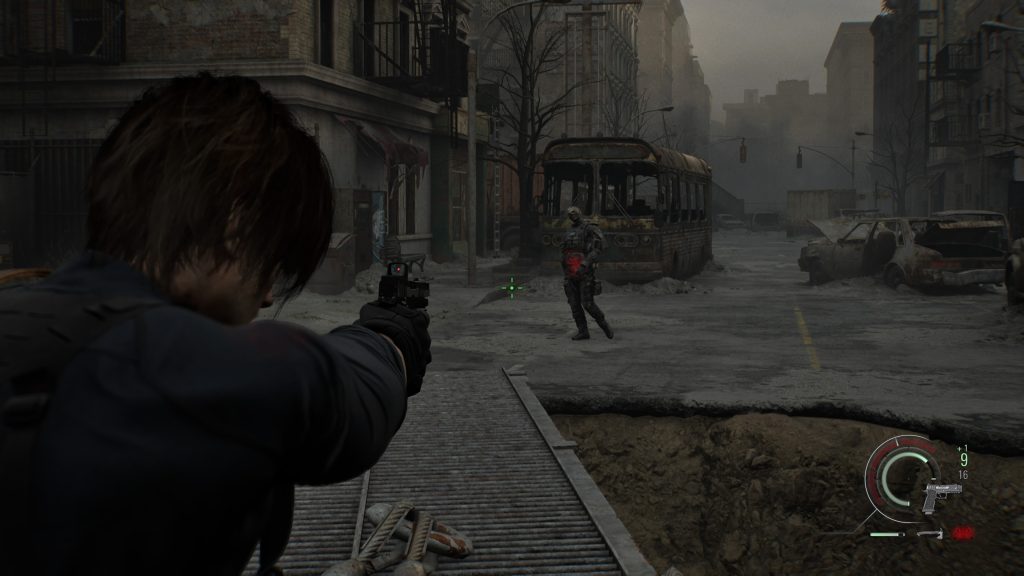
Anyway, Leon is from the new school. He’s third-person by default. His items have variable sizes. He knows gun fu, so he can shoot zombies in the face and melee them when staggered. He can save as much as he wants. If you can roundhouse kick a zombie to the face, you don’t need no stinking ink ribbon.
What’s interesting is that these two approaches to gameplay affect the level design. The characters don’t really inhabit the same spaces. Grace travels back and forth in narrow mansion corridors in a more traditional Resident Evil approach called recursive unlocking. To play well, you basically need to create a heat map of danger areas. Which paths are blocked by zombies? Which ones are worth “unblocking” by shooting them? Is killing zombies worth the risk since the dead ones can mutate, making things even worse? (Hey, a Resident Evil 1 remake reference.)
Leon gets wider, open areas, basically enemy skate parks based on Resident Evil 4. There’s stuff like exploding barrels and pickups lying around. There’s a fight or flight approach: many of these encounters can be solved by clearing the area of enemies or by escaping.
Now, this is all nice and good in an academic sense. My issue is, and I’m going to mangle a Sid Meier quote here, that two good games are worse than one great game.
Both “halves” of Requiem are pretty good, but they lack depth. New gameplay concepts are introduced for a few minutes and are never seen again. The antique coins from Resident Evil 7 are back, but there’s a whopping four things Grace can buy with them. There’s a tiny minigame involved with learning new crating recipes: it happens three times and that’s it. Leon’s arsenal and customization options are more restricted compared to the other action-oriented entries. The gun fu is also pretty limited and enemies refuse to stagger properly. This is a crime, since as far as I’m concerned, gun fu survival horror is Resident Evil’s greatest gift to gaming.
Worst of all, the two “halves” of the game don’t really affect each other. At one point, some enemies are gone for Leon if Grace kills them first, but Leon eats zombies for breakfast so it barely matters. At least it’s cathartic to have Leon clean up zombies that gave Grace so much trouble.
So to sum it up, the theory of making a “greatest hits” version of a series is intriguing. In practice, I don’t really see the point. It’s hard to innovate when you have half the screen time. I would have really preferred a less superficial version of either style. Heck, why not make both longer and release them separately?
Resident Evil does innovate in one area: product placement. Leon is now conspicuously driving a Porsche. Ugh. You can’t shoot the car. I tried. While playing in first-person, Grace’s watch is noticeable. It’s a pretty nice watch, I thought. Well, the watch is also product placement. You can buy it for a mere 1500 bucks. I mean, it is nice… No! BAD! Stay strong.
Here’s the secret recipe of the Resident Evil series: they’re 8-10 hour games that can be comfortably beaten a second time in 3-4 hours. They’re usually very replayable and tend to be well liked by speedrunners. While Requiem doesn’t break this mold, it contains barely interactive set pieces and stealth sections that kill the pacing. If you want to try your New Game+ toys as Leon, well, tough luck, you have to complete Grace’s section all over again. There’s also a “hard” difficulty, but it is ridiculously hard, so much so that the game encourages you to use cheats. It’s kind of a miss, even if it switches item locations.
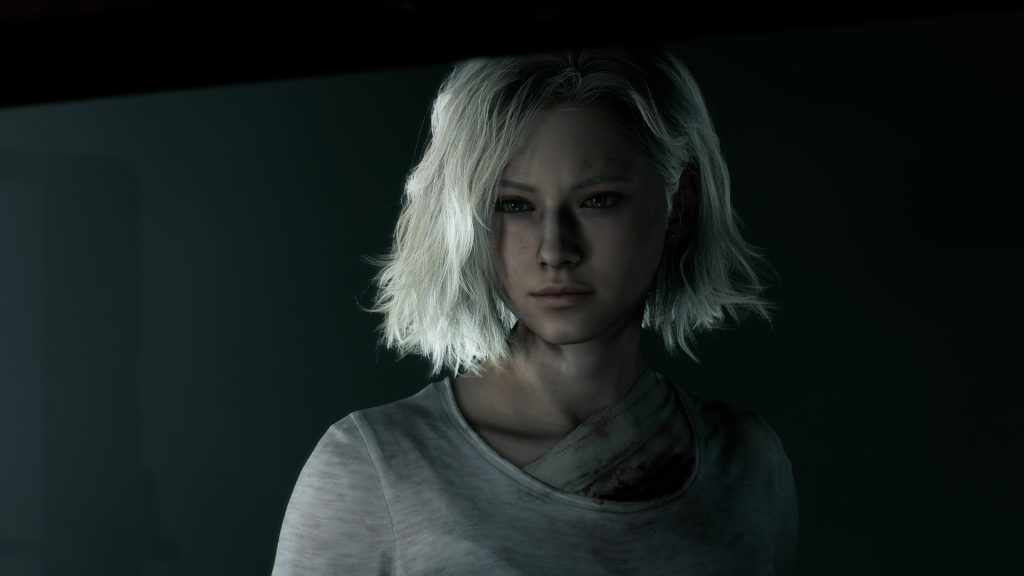
So what about the story? It’s not much of a spoiler that in Requiem you return to the ruins of Raccoon City. It’s right there in the promotional material. Perhaps the real spoiler is just how long it takes before actually going there. You’ve got to do Grace’s bit first. Learn her whole backstory. I didn’t take to her much, with her Barbie doll looks and her annoying sta-sta-stammer. The transformative power of violence can’t come fast enough for her.
Look, can we cut the crap here? If you start looking at Resident Evil not as horror, but as action with monsters in it, it all makes perfect sense. It’s more like a Die Hard movie, call it “dirty tank top” action. The heroes get increasingly bloody and dirty, but they invariably pull through in the end. They can still even wisecrack a bit.
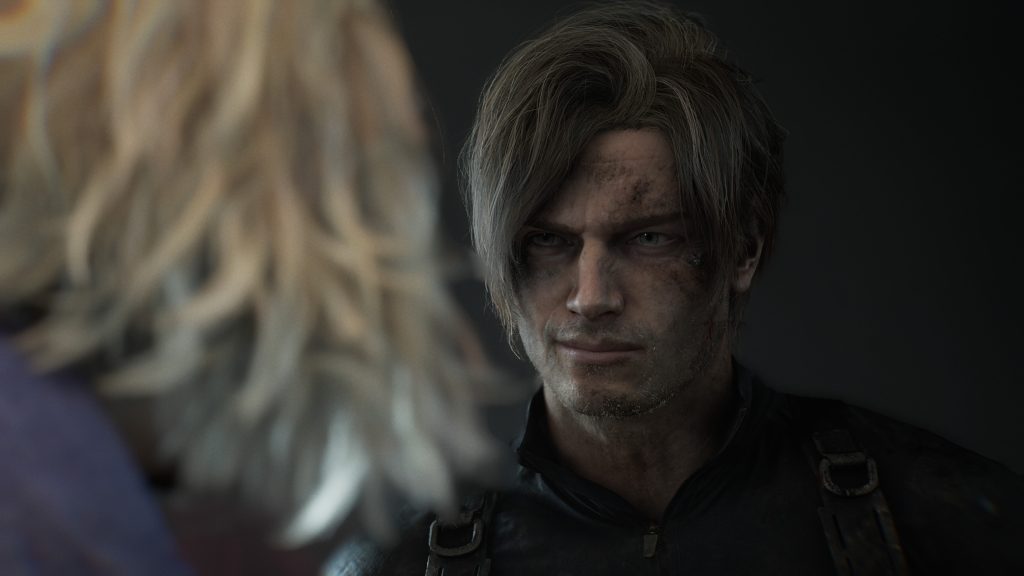
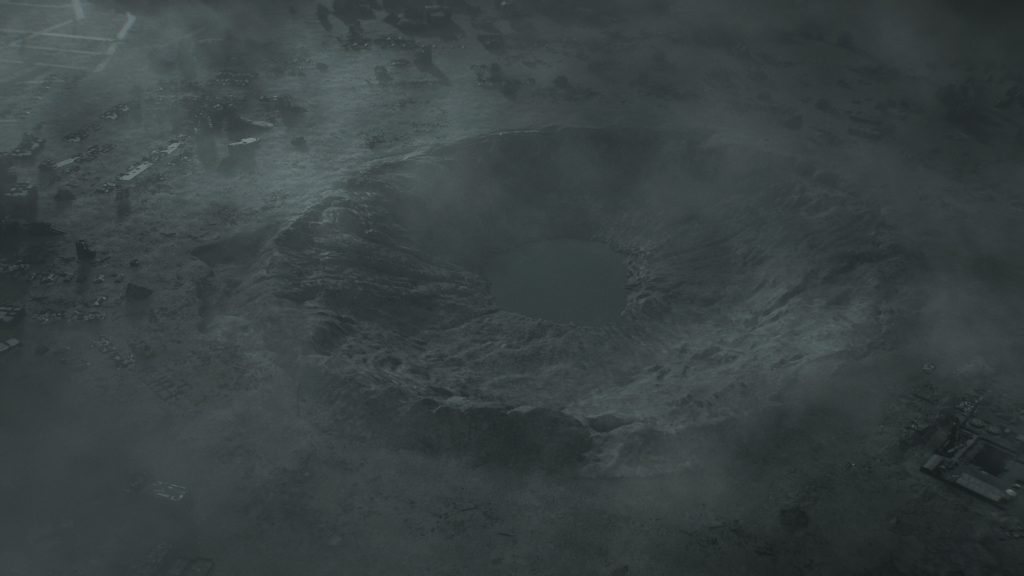
The latter half set in Raccoon City is much more interesting to me. It brings a different mood. The blasted, silent landscape is not your usual Resident Evil architecture. The game seems to have something on its mind.
There’s an even more sudden mood shift when you return to what’s left of the old police station building, the RPD. It’s probably the most iconic place in the entire series. Again, not much of a spoiler, it’s on the store screenshots. The switch is handled with the gravitas of a water slide that exits into a war memorial. Suddenly, the game wants you to solemnly consider the thousands of lives lost. A single zombie still shambles wearily, something he’s presumably been doing for decades. A few notes from the original RPD theme waft wistfully in the air. The entire section might be schlocky, but I can’t say it’s unearned. You see, the Resident Evil series happens in “real time”: the games are usually set in the year of their release. Raccoon City was destroyed in 1998, nearly thirty years ago, with the release of Resident Evil 3 way back on the original Playstation. It really has been that long.
You know what, mild spoilers, let me tell you about the deluxe edition DLC. Included with the package are the unassuming “Letters from 1998”. Those turn out to be a series of notes left by a little girl to her mommy. She’s looking for her father at the police station. The final note is just a blank piece of stationery alongside children’s shoes. The twist is that she’s the daughter of Marvin, one of the cops from Resident Evil 2. We already know he doesn’t make it, but now we get to learn that his daughter died only a few meters away from him and that his father sent her away because he thought she’d be safer elsewhere. Grim. I suppose she’d be in her thirties now. But hey, you do get a trinket you can attach to your gun out of the whole ordeal. So alongside your DLC reskins and doodads, you get a sucker punch to the soul. Jesus Christ Capcom. Well played.
The whole thing reminds me of archeologists recently finding a grave of a little girl from thousands of years ago filled with expensive grave goods. Everyone is oohing and aahing about what it means. What it means is that you guys have unearthed pain that’s thousands of years old. Let the dead lie. Archeologists are dicks.
Right after that, the game proceeds to change its mind again. Now it’s big monsters and big battles all the way to the end. Pew, pew! Let’s go! Requiem also introduces a bunch of massive retcons at the last minute. That being said, you probably shouldn’t think too hard about the “lore” of Resident Evil. That way madness lies. Besides, Resident Evil plots are nonsense, right? Scientists finding a new virus in a cavern, then the virus is modified by a company with dubious ethics in a lab sporting flimsy security, then it gets out and during the outbreak governments seem more interested in covering their tracks than finding the truth? Ridiculous.
In the end, no matter what Requiem attempts, it’s already been done better elsewhere in the series. That’s a “jack of all trades, master of none” for you. If you want old school survival horror, try the remake of Resident Evil 1 or Resident Evil 2. If you want action, try Resident Evil 5 or the remake of Resident Evil 4. If you want a bit of everything, you can go with Requiem.
My rating? Three stars.
P.S.: According to the rumor mill, the next release is either going to be a remake of Code Veronica or Resident Evil 5. Tom likes Resident Evil 5, so maybe there is hope for all of us yet.
