


CloverPit is a delightfully nightmarish roguelike about pulling a lever repeatedly
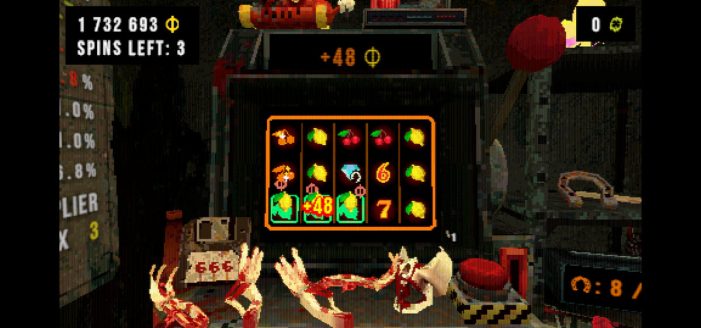
You are in a dingy cell with a toilet, an ATM and a slot machine. Win enough money to pay an ever-increasing debt or the floor literally drops under you. Maybe you’ll earn the key to escape, maybe not. It sounds like the pitch for Saw XIV, but this is CloverPit, one of the bigger roguelike hits of 2025.
CloverPit is pure distilled “roguelikiness”. All the excitement of choosing perks, levelling up and creating a build, only to lose everything and start over again… all without having to deal with anything as pesky as a main gameplay loop. This is the game’s biggest strength and its biggest flaw.
CloverPit represents the current state of roguelikes in the year of our Lord 2025. Last year, Balatro showed the world you could create a roguelike out of an old grandpa casino game like poker. On another front, Buckshot Roulette made the “dirty casino” look a thing. As far as I can tell, Resident Evil VII pioneered this a few years prior with a horror blackjack DLC, of all things. In a way, it makes a lot of sense. Behind the glitz and glamour, a casino exists to exploit the gullibility and poor impulse control of its patrons. So why not put that inner ugliness on the outside, eh? If roulette and blackjack are already taken, what’s next? Slot machines!
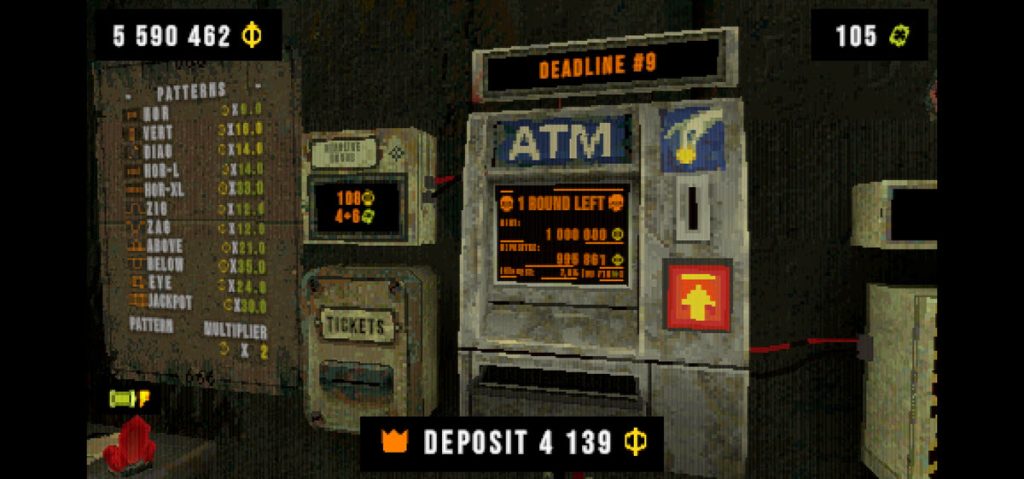
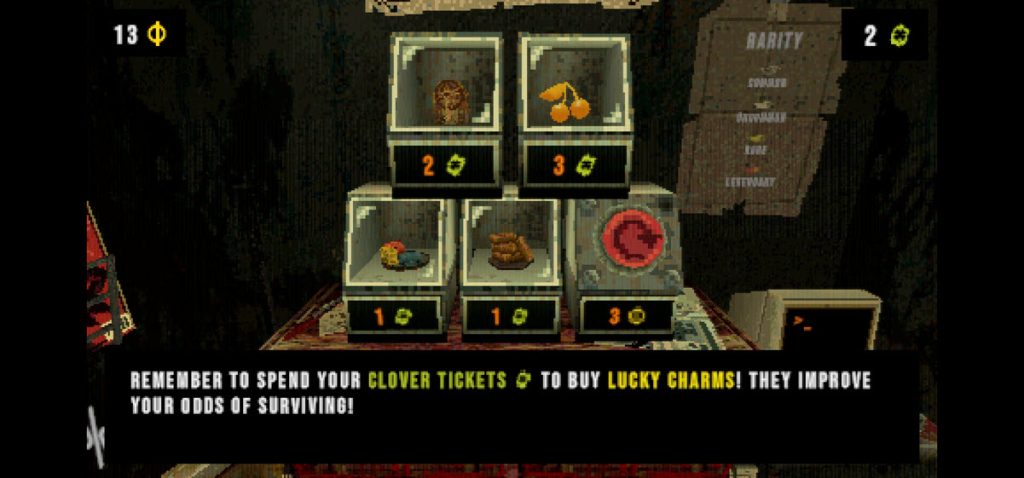
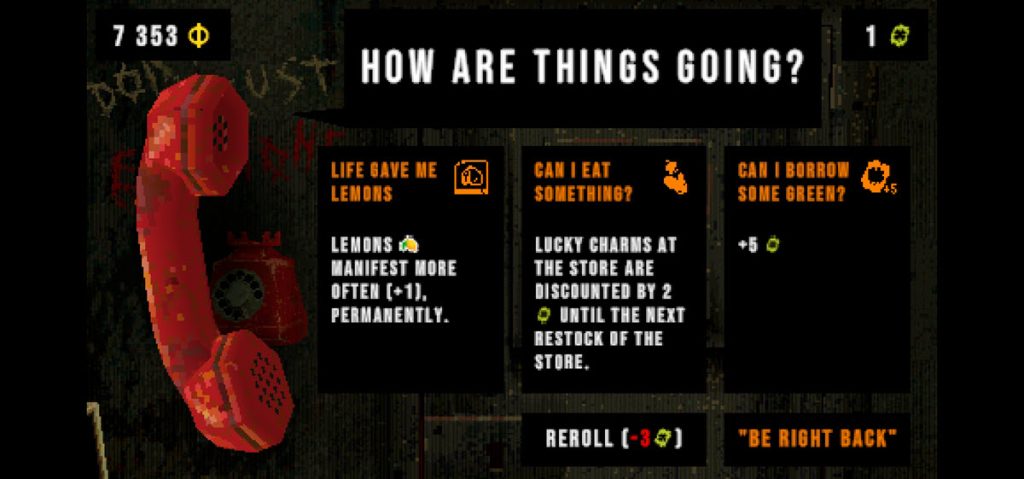
The brilliant part of CloverPit is its laserlike focus. Everything is literally contained in that single tiny room. In front of you is the slot machine. On your right is the ATM, where you deposit money for each “deadline”. Those are basically your dungeon levels. Behind you is a shop that sells lucky charms. Those are your equipable items. After every deadline, you get a phone call and pick between three bonuses. Those are your level up perks.
That’s everything. That’s your entire world. There’s no running back to town to shop because there is no town. There isn’t even any running. You just turn the camera. There’s very little in terms of menus either, since you just look at the object you want to interact with. Cramming an entire game inside a tiny room is magnificent design. The added “bonus” is that you get to feel the experience of those obsessives that spend hours glued in front of the same machine. Isn’t that nice?
The wobbly PS1 era polygons also have an endearing quality to them. It’s maybe even a little bit cozy?
So on to the slot machine. It’s clearly an evil, cursed thing. The point isn’t to just play the slot machine and rely on chance. The whole point is to use your perks and charms to manipulate the odds. If you have one item that increases the value of cherries, a perk that makes cherries more likely to appear and an item that makes cherries pay out twice occasionally, well, you’ve got a “build” right there. It’s those dumb clickbait articles (“One Weird Trick”, “Casinos Don’t Like It When You Do This”), but for real. If for no other reason, you can play CloverPit for the satisfaction of bending a stupid slot machine to your will.
The downside to this is that slot machines are pretty boring. They’re pretty much the least interesting games in a casino. You can fancy them up with lights and sound, but it’s all pure luck. No strategy, no bluffing, no counting cards or calculating the odds, nada. Not very sexy if you ask me. You don’t see James Bond sitting in front of a slot machine for hours with a popcorn carton full of tokens, beer bottle propped on the machine, teeth clenched on a cigarette and mumbling, “it’ll pay soon, I can feel it”.
It’s also a major limitation in the game’s design. In a roguelike, the act of building up a long-term strategy complements the moment-to-moment action, i.e., the core gameplay loop. In Hades, it’s top down action. In Dead Cells, it’s 2D platforming. In Darkest Dungeon, it’s turn-based combat. For most roguelikes, stumbling upon a great combination of perks or bonuses is neither guaranteed nor indispensable. When you do get one of those combinations, it feels like a nice windfall. Once in a while, you get to break free from the boundaries of the game. Oh, this effect gives me back a % of my health on every attack and my health was massively boosted by this other effect. Victory is assured for this run! GG.
In CloverPit, the main gameplay loop is pulling a lever. Breaking the game is the game.
You have to exercise your brain a little to find a decent strategy, but it’s not a very difficult problem to solve either. You need to: (1) make patterns more likely to appear, (2) increase the value of those patterns and (3) make it easier for you to acquire the needed items to get that plan going. It’s also important to note that many roguelikes require skill, but that the perks given are random. CloverPit has random perks and items as well, but its main gameplay loop is also pure luck. So it’s luck + luck. A little bit of item memorization goes a long way, but in the end, it’s still pretty much a game of chance.
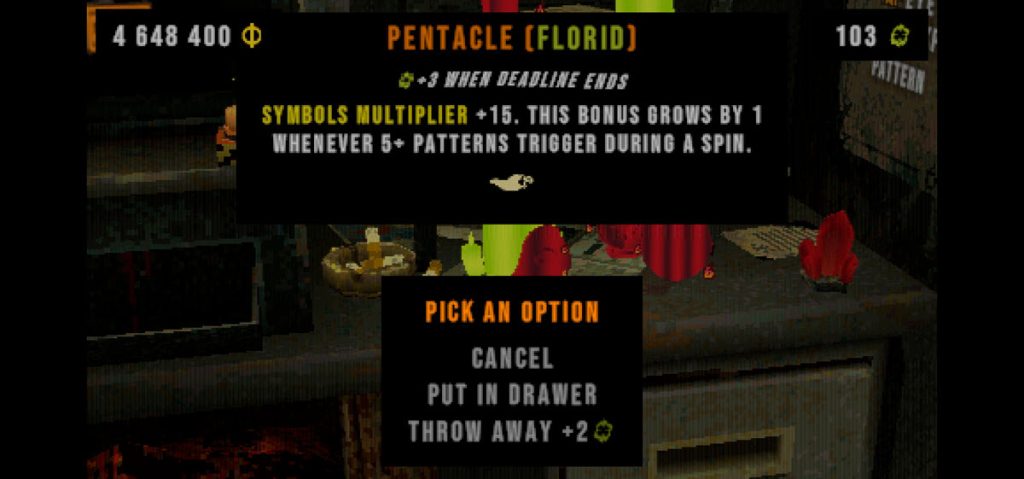
Perhaps it’s a nitpick, but CloverPit does one of the things that really annoy me in roguelikes. The biggest avenue of progression is unlocking new charms. You constantly unlock new ones, but the game just throws them all into one massive item pool. Many of those are garbage and there’s no way to ban any of them. Dude, I just beat the game and my reward is diluting the item pool with multiple new charms that are completely useless? Thanks for nothing.
There’s also a challenge mode of sorts in the game, but it’s been awkwardly implemented. Besides, except for making some items more or less useful, the challenges don’t change much. What else are you going to do? Pull on the lever harder?
With that being said, you’d think the whole slot machine thing is part of some bigger mystery. There’s a little bit more hiding underneath the surface, but otherwise, CloverPit really is just a roguelike about slot machines. Perhaps I’ve been spoiled by Inscryption, where the main game is part of a larger escape room puzzle and both are only a prelude to, well, something else entirely. Or maybe just a game like Please, Don’t Touch Anything that gets a lot of mileage out of its single room.
CloverPit achieves something I didn’t think was possible: it made slot machines interesting to me, at least for a while. Once you get your first good setup and the jackpots start rolling in, you feel like you’re on a Vegas high. And yet… eventually, the routine sets in. You can just sit there and stare at the screen for hours, robotically pulling that lever, again and again, waiting for that big payout, the one that’s going to make you feel as good as that first time. In that sense, CloverPit is an authentic slot machine experience, highs and lows included. You don’t even need to bet your life savings.
CloverPit
Rating:
PC
A roguelike gambling game about the devil’s slot machine.
