


In Cairn, you will get into the groove or you will die trying
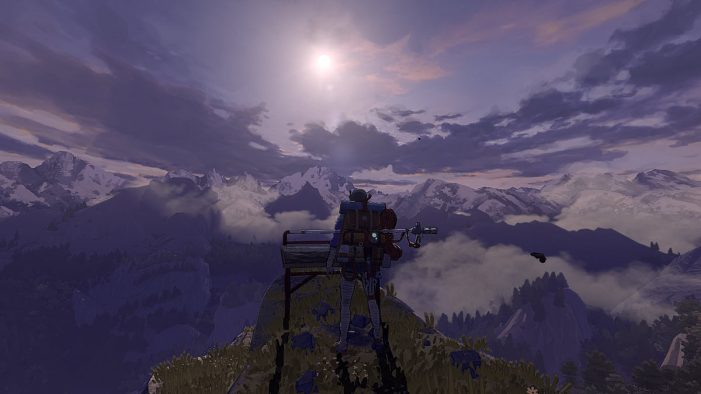
You know what’s my favorite level? Sea level. Still, I can understand the allure of mountain climbing. It’s the feeling of being literally and figuratively on top of the world. A selfie on top of a mountain is that one photo everyone has on social media.
That being said, there are not that many mountaineering games and even fewer games about rock climbing. Most games about climbing are drab or intentionally goofy and sadistic, in the vein of Getting Over It and Baby Steps. When I heard that The Game Bakers (Furi, Haven) were making Cairn, a climbing game, I knew they would add just the right amount of pizzazz to the concept.
Confession time: when I tried the demo a few months ago, I absolutely hated it.
The controls require some getting used to. Climbing is not as natural as pushing a joystick to walk. You move each limb individually, jamming each one in turn into a nook or a cranny. The game then chooses the next limb for you. Usually, it’s a logical choice, but not always. At first, your limbs wriggle uselessly, like an inexperienced octopus reaching for third base. The comparison with clumsy simulators like QWOP and the sadistic climbing games mentioned above seems appropriate initially. It does start making sense eventually. Try the demo if you have doubts.
The final test of the tutorial is climbing a real rock face. You’re now in charge of screwing your own pitons into the rock. Basically, a piton is a place to tie your rope. Instead of falling down to your doom, you can climb back up to it or take a rest. Putting a piton down requires passing a little timing minigame. Get the timing wrong and the piton will break when recovered. It’s exactly the kind of thing you’ll mess up if you wait too long and attempt to use a piton right before falling. Basically, you’re in charge of your own checkpoints, of your own survival. I’m starting to like Cairn more already!
Once you get to the top of that final tutorial wall, you realize it leads directly outside. Bam! You’re out there in nature. It’s a neat little wow moment. It confirms that the player is in good hands with The Game Bakers. There will be other wow moments. In fact, the weather/time of day system creates lots of great screenshot opportunities. Photo mode is really earning its keep here.
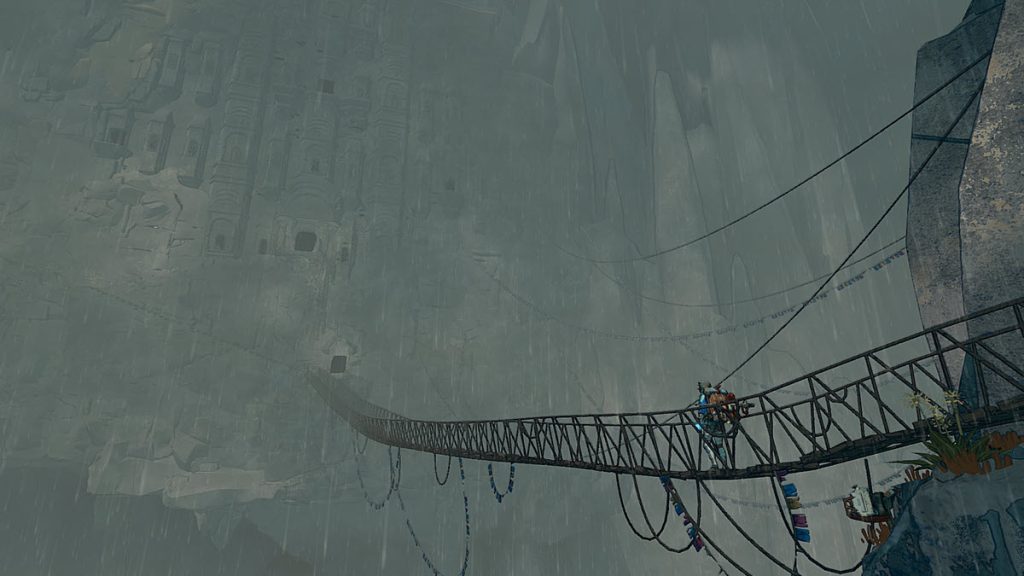
Another thing that had me worried is that you basically spend most of the game just staring at a wall. When climbing, you don’t see anything but the rock face. However, when you can’t see much, you start to hear: the birds, the wind and, perhaps more importantly, the subtle grunts of your character indicating fatigue or her feet slipping on the rock. You can also jam to the sound of the electronic soundtrack, whose presence makes itself felt at important moments.
One last thing about the beginning of the game. You know how most games have a special name for their hardest difficulty level? Nightmare, Veteran, Insanity, that kind of stuff.
Cairn calls its hardest difficulty level “Free Solo”.
If the very mention of Free Solo doesn’t put you in a state of sphincter-loosening terror, maybe you don’t know what it means. It’s basically rock climbing without ropes, harnesses or any kind of security. It’s do-or-die (By the way, Alex Honnold climbed a skyscraper free solo in a Netflix live special the other day. My mind could barely process what was happening onscreen.). When it comes to Cairn, Free Solo mode basically does the same thing: no harness, no pitons, no save points and permadeath. Anyway, if the name of a difficulty level itself elicits a response, Cairn is already doing a better job than most horror games I’ve played.
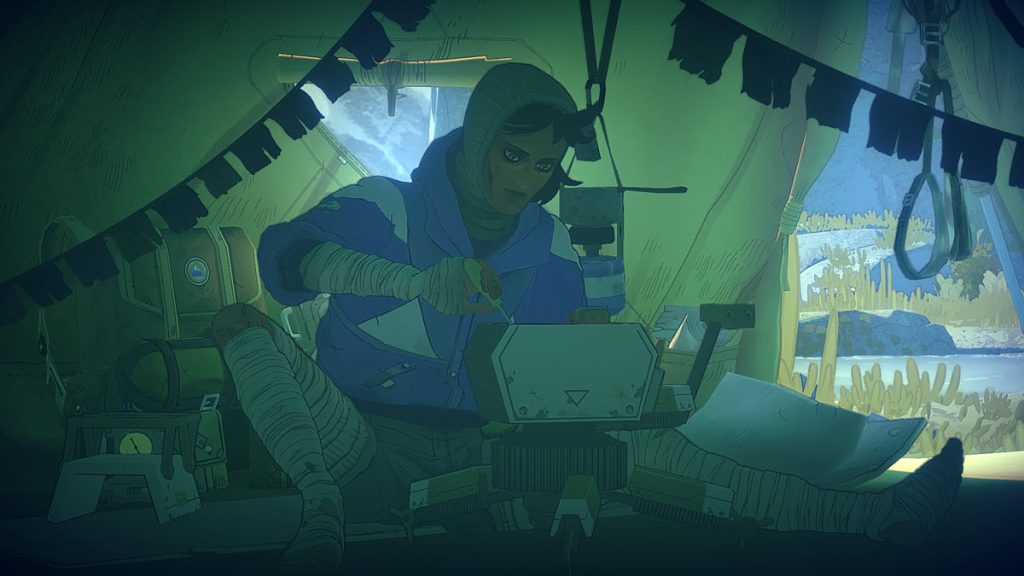
The protagonist of Cairn is Aava. “Hero” isn’t the right word here. She’s not here to save anybody or to help anyone, she just wants to climb her damn mountain in peace. If there’s ever a time to bring out the word “monomaniac”, it’s now. There’s an obvious disconnect between Aava’s high-minded introductory narration about finding her place in the world and the cranky lady you meet right after that. She doesn’t reply to her agent, she hates interviews, she ignores her loved ones. Her encouragement to a fellow climber rings hollow. You know the kind: “If you even think about defeat, you’ve already lost. There is no I in failure!” In fact, it doesn’t seem so obvious that Aava is going to find what she’s looking for on top of that big rock. Hubris and anomie are a dangerous mix in a mountain climber. I respect The Game Bakers for not just making a game about a “cool, fun person who has a big dream and has lots of fun achieving her life goals while discovering the power of friendship.” (As an aside, Alex Honnold displayed nothing but placid confidence during his skyscraper ascent. His wife’s face, however, was a much more complex mix of emotions.)
The mountain in this game is Kami, a fictional mountain that makes Everest look like a walk in the park. The game states that Kami is a killer, but that’s really not true. The true villain of the game is something else. It was there when you fell off your bike and scratched your knee. It was there when you dropped your phone in the toilet and never told anyone. Gravity. It’s always been there, pulling you down. And if you dare to get off the ground, it now has a chance to get you good.
The point is that the fear of heights requires no explanation. It’s not some evil sorcerer whose powers you have to demonstrate to the player. Oh no. When Aava’s limbs start wriggling furiously and you realize you forgot to put in a piton, you know what comes next. No jump scare will ever be more effective than knowing what happens if you slip up. Don’t look down.
Once you start on your real journey, you have a certain amount of control over the route you take. You can even get a bird’s-eye view of the terrain to plan ahead. That freedom is still limited, however, since eventually you will reach the same important landmarks.
There are also the usual survival sim elements to manage: health, hunger, thirst, and cold. You collect items in your backpack, like food and drink, to meet those needs. Very standard stuff. I have to say these RPG elements feel very pro forma. There’s so much stuff lying around that these needs barely seem to matter.
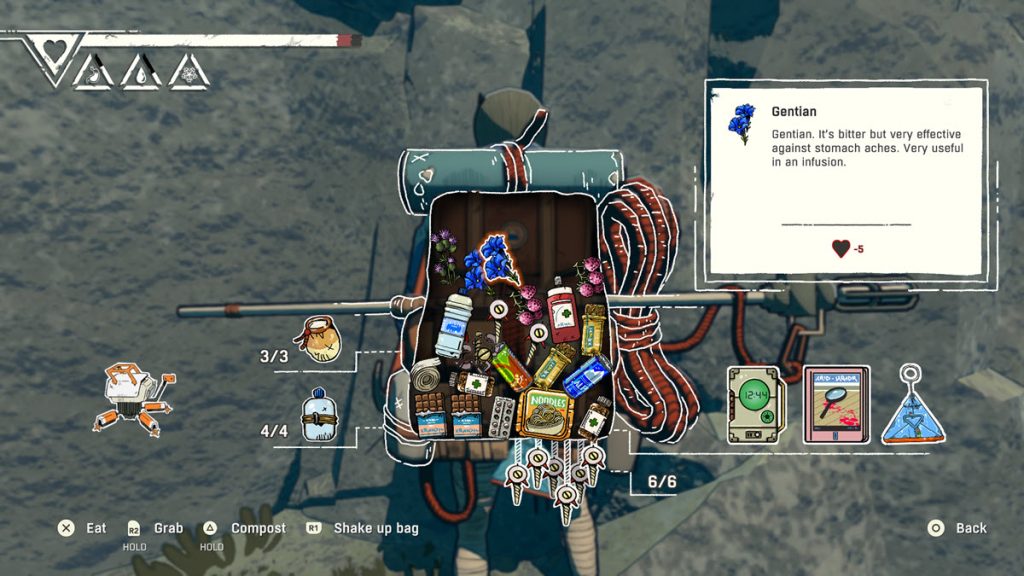
Stamina is by far the most important resource in the game, but it’s a hidden variable. I suppose the developers wanted it that way to make the game “immersive”, they wanted you to listen to the subtle cues mentioned above. I’m not sure it’s working. Why am I told in detail that raspberries are worth ten hunger points, but I’m told absolutely nothing about how stamina works? Does it matter if I climb fast or slow? How “good” is a good grip? Are there “better” grips? What do the food buffs do, numerically speaking? How do you take a good rest mid-climb? Why does rest work sometimes but other times nothing happens? Can you have unlimited stamina by taking breaks? When Aava moves a limb by herself, should I trust that she’s chosen a good hold?
On top of that, some enormously important options aren’t activated by default. There’s an option for visual feedback when you grip a good hold. The little extra visual feedback isn’t “immersive”, but it’s very hard to predict with certainty what the game is going to consider a good hold. You should probably remap the controls for manual limb selection as well.
Don’t worry, says the game, I have plenty of assist options too. I don’t want assists, I want you to help me understand the game.
It’s actually frustrating that Cairn is so unconcerned about teaching you its nuances. For a while I thought it wouldn’t matter because it’d mostly be a “narrative experience”. Oh no. At about the midway point, the gloves come off. There’s a particularly terrifying bit of vertical wall with no breaks and no solid footholds. I ended my session there that evening and it literally gave me nightmares at night. I left my character right there on the rock face. It’s irrational, I know, but in a sense I too was still on that rock face. That section is impossible, I don’t have enough pitons, no one can do it, I’m going to fall, it’s all over, don’t you see?
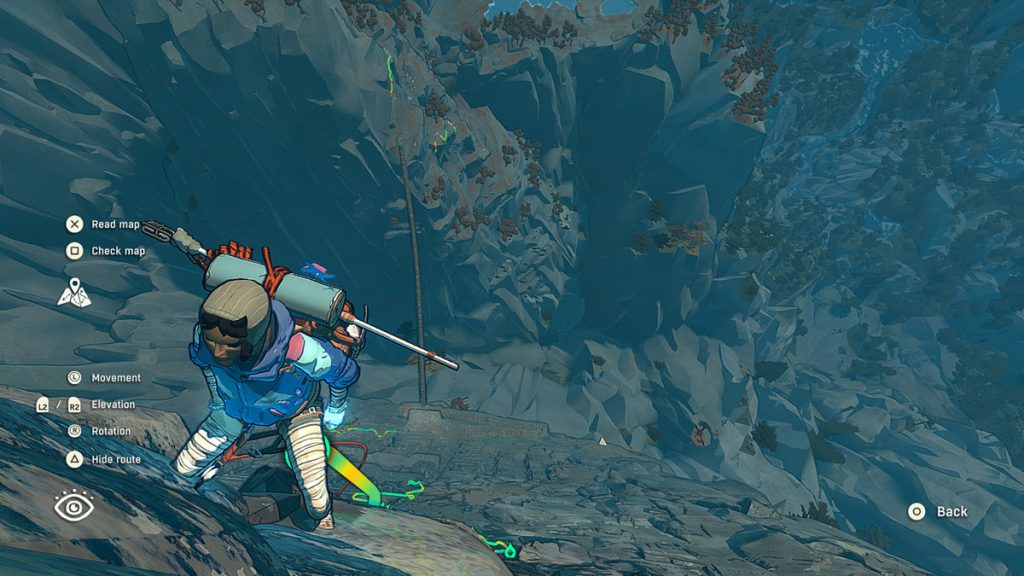
I ended up taking the assists. No game is worth losing this much sleep before a work day. But in a way, I suppose that means the game is doing something right.
I’m happy to report that the rest of the game went without any sleepless nights, even with the assists off.
There are a lot of environmental details to find on Kami. There’s a little subplot about the natives of the mountain. They’ve built an impressive vertical rock-carved city, but there’s nothing “magical” about them. They’re just a declining local population abandoning their traditional way of life to go “live with the horizontals”. It’s like leaving the Amazon forest to get an office job at, I dunno, Amazon. Your fellow climbers have also left a lot of things behind. Their old stuff to loot. Messages about their hopes and dreams and what the mountain means to them. Some have left their mortal remains. It seems that the smarter climbers have found what they were looking for early and turned back. The more stubborn climbers paid the ultimate price for their perseverance. Cairn is a game about the virtues of giving up.
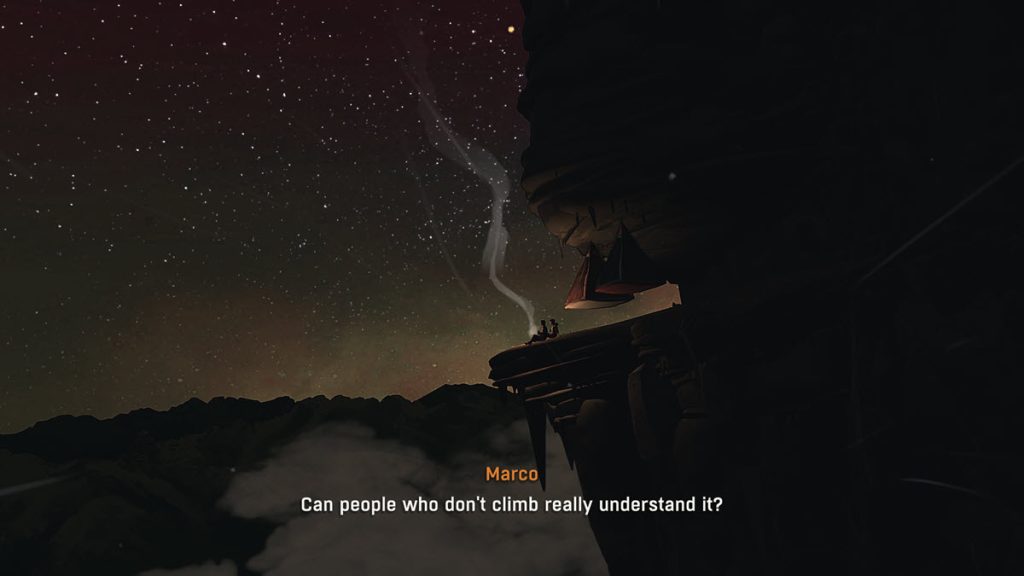
I’ve heard that mountaineering can be a meditative experience. Basically, you either have complete focus or you die. That doesn’t sound very relaxing, but okay. I suppose there’s something of that paradox in Cairn. It’s a slow game, but it’s not cozy. It’s a simple game, but it’s not forgiving. It’s a terrifying game, but it’s not horror. Or is it? A tiny part of my soul is definitely going to stay stuck on that rock face forever.
Cairn
Rating:
PC
A terrifying horror game about a protagonist who doesn’t understand that rock climbing is scary and not beautifully transformative.
