
See that? That’s a screenshot of one of the most amazing things I ever saw in wargaming: snow in 1941. As I pointed out a while back, that’s more of an observation about what computers could do for wargames back in 1981 than doubt about the weather in Russia. So I was glad the third bullet point in Shenandoah’s press release for their newly announced game, Drive on Moscow, proclaimed “a changing map based on weather conditions.”
After the jump, I predict famous designers. Continue reading →

Balance is like the reverse of pornography: everyone can give you a definition, but no one seems to be able to know when they see it. Oh sure, they think they know. Plenty of people will tell you that this race is overpowered, or that class is imba, and people go on to repeat it until it takes on a life of its own. I’ve seen plenty of game reviews declare a game is balanced or imbalanced, often on release day when I’m not sure how anyone can know that for sure.
The problem with balance is that just because someone hasn’t won with a particular race, or strategy, or build, doesn’t mean they can’t. Likewise, just because you found a strategy that won a bunch of games early doesn’t mean there isn’t a much better strategy that someone just hasn’t figured out yet. Or more pointedly, that they haven’t used against you.
But, after the jump, Battle of the Bulge is imba! Continue reading →
Battle of the Bulge snapshot

See that screen? If you play a lot of John Butterfield’s Battle of the Bulge: Crisis in Command: Volume I (actual legal name) you know something important that I am about to tell you. I’m not sure if Tom knows it, though, so I may be compromising operational security. That’s opsec for you people who are in the know like me. And not like Tom, just to reiterate that so there isn’t any misunderstanding. About Tom being in the know, I mean. Anyway. That’s the German 1st SS Panzer Division, the biggest, baddest unit in the German army. In this game, I mean – there might be other, badder units on the Eastern Front or something. I’m only in charge of this game. So getting back to the opsec, I am in Malmedy without having taken any losses. That might be because (a) I attacked the two-pip Allied armor that was there and blew it totally up, or (b) Tom evacuated it (‘bugged out’ in military vernacular) so that it wouldn’t get seriously bushwacked. Either way, the 1st SS Panzer Division is essentially guaranteed to get to Werbomont on the next day (Dec. 17th). (In Bulge there are multiple ‘turns’ per day but each unit only moves once.) Once I am in Werbomont, I am guaranteed to be able to attack Huy on the first impulse of Dec. 18th. If I can clear that space on the 18th, I have a decent chance of winning an automatic victory on the 19th. Since the game could technically extend all the way to the 28th, that’s pretty quick business by the Germans.
But here’s the thing: it’s two days early, and I already know what the chances are of me clearing that space if Tom defends it with one elite infantry. He gets two elite infantry as reinforcements on the 18th, but has two key spaces to defend with them. If he defends Huy with one of them, my chances are exactly 41.8%. I did the math so that you don’t have to.
On the other hand, if Tom had inflicted one hit of damage on 1st SS Pz during the combat in Malmedy, my chances would drop. To 27.3%.
That sounds like a lot of nerdy hoo-rah. Except that pushing for Huy and trying for an early victory is only one possible strategy in the game. Part of playing the Germans is making the Allied player think you are doing one thing when you are planning another. If Tom were reading the numbers, he’d be able to deduce that the river crossing strategy is still a viable one for me. And if you’re playing the game, and see the Germans take a hit in Malmedy on that first attack, you can breathe a little easier about the early victory, because your chances of stopping them from even getting into position for it in Huy are a hefty 73.7%. And you’d know that two days in advance.
Anyway, better keep strict opsec on this one.

With so much die rolling in Battle of the Bulge, you’re bound to hear a number of complaints when things don’t go someone’s way. It’s the case with any game where you roll dice, and you can make an argument that the complaining is just as much a part of the game as the act of rolling. “You sank my battleship!” “Pretty sneaky, sis.” Et cetera. But there are a couple of places in Bulge where the customer service seems to be particularly bad.
One of those places is Eupen.
After the jump, how do you say that, again? Continue reading →

A long time ago, strategy articles about boardgames went through an extensive process to get to you. First, they had to be typed. Diagrams had to be mocked up. They then had to be mailed to an editor, who put them in a magazine, which had to be printed and mailed. Eventually, they appeared in your mailbox.
Those days are gone, and I’m a little sad about it. Now, people apparently watch gameplay videos. That’s okay, I guess. There is a set of gameplay videos up for Battle of the Bulge which I haven’t watched yet. Videos are great for watching, but less great for savoring. You can bet that’s what I did with every morsel of strategy advice I ever read for Afrika Korps. Maybe games are more disposable now, or maybe they always were and I just didn’t know it. But there is something to examining a game methodically, and turning it over and over until you have a better appreciation of what it offers. Even if it doesn’t come in a cool magazine.
After the jump, first we take Bastogne Continue reading →

I’m not quite sure exactly what it is about wargames that befuddles people. Something about NATO symbology* which translates armored units into rectangles with ovals in them. Or hexagons. I know some people don’t like hexagons. Although Neuroshima Hex has those as well, and it does all right.
I think the biggest obstacle to playing wargames is all the weird things you have to be aware of to play a game properly, without any way to judge how important they may be. Wargames sometimes make you use tools that you often didn’t even know you had. One of those is unit breakdown.
After the jump, is your Panzerkampfwagen under warranty? Continue reading →

A very accomplished game designer once told me his best ideas were mostly borrowed, but that he made them his own in the way he arranged and adapted them to a setting. Part of good design, he said, is knowing what works in a particular situation, and why. Good ideas keep coming around in new forms for a reason. They are borrowed, adapted and thus evolve, while the bad ones are discarded.
So it always puzzled me that computer wargames didn’t seem to have this evolving pool of good ideas. Instead, too often they were races to the bottom of some massive simulation pit, at the nadir of which was presumably an infinitely complex reality modeling engine. In retrospect, it was logical: when your platform is a supremely powerful computation device, it makes sense to make it compute as much as possible.
But nothing shakes up the status quo like a new platform that behaves like a new habitat, forcing its inhabitants to adapt or die. John Butterfield’s Battle of the Bulge feels like a game designed from the ground up for the tablet and its touchscreen*, where simple rules and clean design are ambitions instead of compromises. It’s also a fascinating example of how a hobby that once strove for superlative accuracy is willing to compromise in the name of superlative gameplay.
After the jump, dance of the wargaming masters Continue reading →

By now we’re at the fourth installment in this new War in the East series, and you’re probably wondering if I’m ever going to attack another hex, or if I’m going to just keep going to my closet and pulling out different games about Stalingrad. I assure you that both of those things are definitely going to happen. But I also promise that before this post is done, I will have attacked many hexes and shown you several actual in-game screenshots. But before that happens, I have to tell you a story. It’s kind of long, but at the end you’ll know a little more about what I’m trying to tell you. If you don’t like it, I promise to give you your money back.
After the jump, follow me down the board wargaming rabbit hole Continue reading →

Before we can get to the fight for Stalingrad or whatnot, there is the small question of Sevastopol. This naval base on the Crimean peninsula, famous as the site of the focus of the Crimean War in 1855, was the home of the Soviet Black Sea Fleet in 1941 and stood as a fortress through a 250-day siege until it finally fell to the Germans in 1942. In War in the East’s Operation Blue scenario, the Soviets get 50 points for every turn they control the city. That’s a lot of points, so I need to make an all-out assault on the first turn to limit the damage to my final victory.
After the jump, Germany made an all-out assault of their own. Continue reading →
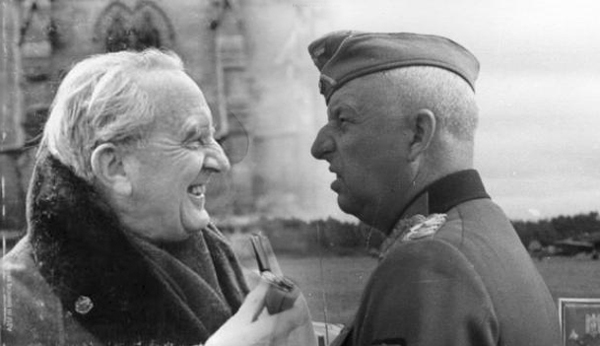
When you start watching The Two Towers, you get a little reminder of important stuff that happened earlier, like the wizard who fell off the bridge fighting the flaming minotaur. It’s an integral part of the Lord of the Rings, because the mistakes made earlier in the story lead to the choices available to the protagonists at the start of the second book.
When you start reading any book about Stalingrad, you get a little reminder of important stuff that happened earlier, like Operation Barbarossa. It’s an integral part of the Stalingrad story, because the mistakes of the previous year’s campaign led to the choices available to the Germans at the beginning of the second summer in Russia.
Explanations are good, because things seem weird and arbitrary if you don’t know why they happened, whether it is two midgets taking a two-thousand-league trek into the heartland of a genocidal warlord, or a genocidal warlord fighting a campaign two thousand leagues into the middle of nowhere. On the other hand, sometimes things just seem weird and arbitrary.
After the jump, David Glantz vs. J.R.R. Tolkien Continue reading →

It was often said in the Stalingrad pocket that it was better to have a cousin in the Luftwaffe than a Father in Heaven.
–Heinz Schroter
Seventy years ago this month, in a place between the Don and Volga Rivers, the Soviet Red Army broke through the front lines of the Germans and their Italian, Rumanian, and Hungarian allies. The 250,000 men of the Sixth Army were encircled, and over the course of the next ten weeks, starved, defeated, and destroyed. Few of its survivors saw their homes again.
Some years later, people with overactive imaginations and a lot of time on their hands invented a way to recreate these events using cardboard squares with numbers on them, paper maps covered in hexagons, and some six-sided dice. Want to drive a make-believe German tank over your dining room table? At one point in time, you could walk into many Toys R Us in the United States and buy a boardgame with a panzer and some German landsers on the cover, or Hitlerian code name for a title, like “Wacht Am Rhein”. Right down the aisle from Raggedy Ann and Andy. Now we download complete games about the war on the Eastern Front from the Internet and leave the stuffed dolls by themselves.
After the jump, we’re doing the War in the East thing again Continue reading →

I was walking around in a local bookstore this weekend. The kind that has a cat, and you pet the cat, and then browse for books, and then you think that there isn’t anything interesting here but you can always go back and pet the cat again. Except on the way back to the cat part, I got sidetracked and took a trip I wasn’t expecting. That’s the best kind of bookstore.
After the jump, taking a trip from Greece to Greyhawk Continue reading →

Years ago, every boardgame was a solitaire game. I know that because I played a lot of them solitaire. In the late 1970s and early 1980s, there weren’t a lot of ways to play board wargames against someone else unless you wrote your moves on a piece of paper and put them in the mail, or went to a convention, or somehow knew someone in your area who wanted to sit around pushing cardboard counters back and forth for days at a time. When you add that to Soviet Communism, it was a pretty bleak world.
Commies defeated and gaming saved, after the jump Continue reading →

The argument about whether or not games are art is often just a plea for games not to be ridiculed, and instead to be treated as serious endeavors. I usually avoid it, because I think it’s a misplaced argument, and far too defensive a posture to take about something that shouldn’t cause anyone any embarrassment in the first place. But there must be something to it, because I keep running into it, sometimes in the weirdest places.
After the jump, I run into it in a boardgame about Colombian cocaine trafficking. Continue reading →

If it’s possible for someone to have a patron game, like they have patron saints or patronage at city hall or something, mine would be Titan. No other game has watched over my journey from adolescent nerd to middle-aged geek quite like that thing in the purple gamebox.
After the jump, some very durable cardboard Continue reading →


