

Daily Little Big Planet 2: waddle-ee-ocha
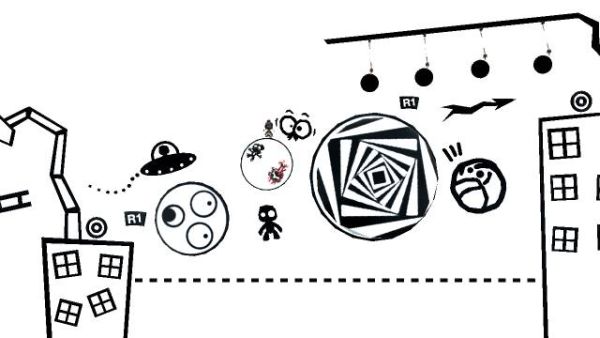
I like the rest,
but the part I like best
It goes: doodle-ee-doodle-ee-doo. Woo.
Demented Doodles 3: The Final Scribble.

Comments


I like the rest,
but the part I like best
It goes: doodle-ee-doodle-ee-doo. Woo.
Demented Doodles 3: The Final Scribble.

The Dead Island zombie count will never be able to match the Dead Rising zombie count. But at least it’s now up from 5 to 11. Maybe 13 depending on whether a dead zombie technically still counts as a zombie.
Reader Brian has helpfully pointed to a previous zombie count of 19, but these numbers are hard to track and inherently unstable. We’ll be keeping an eye on Dead Island’s zombie population as it fluctuates.

On my way north to intercept the other convoy I run across a strange sight in the night — a fully lit up ship. Having operated near territory at war where all ships are running without lights, I take a moment to remind myself that the Gibraltar Strait services many, many nationalities and ports, and some of them might not even be at war with us. Bugger. Time to run some drills!
After the break, I lose half of my torpedoes. Continue reading →

Every time you play Patapon 3, you’re first greeted with the PSP splash screen, followed by the epilepsy warning. So far so good. Then you select your language of choice, even if you’ve already selected it before (maybe you’re feeling like a little French or Spanish this time). Then the game pops up a dialogue box telling you it’s looking for storage media. You then have to manually confirm the autosave feature by selecting “understood”. There is no option to not understand. Then there are three screens reporting the Patapon 3 is looking for, finding, and loading your system data (not to be confused with your saved game data, which you’ll get to manually load later). Then a loading screen displays a snatch of pulsing artwork in the lower right corner of the screen while the Online User Agreement loads. This is eleven pages long. You have to page through all eleven pages, one at a time, each with a button press. Then a box appears asking if you accept the terms, even if you’ve already accepted them during a previous playthough. Because, you know, it wants to make sure you haven’t changed your mind. So you have to move the d-pad to bring a highlight on screen for the accept option, at which point you have to hit a button to confirm. Then an elaborate cinematic plays for a while as it loads. After it’s played for a bit, it’s apparently loaded sufficiciently that you can skip it to reach the main splash screen. From there, you select continue and then select your saved game. Once your saved game is loaded, you have to confirm that you’ve loaded the saved game. Then three dialogue boxes scritch by and you have to confirm the last one, at which point you’re at a new loading screen on the way to the actual game. When that’s done, Patapon 3 informs you that you can press any button to start playing.
Congratulations, you have gotten into Patapon 3! You’ll get your chance to take this epic journey when the game is released next Tuesday.

Welcome to Stalker: Call of Pripyat. The game opens in a field after a long and badly dubbed intro. There I am, staring out at a wooded plain. There’s nothing around. Just…woods.
Up pop five objectives, but I haven’t been trained to use identify or set them yet. Having played many modern AAA games, I’m used to a short tutorial on the game systems, so I sit there for several seconds, hoping some friendly guy will come over and take pity on this sad, stupid man who’s just appeared and explain what the hell is going on. I’m not sure if it’s an eastern European thing (the developers are Ukranian, I think), but this game just drops you in, and leaves the systems up to you. Welcome to the Zone, stalker!
After the jump, splashing around in the deep end Continue reading →

The opening cutscene for SOCOM 4, Sony’s upcoming military shooter, introduces you to Lead Character McMainDude on his way to get a briefing from the commander. He waits outside the commander’s tent while an argument plays out inside. A feisty Korean woman is upset that her recon team isn’t being sent into the action. She’s furious. She’s seething. She mouths off to the commander, like you do in videogames. They exchange words over a map table and then the commander dismisses her. As she leaves the tent, she passes by Lead Character McMainDude and presses a pen into his hand.
“This is his pen,” she hisses. “Make sure you stab him with it.”
Then you get your briefing. Some stuff about Korea and a terrorist group. It’s mercifully brief, since everyone knows you want to get into the game proper. Naturally, you don’t stab the commander with a pen. Instead, as the scene winds down, the commander absently pats his pockets, looking for his pen. Nothing more is said about the pen, because nothing more needs to be said about the pen.
It’s a sad state of affairs in videogaming that I noticed this detail, not necessarily because it was memorable — the Korean woman is actually pretty cool, and she’ll figure prominently in the story — but because it meant the writers and animators collaborated on a gag. The writers wrote the pen gag, and the animators animated it. Normally, writers just write dialog and animators make characters that gesticulate generically. Then someone sticks them together and, voila!, cutscene.
I recently saw a demo of Ratchet & Clank: All 4 One, the upcoming co-op action game. Composer Michael Bross, known for the Oddworld games, was announced during the demo. At the end of the level, the players kill a big sort of squid/crayfish. As the creature chokes and coughs its last, Bross’ playful score slows and halts in tempo with the creature’s dying gasps. Here was an example of the animators and the score interacting specifically.
We can start talking about how games have reached the level of other entertainment when I stop noticing this sort of thing and I start taking it for granted.